
WASHINGTON, November 9, 2026: NASA has successfully tested an advanced navigation technology designed to help spacecraft identify safe landing sites on the Moon and other planetary surfaces, marking progress toward more precise and autonomous space landings.
The technology, known as Safe and Precise Landing – Integrated Capabilities Evolution (SPLICE), uses sophisticated sensors and navigation systems to assess terrain conditions and guide spacecraft away from potentially hazardous landing areas.
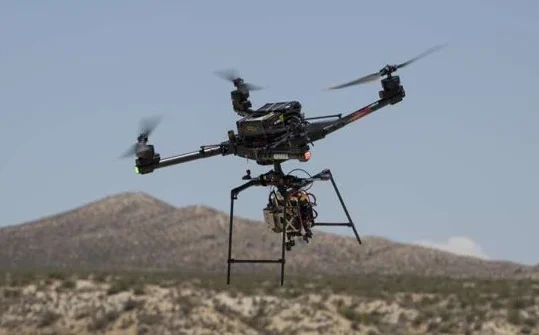
According to the US space agency, researchers conducted simulated lunar landing exercises using a specially equipped drone in California’s Mojave Desert.
During the tests, the drone used advanced navigation and guidance technology to simulate the challenges spacecraft may encounter when approaching the lunar surface.
The system processes data collected by light-based ranging sensors to generate highly detailed digital maps of the terrain below.
These maps allow the navigation system to evaluate potential landing locations and identify obstacles or surface conditions that could make a landing unsafe.
If the technology determines that a designated landing site presents a risk, it can automatically adjust the vehicle’s trajectory and direct it toward a safer location.
The SPLICE technology was developed by researchers at NASA’s Johnson Space Center in Houston, Texas, as part of efforts to improve the safety and accuracy of future planetary landings.
Unlike conventional landing approaches that depend heavily on predetermined coordinates, the technology is designed to make real-time decisions using information gathered during descent.
The development is particularly relevant to NASA’s long-term lunar exploration ambitions, including plans to establish a sustained human presence on the Moon.
Future missions could benefit from autonomous landing capabilities when operating in unfamiliar or hazardous terrain where precise navigation is essential.
The successful drone experiments demonstrate the system’s potential under simulated conditions, although further testing and integration would be required before its use in operational lunar missions.