
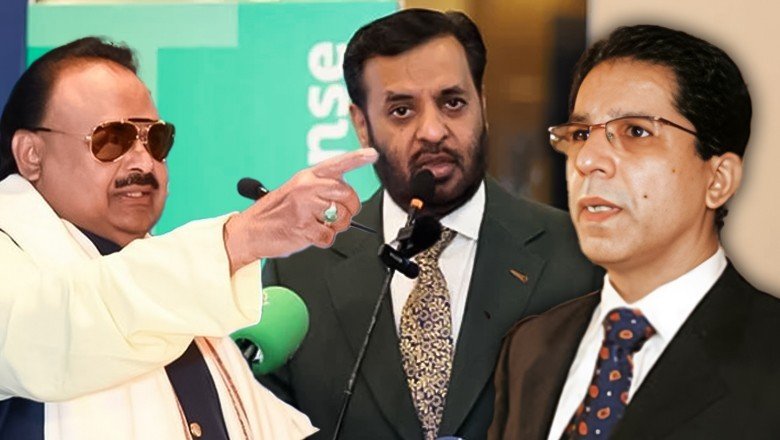
KARACHI: In a dramatic escalation of Karachi’s political fault lines, Mustafa Kamal has accused MQM founder Altaf Hussain of orchestrating the 2010 murder of senior party leader Dr Imran Farooq in London. The allegations, delivered at a fiery press conference, have reignited one of Pakistan’s most haunting political controversies and reopened wounds within the MQM’s fractured ranks.
A Murder That Shook MQM
Dr Imran Farooq, a founding member of MQM and one of its ideological architects, was brutally killed outside his London home on September 16, 2010. The attack, carried out with knives and a brick, stunned MQM supporters worldwide and cast a long shadow over the party’s leadership. For years, the case has lingered unresolved in the public imagination, with Scotland Yard investigations complicated by political sensitivities and factional rivalries.
Mustafa Kamal’s Explosive Allegations
Mustafa Kamal, once MQM’s rising star and celebrated mayor of Karachi, claimed Altaf Hussain ordered the killing while intoxicated, describing it as a “birthday gift.” He alleged MQM-London was bankrolled by India’s RAW, even claiming funds were recovered from Altaf’s residence.
“These were not isolated crimes,” Kamal said. “They were part of a system where loyalty was enforced through fear, and dissent was silenced through violence.”
His remarks coincided with renewed attention following the death of Dr Farooq’s widow, Shumaila, which Kamal linked to alleged exploitation and fundraising theatrics by MQM-London.
Wall Chalking Campaign Targets Kamal
As Mustafa Kamal’s accusations reverberated across Karachi, the city’s walls became canvases of retaliation. Fresh wall chalking appeared in multiple neighborhoods, cursing him in highly offensive language and branding him a traitor. The harsh slogans, scrawled in bold paint, reflected the anger of Altaf loyalists and underscored the raw emotions still tied to MQM’s fractured identity.
Such wall chalking has long been a hallmark of Karachi’s political battles, where slogans often serve as weapons in factional wars, leaving ordinary citizens caught between rival narratives.
MQM’s Fractured History
Mustafa Kamal’s accusations carry weight given his long association with MQM. Joining the party in the 1980s, he rose through its ranks to become Sindh’s IT minister and later Karachi’s mayor (2005–2010), earning praise for infrastructure projects and urban reforms. He later served as senator before breaking away to form the Pak Sarzameen Party (PSP) in 2016, only to rejoin MQM-Pakistan in 2023.
His trajectory—from insider to critic and back again—gives his words both credibility and controversy. MQM-London leaders have dismissed his claims as politically motivated, accusing him of acting at the behest of “masters pulling strings.”
Why Now?
Analysts suggest Mustafa Kamal’s timing is deliberate. The death of Shumaila Imran has revived public memory of the Farooq case, while MQM-Pakistan seeks to consolidate its position against Altaf’s loyalists abroad. By linking the murder to systemic violence and foreign funding, Kamal is attempting to reshape MQM’s narrative and delegitimize Altaf’s lingering influence.
The allegations also highlight the enduring scars of Karachi’s political violence, where unresolved murders and factional battles continue to shape the city’s fragile democratic fabric.
Human Impact
For MQM supporters, the accusations reopen painful memories of a party once seen as a vehicle for urban empowerment but now synonymous with internal purges and factional strife. For Karachi’s citizens, the story is a reminder of how political violence has robbed communities of leaders, fractured trust, and left wounds that remain unhealed.
Conclusion
Mustafa Kamal’s accusations against Altaf Hussain are more than a political broadside; they are a reckoning with MQM’s past. Whether these claims lead to renewed investigations or remain part of Karachi’s contested political theatre, the Imran Farooq murder case continues to haunt Pakistan’s political conscience — now echoed not only in press conferences but on the walls of Karachi itself.
Read related news here: https://thepublicpurview.com/pakistan/
For more stories and insights, visit The Green Post
Sources: Pakistan Today, National Times, The Nation/MSN, The Express Tribune, Wikiwand/Wikipedia



 Today's E-Paper