
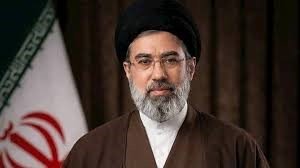
Mojtaba Khamenei has been named Iran’s new supreme leader following the death of his father, Ayatollah Ali Khamenei, according to an announcement by Iranian state television early Monday.
The leadership change comes less than two weeks after Ayatollah Ali Khamenei was killed in an Israeli strike in Tehran, marking a major shift in Iran’s political structure during a period of heightened regional conflict.
Iranian state TV said Mojtaba Khamenei was selected by the Assembly of Experts, an 88-member clerical body responsible for appointing the country’s supreme leader. The announcement said he received strong support in the vote and called on the public to unite behind the new leader.
Mojtaba Khamenei, 56, had long been viewed as a potential successor to his father despite never holding an elected government position. Known for maintaining a low public profile, he now assumes the most powerful office in Iran’s political system.
As supreme leader, he will have final authority over key state institutions, including the military and the Islamic Revolutionary Guard Corps, and will influence major strategic and foreign policy decisions.
This is only the second leadership transition in the role since the 1979 Islamic Revolution. Ayatollah Ali Khamenei held the position for 37 years after succeeding the Islamic Republic’s founding leader, Ayatollah Ruhollah Khomeini.
Iranian President Masoud Pezeshkian described the appointment as an important step toward maintaining national unity during a time of conflict and political uncertainty.
Regional tensions continue to rise
The leadership change comes amid an ongoing regional conflict involving Iran, Israel and several other countries.
Officials say the war has resulted in significant casualties across multiple countries. Iranian authorities report more than 1,200 deaths in Iran, while officials say at least 397 people have been killed in Lebanon and 11 in Israel.
Several Gulf states have also reported missile and drone strikes during the conflict. Bahrain accused Iran of striking a desalination plant that supplies drinking water, while Saudi Arabia reported civilian casualties after a projectile hit a residential area.
Meanwhile, fighting between Israeli forces and the Iran-backed militant group Hezbollah has displaced hundreds of thousands of people in Lebanon. Lebanese officials say more than 500,000 residents have been forced to leave their homes since the latest escalation began.
Strategic transition in Iran’s leadership
The appointment of Mojtaba Khamenei places him at the center of Iran’s political and military decision-making during a period of intense regional tension.
Analysts say the new supreme leader will oversee Iran’s military forces and the country’s nuclear program, as well as broader strategic policy decisions that shape relations with regional and global powers.
The leadership transition is being closely watched internationally as Iran navigates ongoing conflict and diplomatic pressure.

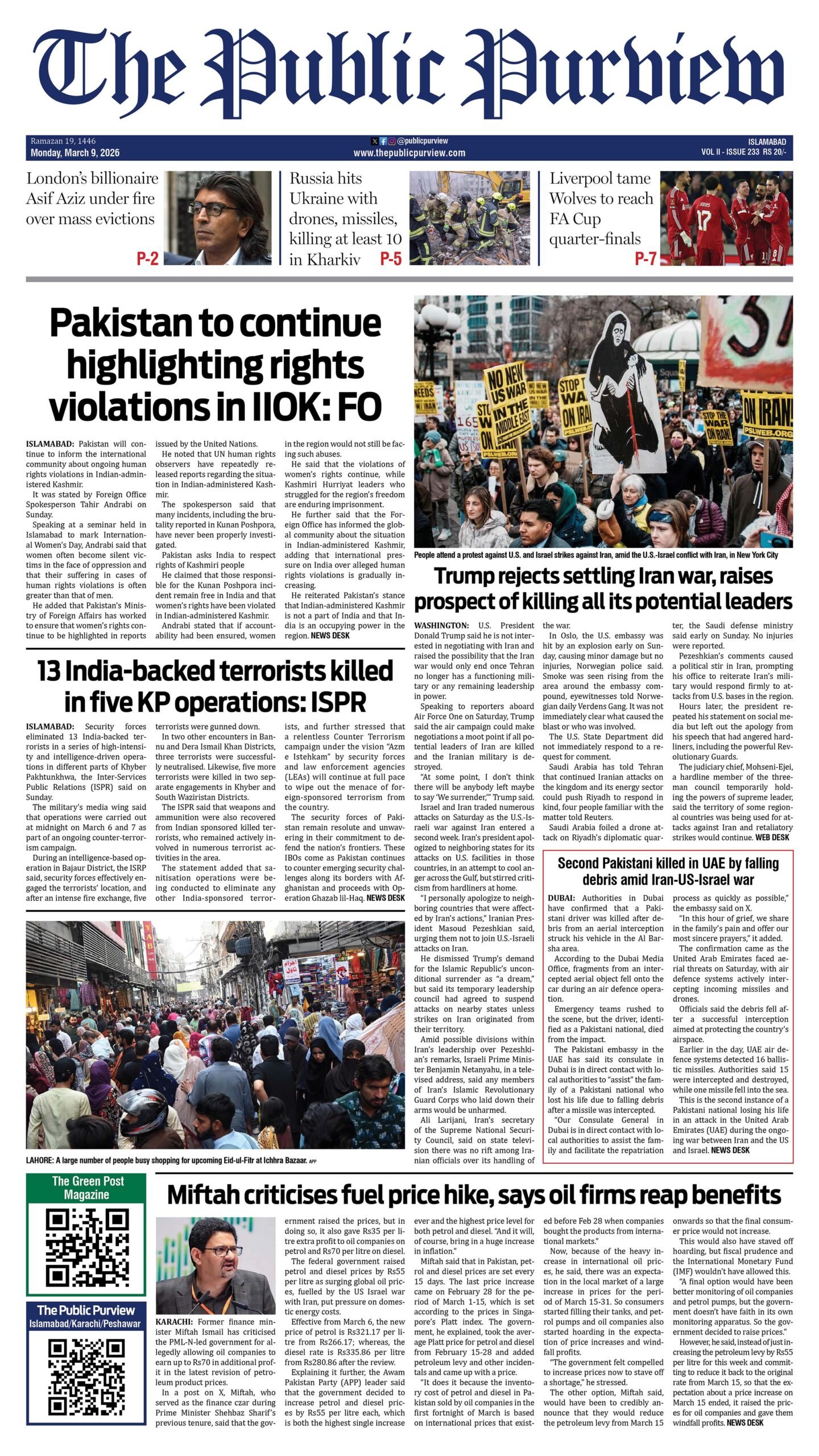 Today's E-Paper