
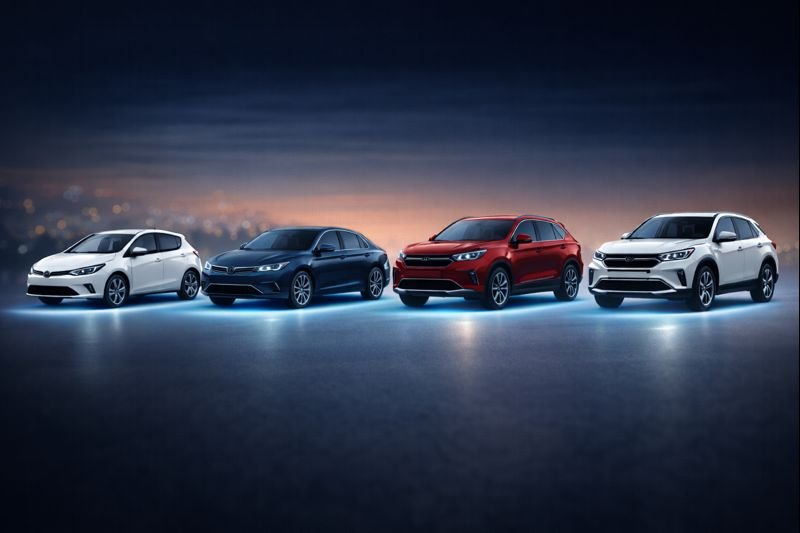
Plug-in hybrid cars are now offering electric-only driving ranges that were once associated exclusively with full battery electric vehicles (EVs), reshaping how buyers compare electrified options. For drivers who want daily electric driving without range anxiety, the latest generation of plug-in hybrids delivers significantly longer battery range than earlier models.
Once limited to around 30km of electric travel, today’s longest-range plug-in hybrids can exceed 100km—and in some cases far more—on a single charge, depending on the testing standard used. Below is a brand-by-brand look at plug-in hybrid models offering the longest claimed electric range.
Plug-in hybrid cars with the longest electric range
| Rank | Model | Vehicle type | Claimed electric range | Battery capacity | Charging capability | Key notes |
|---|---|---|---|---|---|---|
| 1 | Lotus Eletre (PHEV, upcoming) | Large SUV | 345 km (220 miles) | 70 kWh | AC / DC (market-dependent) | Range based on China’s CLTC cycle; significantly higher than WLTP |
| 2 | Omoda 9 | SUV | 149 km (93 miles) | 34.5 kWh | AC charging | Claimed total range exceeds 1,100 km |
| 3 | Chery Tigo 9 | SUV | 148 km (92 miles) | 34.5 kWh | DC fast charging (71 kW) | 30–80% charge in ~18 minutes |
| 4 | Audi A3 | Hatchback | 141 km (88 miles) | 19.7 kWh | DC fast charging (50 kW) | Among longest-range PHEV hatchbacks |
| 5 | Volkswagen Golf | Hatchback | 141 km (88 miles) | 19.7 kWh | DC fast charging | Shares platform and battery with Audi A3 |
| 6 | Skoda Superb Estate | Estate | 133 km (84 miles) | 25.7 kWh | DC fast charging (50 kW) | Combines long range with large cargo space |
| 7 | Volkswagen Passat | Saloon | 131 km (82 miles) | 25.7 kWh | DC fast charging | Boot space remains largely unaffected |
| 8 | Seat Leon | Hatchback | 131 km (82 miles) | 25.7 kWh | DC fast charging | Compact alternative with strong range |
| 9 | BYD Seal U DM-i | SUV | 125 km (78 miles) | 26.6 kWh | AC / DC charging | Claimed combined range over 1,100 km |
| 10 | Cupra Formentor | Crossover | 125 km (78 miles) | 19.7 kWh | DC fast charging | Performance-oriented PHEV |
| 11 | Volkswagen Tiguan | SUV | 123 km (77 miles) | 19.7 kWh | DC fast charging | Mechanically identical to Skoda Kodiaq |
| 12 | Skoda Kodiaq | SUV | 123 km (77 miles) | 19.7 kWh | DC fast charging | Larger body, same drivetrain as Tiguan |
| 13 | Mercedes-Benz GLC | Premium SUV | 120 km (75 miles) | 31 kWh | AC / DC charging | Focus on comfort and efficiency |
| 14 | Volkswagen Tayron | SUV | 120 km (75 miles) | 19.7 kWh | DC fast charging | PHEV version loses seven-seat option |
| 15 | MG HS | SUV | 120 km (75 miles) | 25 kWh | AC charging | One of the most affordable long-range PHEVs |
| 16 | Range Rover | Luxury SUV | 117 km (73 miles) | 38.2 kWh | AC / DC charging | Six-cylinder petrol + large battery |
| 17 | Range Rover Sport | Luxury SUV | 117 km (73 miles) | 38.2 kWh | AC / DC charging | Higher performance tuning |
| 18 | Mercedes-Benz C300e | Saloon / Estate | 109 km (68 miles) | 25.4 kWh | DC fast charging | One of the longest-range PHEV saloons |
Why electric range now matters
With electric-only ranges now covering most daily commutes, many plug-in hybrids can operate as electric cars for routine driving while retaining petrol power for long journeys. As battery sizes continue to grow, the gap between long-range plug-in hybrids and entry-level EVs is narrowing, giving buyers more flexibility when choosing their next car.





 Today's E-Paper