
By Farooq Awan
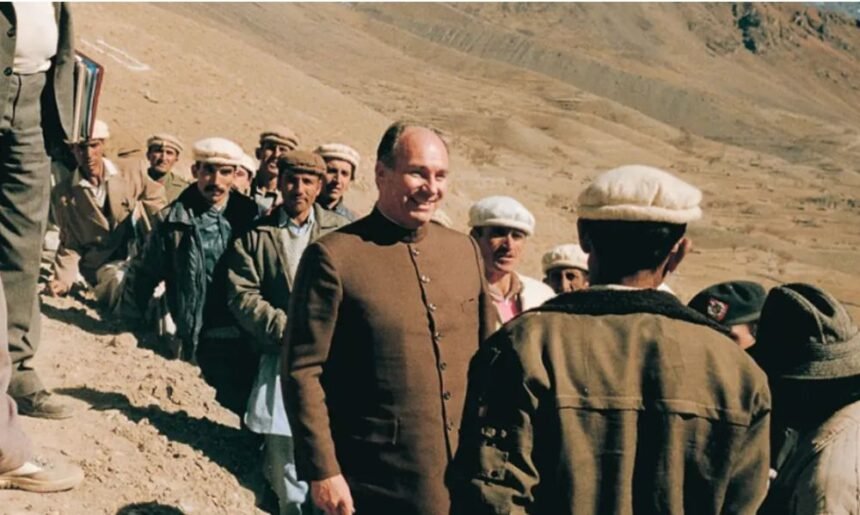
His Late Highness Prince Karim al-Hussaini Aga Khan IV will be remembered with deep respect for a lifetime devoted to service, compassion and human development. He dedicated more than six decades to improving lives. He guided his community with care and worked for the welfare of vulnerable people across the developing world.
For 67 years, he served as the spiritual leader of the Shia Ismaili Muslims. At the same time, he acted as a humanitarian and development leader. He linked faith with action and values with institutions. As a result, millions gained access to education, healthcare, electricity and economic opportunity. His passing on 4 February 2025 in Lisbon, Portugal, at the age of 88, marked the end of an extraordinary era of service.
At the heart of his work was a clear commitment. He sought to interpret the faith for the Ismaili Muslim community. He also aimed to improve the quality of life of the people among whom they lived. Guided by the ethical principles of Islam, he built institutions that served humanity without discrimination of faith, race, ethnicity or gender. This approach shaped both his spiritual leadership and his development philosophy.
Early life and education
Prince Karim Aga Khan IV was born on 13 December 1936 in Geneva. He was the eldest son of Prince Aly Khan and Princess Tajuddawlah, née Joan Yarde-Buller. He spent his early childhood in Nairobi, Kenya. Later, he studied at the Institut Le Rosey in Switzerland. He graduated from Harvard University in 1959 with a Bachelor of Arts degree with honours in Islamic history. This education prepared him for the responsibilities he would soon assume.
Becoming the Imam
On 11 July 1957, at the age of 20, he succeeded his grandfather, Sir Sultan Mahomed Shah Aga Khan III. He became the 49th hereditary Imam and spiritual leader of the Ismaili Muslim community. He then led the community for the next 67 years, a period marked by major global and social change.
In the same year, Her Majesty Queen Elizabeth II granted him the title “His Highness,” following the tradition established for earlier Aga Khans. The hereditary title “Aga Khan,” meaning “Commanding Chief,” dates back to the 19th century Persian monarch Fath Ali Shah.
As Imam, he guided his community in both spiritual and material matters. He believed these two aspects of life were connected and complementary. The Shia Imami Ismaili Muslims, commonly known as Ismailis, belong to the Shia branch of Islam. They number about 12 to 15 million people and live in more than 35 countries. Under his leadership, they embraced pluralism, built bridges of peace and contributed to the societies in which they lived.
Aga Khan Development Network
One of his most significant achievements was the establishment of the Aga Khan Development Network (AKDN). Guided by Islamic ethical principles, he created this network to improve living conditions and opportunities in some of the poorest and most vulnerable regions of the developing world.
The AKDN is a group of private, international and non-denominational agencies. Today, it employs approximately 96,000 people and operates in 30 countries. Its work covers education, healthcare, rural development and culture in the not-for-profit sector. It also works in financial services, infrastructure, telecommunications, industry and tourism.
The Network’s impact is wide and measurable. Each year, it generates electricity for 10 million people. It provides healthcare to 5 million people. It educates 2 million students. In addition, it hosts 5 million visitors at its parks and gardens.
The AKDN includes two universities, more than 200 schools and over 700 health facilities. These institutions show his belief that lasting progress requires strong systems and long-term partnerships with governments and communities.
Commitment to education and culture
Education remained one of his highest priorities. In 1983, he established the Aga Khan University as Pakistan’s first private, internationally chartered university. The university houses leading faculties in medicine, nursing and education. He later founded the University of Central Asia in partnership with regional governments to support social and economic development, especially in high mountain societies. Through these initiatives, he expanded access to quality education and professional training.
He also valued culture and heritage. Through the Aga Khan Trust for Culture, he established the Aga Khan Museum in Toronto, dedicated to Muslim civilisations. He founded the Aga Khan Award for Architecture, which distributes prizes totalling US$1 million every three years. The award recognises excellence in architecture, planning, preservation and landscape design. These efforts reflected his view that culture and heritage are essential to human dignity.
Personal interests and recognition
Beyond his institutional work, he maintained several personal interests. He was an accomplished competitive skier and represented Iran in the 1964 Winter Olympics. Continuing a family tradition, he became the owner and operator of one of the world’s most successful horse racing and breeding operations. He also pursued a lifelong passion for yachting and helped found the Yacht Club Costa Smeralda, which promotes ocean conservation and marine preservation.
Because of his contributions to human development, he received numerous decorations, honorary degrees and awards from institutions and nations around the world. In 2018, at the invitation of the Government of Portugal, he established the Diwan of the Ismaili Imamat in Lisbon as the global headquarters of the Imamat.
A lasting legacy
His Late Highness Prince Karim Aga Khan IV’s life stands as a clear example of faith in action. He combined spiritual guidance with practical development work. He built institutions that continue to serve millions of people. His legacy of service, compassion and human development will endure for generations to come.




 Today's E-Paper