
The Khyber Pakhtunkhwa government has launched a province-wide initiative to identify and bring out-of-school children back into the education system, with officials estimating that around 2.6 million children are currently not attending school.
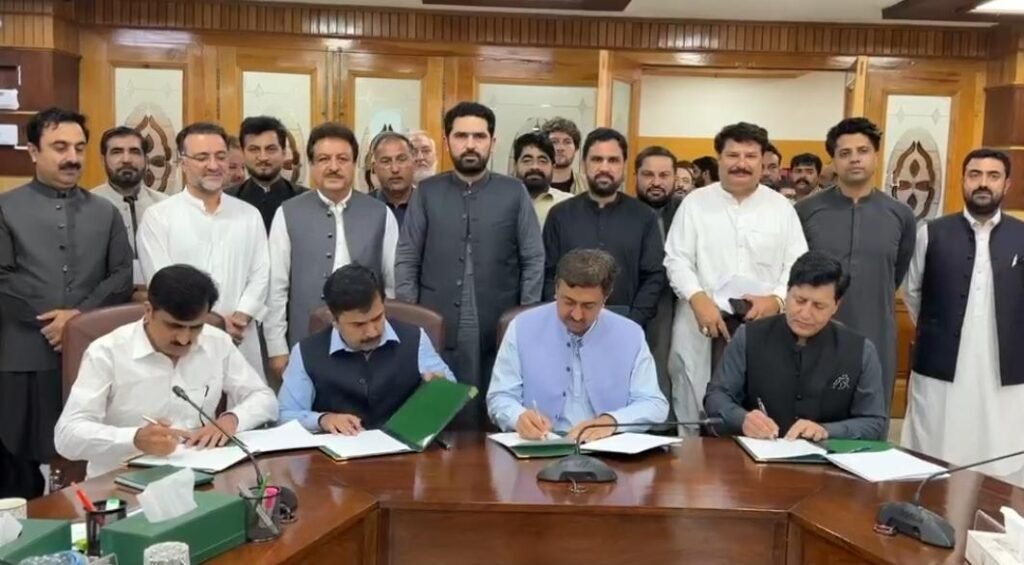
In the presence of Chief Minister Khyber Pakhtunkhwa Muhammad Sohail Khan Afridi, a Memorandum of Understanding (MoU) was signed between the Elementary & Secondary Education Department, Local Government Department, Health Department and Social Welfare Department to coordinate efforts under the initiative.
Door-to-Door Survey to Identify Out-of-School Children
The programme will begin with a door-to-door census and comprehensive survey across the province to determine the exact number, locations and educational needs of children who are currently out of school.
Officials briefed the chief minister that a “One Map” system will be developed to consolidate and map accurate data on out-of-school children, helping authorities plan targeted interventions.
According to the briefing, the 2023 census estimates that approximately 4.9 million children aged between five and 16 live in Khyber Pakhtunkhwa. The Education Department estimates that around 2.6 million children in this age group are currently out of school.
The government has set an initial target of enrolling 60 percent of these children in schools during the first phase of the programme.
Schools, Digital Learning and Vocational Training
The government will also collect data on children aged zero to five to help authorities anticipate future educational requirements and improve long-term planning.
A range of education models will be used to accommodate children, including government schools, double-shift schools, community schools, digital learning platforms and public-private partnerships.
Children who left school because of poverty will be supported through scholarships, Zakat and other social assistance programmes.
For young people aged 14 to 16, the initiative will provide technical and vocational training through the United Nations-backed Generation Unlimited programme, offering an alternative pathway for skills development.
Data Verification and Attendance Conditions
Provincial and district-level steering committees will oversee implementation of the programme.
To improve transparency and ensure the reliability of the survey, an independent organization will verify 5 percent of the collected data.
Scholarship payments will also be linked to a minimum 75 percent attendance requirement, encouraging beneficiaries to remain enrolled and regularly attend school.
The KP government says the initiative is guided by the objective that no child should remain out of school, every child should have access to education, and every young person should have an opportunity to build a better future.
Also Read :