
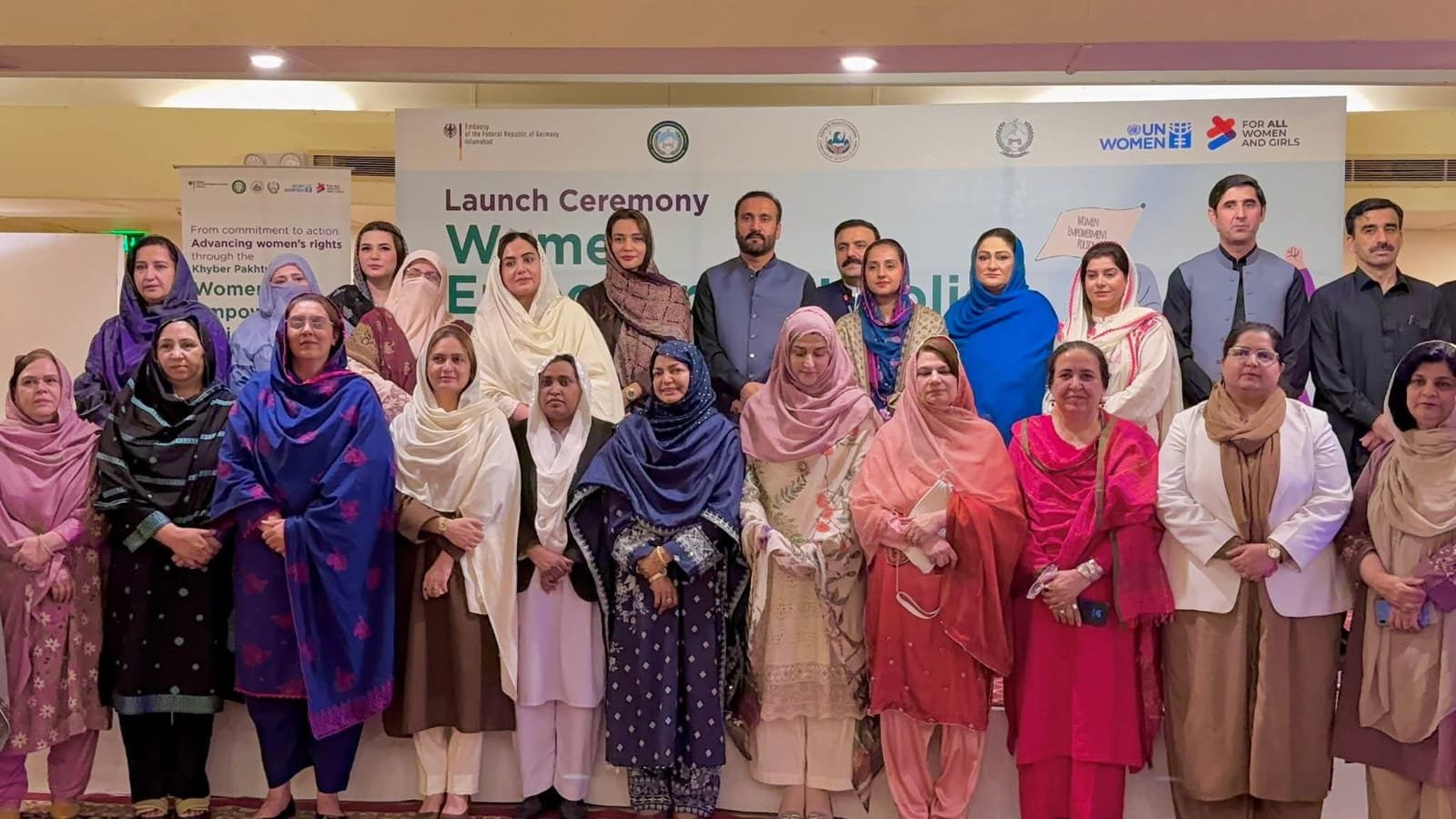
PESHAWAR — The Khyber Pakhtunkhwa government, in collaboration with UN Women, has launched a five-year Women Empowerment Framework (2026–2030) aimed at strengthening gender equality and improving opportunities for women across the province.
The policy was formally introduced at a provincial event in Peshawar organized by the Khyber Pakhtunkhwa Commission on the Status of Women, reaffirming the government’s commitment to gender-responsive governance and inclusive development.
Officials said the framework seeks to improve women’s access to justice, education, healthcare and economic opportunities, while also increasing women’s participation in decision-making processes.
Focus on inclusive development
The policy was developed through consultations led by the Social Welfare and Women Empowerment Department and the KP Commission on the Status of Women, with technical assistance from UN Women under the Germany-funded Gender Parity Project.
The launch event was attended by government officials, members of the provincial assembly, civil society representatives, academics, private sector leaders and development partners.
Provincial Minister for Law and Parliamentary Affairs Aftab Alam said the Women Empowerment Framework represents the provincial government’s commitment to protecting the rights and dignity of women and ensuring equal opportunities.
He said the government would support the framework through legislation, institutional coordination and allocation of resources to ensure effective implementation.
Implementation and monitoring
Chairperson of the KP Commission on the Status of Women Dr. Sumera Shams said the commission would work with relevant departments and stakeholders to ensure transparent and accountable implementation of the policy.
Officials noted that the framework also addresses key challenges such as gender disparities and the needs of merged districts in the province.
UN Women representatives described the policy as an important step toward advancing Sustainable Development Goal 5 and strengthening gender-responsive governance.
The launch ceremony concluded with a panel discussion involving experts from social, legal, economic, digital and climate sectors, who presented recommendations for implementing the framework through coordinated departmental strategies and monitoring mechanisms.




 Today's E-Paper