
The assassination of Iran’s Supreme Leader Ayatollah Ali Khamenei and members of his family in Tehran marks a turning point in global politics and international law. By carrying out this act, the United States and Israel have crossed a line that few states have dared to approach, setting a precedent that undermines the very foundations of sovereignty and diplomacy. The killing of the head of a sovereign state is not merely a military strike; it is a direct assault on the principles that govern relations between nations. In choosing this path, Washington and Tel Aviv have demonstrated a disregard for conventions that were designed to prevent precisely such destabilizing actions.
Ayatollah Khamenei had been at the helm of Iran since 1989, guiding the country through the aftermath of the Iran-Iraq war, enduring decades of sanctions, and navigating persistent tensions with the West. His leadership was central to Iran’s political and religious identity, and his assassination has left a vacuum that cannot easily be filled. The interim governing council now in place suggests that Iran anticipated such a scenario, but the loss of its supreme leader has nonetheless shaken the nation and reverberated across the Muslim world.
The ayatollah was not only a political figure but also a spiritual guide for millions of Muslims worldwide. His influence extended far beyond Iran’s borders, with many in Pakistan and elsewhere following his religious edicts. The protests that erupted after his death were therefore inevitable, reflecting both grief and outrage. In Pakistan, demonstrations turned violent, with tragic incidents at the US consulate in Karachi and further unrest in Islamabad. These events highlight the depth of the emotional and religious connection between communities here and the late Iranian leader.
Meanwhile, the military confrontation continues to escalate. Iran has launched retaliatory strikes, targeting US interests and facilities in the Gulf, while Israel and the United States press forward with their campaign. The danger lies not only in the immediate destruction but in the broader regional fallout. If Iran persists in striking neighboring countries, collateral damage will isolate it further, weakening its position and strengthening the narrative of its adversaries.
Restraint, though difficult in the face of such provocation, remains essential. Iran must channel its anger into diplomatic and political avenues, leveraging international forums to expose and condemn the violation of its sovereignty. Resorting to indiscriminate retaliation risks alienating allies and undermining its moral standing. The Global South, particularly Muslim-majority states, must recognize the gravity of this moment. They should stand in solidarity with Iran, condemning the aggression in clear terms, not only to defend one nation’s sovereignty but to safeguard their own futures.
History has shown that attempts at regime change imposed from outside rarely succeed. They leave behind fractured societies, prolonged instability, and humanitarian crises. The people of a nation must decide their own destiny, free from external coercion. By assassinating Khamenei, Washington and Tel Aviv have not secured peace or stability; they have ignited chaos that will spread across the Middle East and beyond. Accountability must be demanded, for unchecked adventurism of this kind threatens to erode the fragile order that holds the international system together.
Khamenei assassination sparks chaos

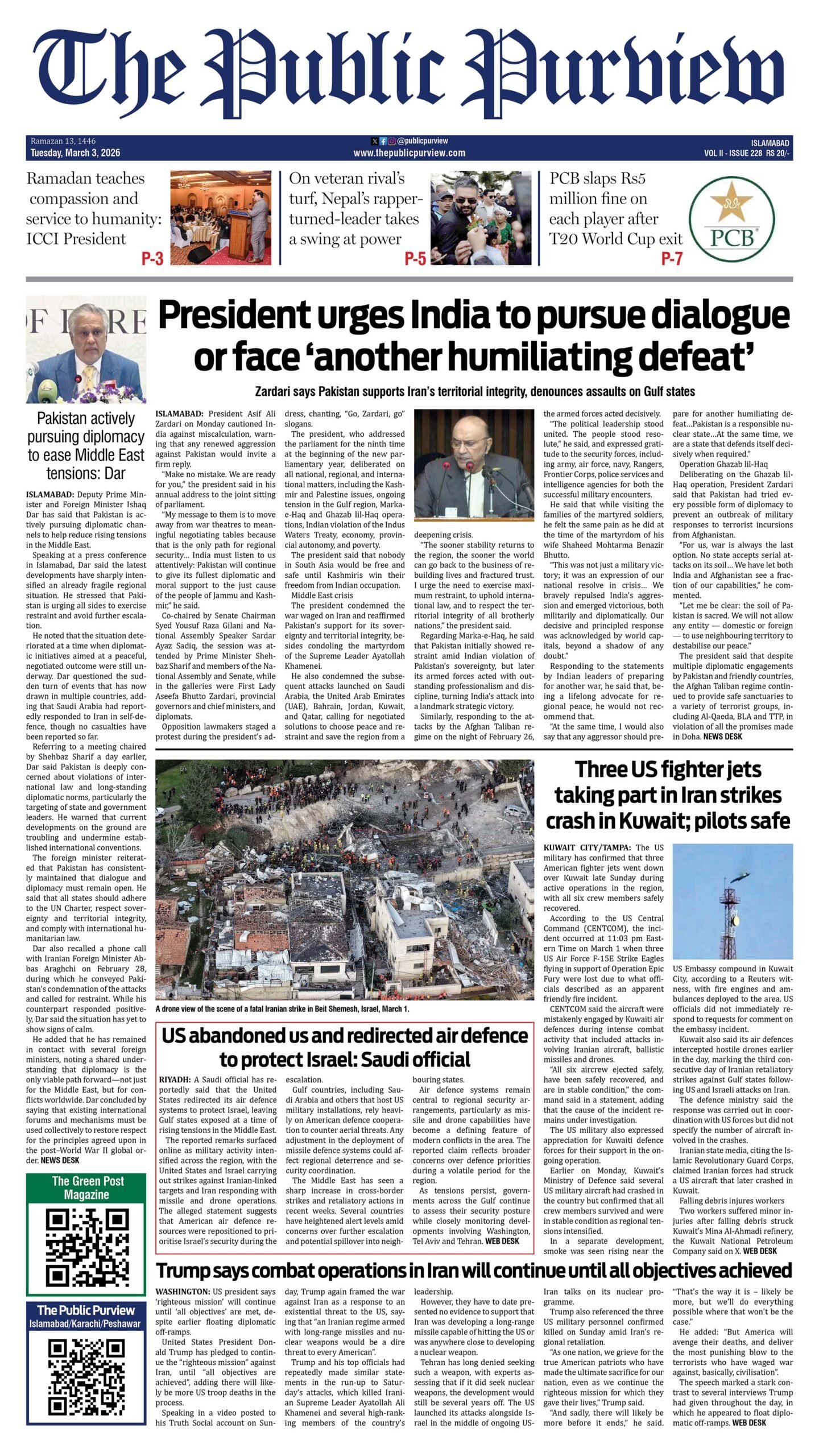 Today's E-Paper