
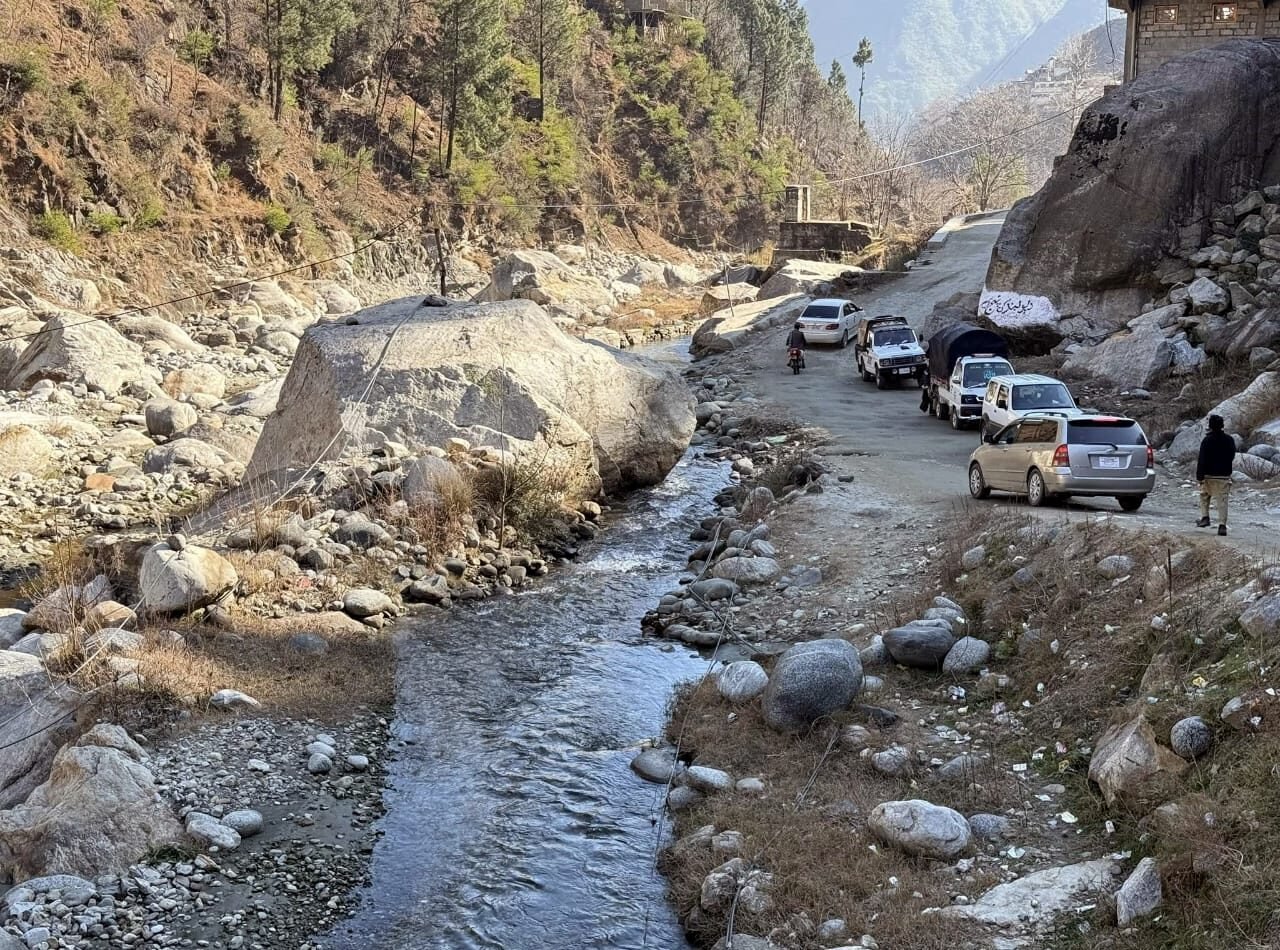
Shangla: The multi-billion-rupee Karora–Ajmer road project in Shangla district has remained incomplete years after its launch, with residents alleging prolonged delays, substandard construction, and a lack of effective oversight despite official timelines showing continued progress.
The concerns have intensified as the World Bank-funded project, valued at Rs1.98 billion, approaches its scheduled completion date of March 18, 2026, according to information displayed on a project signboard installed at the site.
The 28-kilometre road, which serves as the main transportation artery for Tehsil Kana Valley, was envisioned as a modern and safe link for local communities. However, residents say less than half of the work has been completed and that construction activity has remained largely suspended for several months.
Residents cite stalled work and deteriorating road conditions
Local residents report that heavy machinery and labour were removed from the site long ago, leading to prolonged stagnation. They also allege that the quality of construction materials used in protection walls, retaining structures, and embankments does not meet basic engineering standards.
Wedding vehicle plunges into ravine in Swat, two children killed, five injured
According to residents, several sections of the road have already begun to deteriorate or collapse, with loose gravel and unfinished stretches creating serious difficulties during rainfall and periods of heavy traffic. The road is the only major route for thousands of commuters, including patients, students, traders, and commercial vehicles.
Residents say the deteriorating condition of the road has disrupted access to healthcare, education, and markets, adversely affecting daily life and economic activity in the region.
Demands grow for official and third-party investigations
Affected citizens claim that repeated appeals to the district administration and relevant departments have produced no tangible response. Public concern has also grown over what residents describe as official inaction, raising questions about monitoring and accountability.
Sources have alleged attempts to downplay the situation through influence on local figures and activists. These claims, however, remain unverified and residents are calling for impartial investigations to establish facts and responsibility.
Given that the project is financed by the World Bank, civil society groups and residents have urged the lender to review the project’s implementation and ensure that funds are used for their intended purpose. They have also demanded inquiries by the National Accountability Bureau, the Chief Minister’s Inspection Team, and the Governor’s Inspection Team.
Residents have warned that if the pace and quality of construction do not improve, they will pursue legal and constitutional remedies to protect public safety and their rights.
Once seen as a gateway to regional development and improved connectivity, the Karora–Ajmer road project is increasingly viewed by locals as a test of governance, oversight, and accountability.




 Today's E-Paper