

KARACHI: Residents of the country’s financial hub woke up to deteriorating air quality on Tuesday, making Karachi the world’s most polluted city this morning.
According to Swiss air quality monitor IQAir, the city’s Air Quality Index (AQI) value reached 237, a level classified by the group as “very unhealthy”.
The concentration of toxic pollutants PM2.5 – fine particles small enough to be inhaled into the bloodstream – was measured at 162 µg/m³, 32.4 times higher than World Health Organization (WHO) guidelines.
Deterioration in air quality can be a result of cold weather in the city, as smog and air pollution problems are common in winter when cooler temperatures trap dust particles closer to the ground.
The minimum temperature in Karachi was recorded at 10.5 degrees Celsius in the last 24 hours, Pakistan Meteorological Department (PMD) data showed. The mercury is expected to hover between 9°C and 11°C during the next day.
The Met Office said that with humidity levels of 41% along with north-easterly winds of 8 to 10 kilometers per hour, the maximum temperature is expected to remain between 25 and 27C.
However, the correlation between cold weather and poor air quality is not limited to Karachi, as Punjab’s capital Lahore is also ranked as the fifth most polluted city with an “unhealthy” AQI of 194.
Bangladesh’s capital Dhaka (210) is in second place, followed by China’s Wuhan (208) and Delhi (204) fourth.
Every winter, a mix of low-grade fuel emissions from factories and vehicles, compounded by seasonal crop burning by farmers, blanket parts of Punjab trapped by colder temperatures and slow-moving winds.
The smog situation is spreading to other cities of the country, including Karachi.
Breathing toxic air has disastrous health consequences, with the WHO warning that strokes, heart disease, lung cancer and respiratory diseases can be triggered by prolonged exposure.





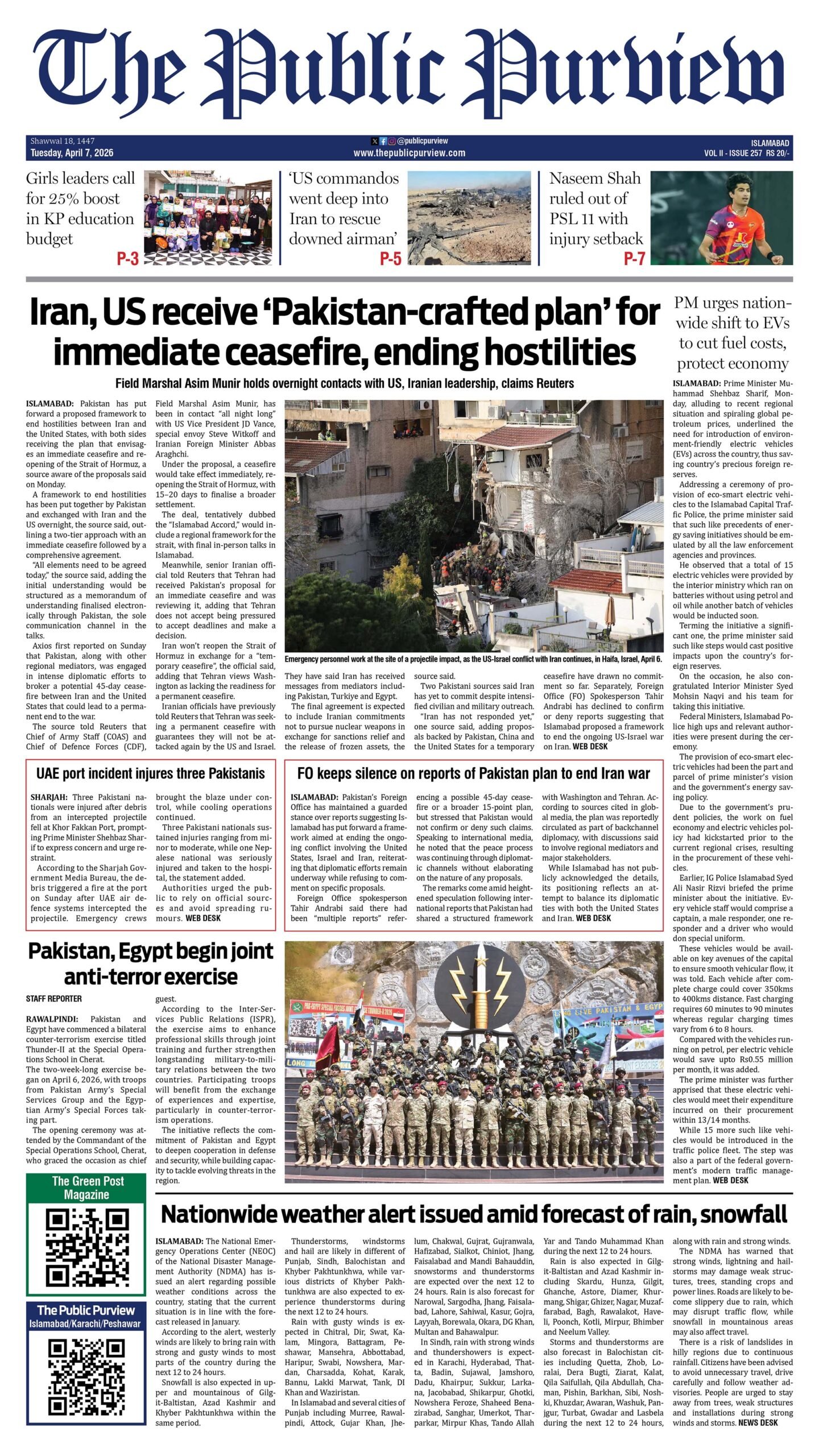 Today's E-Paper