
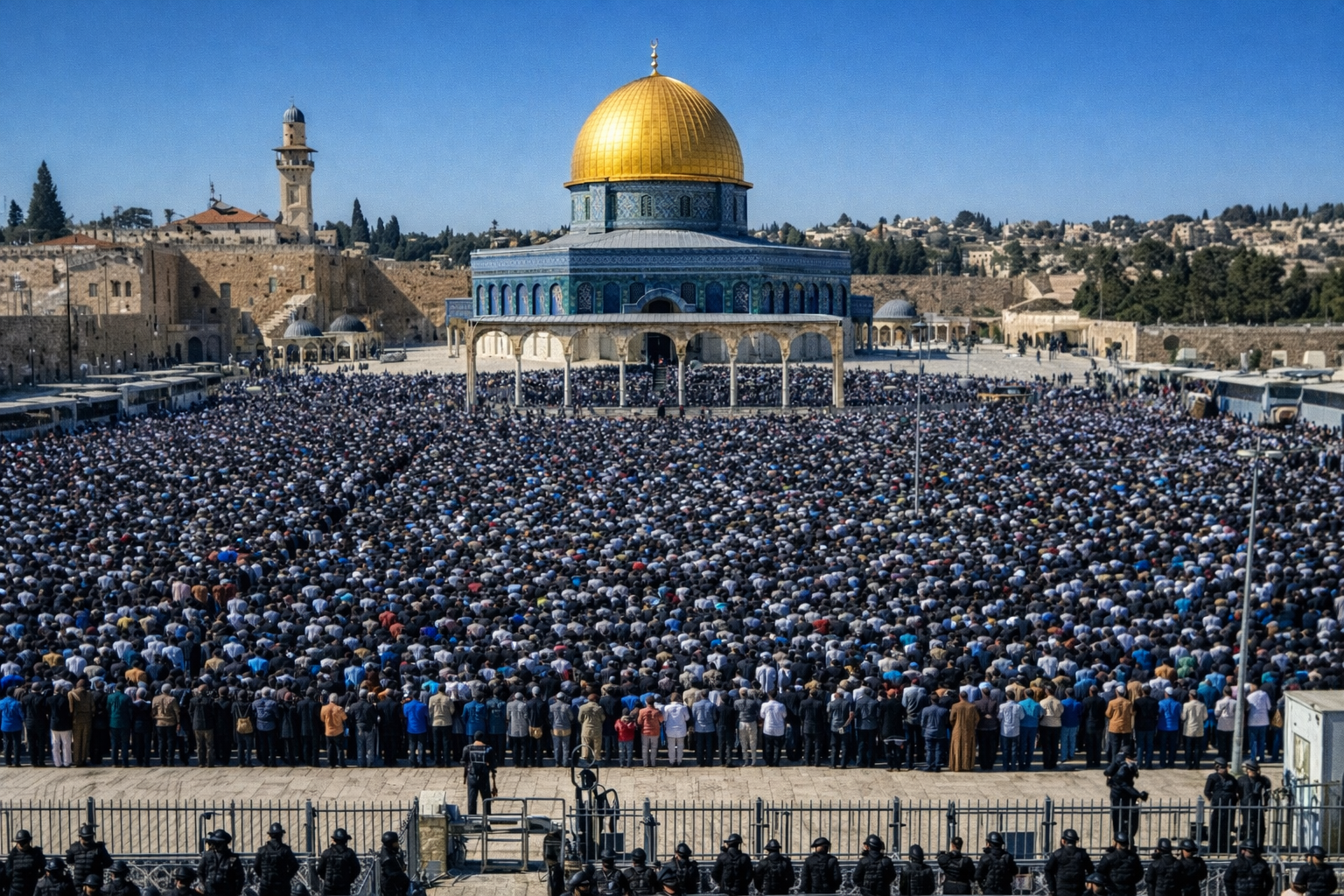
Jerusalem — Israeli authorities have limited Palestinian access to the Al-Aqsa Mosque compound for the first Friday prayers of Ramadan, allowing only 10,000 permit holders from the occupied West Bank to enter East Jerusalem, according to official statements. The move significantly reduces attendance compared with previous years, when hundreds of thousands gathered at the site.
The restrictions apply to Palestinians from the West Bank and require special permits. Only children under 12, men over 55 and women aged 50 or older are eligible to enter under the current measures, Israeli officials said. Access is being controlled through military checkpoints, including Qalandiya near Ramallah.
By Friday morning, Israeli media reported that roughly 2,000 Palestinians had crossed through Qalandiya toward Jerusalem, amid heightened security at crossings between the West Bank and East Jerusalem. Later, the Palestinian news agency Wafa cited local officials as saying Israeli authorities claimed the daily entry quota had been filled.
Crowds at checkpoints
Hundreds of Palestinians were seen waiting at checkpoints in hopes of reaching the mosque compound, one of Islam’s holiest sites. In previous Ramadan Fridays, attendance at Al-Aqsa has reached up to 250,000 worshippers, according to past estimates.
Israeli authorities said the restrictions were part of broader security measures during the holy month. The first Friday of Ramadan traditionally draws large crowds for congregational prayers and communal iftar gatherings.
Rising tensions in the West Bank
The new limits come amid heightened tensions in the occupied West Bank and East Jerusalem. Palestinian officials, human rights groups and the United Nations have reported an increase in violence involving Israeli settlers and security forces since 2023.
According to the UN Office for the Coordination of Humanitarian Affairs (OCHA), more than 1,100 Palestinians have been killed in the West Bank since 2023, and over 10,000 people have been displaced.
Earlier this week, Israel’s government approved measures expanding its designation of land in parts of the West Bank as “state property,” a move that drew criticism from more than 80 UN member states. International officials said such actions could affect prospects for a negotiated two-state solution.
The restrictions at Al-Aqsa during Ramadan add to ongoing disputes over access, security and sovereignty in East Jerusalem, an area that holds religious significance for Muslims, Jews and Christians.


 Today's E-Paper