
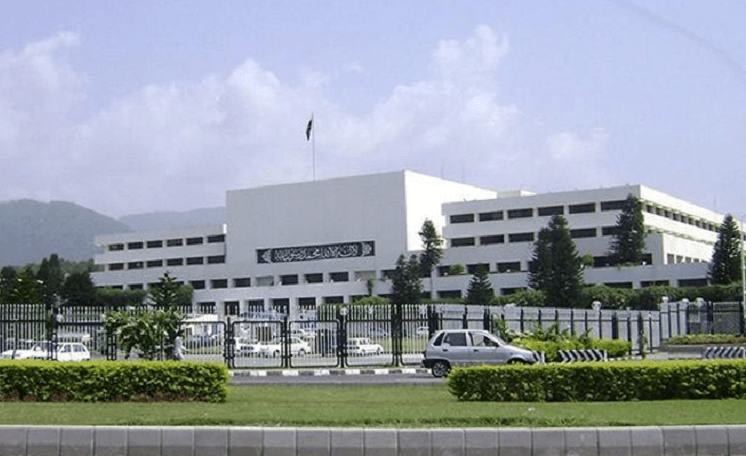
ISLAMABAD, September 24 — A major proposal to give Islamabad a province-like governance structure — including its own elected assembly, chief minister and greater financial autonomy — is set to take centre stage at a high-profile convention at the Islamabad Chamber of Commerce and Industry (ICCI) on September 25.
The “Islamabad Governance and Provincial Status Convention 2026” will bring together the business community, trade associations, bar councils, civil society, academics, professionals, residents and political representatives to debate the future administrative and constitutional structure of the federal capital. ICCI says the gathering is intended as a broad consultation rather than an endorsement of a particular political model.
Proposals being circulated ahead of the convention envisage a substantially different system of government for Islamabad, potentially giving residents an elected legislature and chief executive while restructuring the capital’s existing administrative arrangements.
According to material associated with the proposed Islamabad Charter 2026, the model calls for an elected Islamabad assembly and a chief minister who would be accountable to that legislature.
The proposals also seek greater administrative and financial authority for the capital and argue that revenue generated in Islamabad should be spent on the city rather than leaving its financial affairs dependent on arrangements designed for the provinces.
Another element calls for an integrated local government structure involving the Metropolitan Corporation Islamabad, Capital Development Authority and other relevant administrative bodies.
The charter material further proposes that elections for the new assembly and union councils should be held within 120 days under the supervision of the Election Commission of Pakistan if the proposed framework receives the necessary legal and constitutional approval.
The documents also refer to a separate high court for Islamabad. The Islamabad High Court already operates as the federal capital’s constitutional high court, meaning the precise intention behind that provision will require clarification when organisers present the detailed charter.
ICCI Says Islamabad’s Existing Governance Model Is No Longer Enough
ICCI President Sardar Tahir Mehmood has argued that Islamabad’s existing governance arrangements have failed to keep pace with the capital’s growth.
Announcing the September 25 convention, he said Islamabad’s population was approaching 2.5 million and residents lacked an effective elected forum through which they could demand accountability for sanitation, water, traffic, infrastructure, taxation and other municipal services.
He argued that Islamabad required more than an elected mayor and should have a chief executive directly accountable to elected representatives.
The convention comes amid a broader national debate over creating new provinces and administrative units in Pakistan.
Interior Minister Mohsin Naqvi has previously called for discussion on granting provincial status to Islamabad, arguing that residents of the federal capital do not receive a share under the National Finance Commission Award. He has said any such restructuring should have public support and take place within the constitutional framework.
However, Parliamentary Affairs Minister Tariq Fazal Chaudhry has said Islamabad is not currently being converted into a separate province and that work is instead underway on a new governance model for the capital. He has also said Parliament will debate the wider question of new provinces.
Rana Sanaullah Says Decision Belongs in Parliament
Prime Minister’s Adviser on Political Affairs Rana Sanaullah has taken a more parliament-centred position in the wider debate over new provinces.
Sanaullah has publicly said that Parliament, rather than seminars, conferences or other outside forums, is the proper place to decide whether new provinces should be created.
Speaking separately on the controversy this month, he said discussions at business seminars and conferences could not determine the outcome and argued that an issue of such constitutional importance should be debated by elected representatives. He said any final decision on the creation of a province would be made “in Parliament, and by Parliament.”
In remarks conveyed during a television discussion with senior anchor Hamid Mir, Sanaullah was also reported as questioning businessmen taking the lead on such constitutional proposals, arguing that those wishing to determine such matters should enter politics, secure representation and bring their proposals before Parliament.
That specific exchange has not been independently located in published reporting reviewed by The Public Purview, but Sanaullah’s broader position that Parliament is the constitutional forum for deciding the creation of new provinces is documented in multiple recent statements.
Proposal Could Put Islamabad Governance at Centre of National Debate
The September 25 convention does not itself have the authority to turn Islamabad into Pakistan’s newest province. Rather, it is expected to put forward a governance and provincial-status proposal for wider political and public consideration.
Any fundamental alteration to the constitutional status of the Islamabad Capital Territory would ultimately require action through Pakistan’s constitutional and parliamentary process.
The gathering nevertheless comes at a significant moment. The question of new provinces has returned to national politics in recent months, while competing ideas have emerged over whether Islamabad needs full provincial status, a province-like governance structure or a strengthened local government model.
The September 25 convention could provide the clearest indication yet of what Islamabad’s business and civic stakeholders want that future structure to look like — and whether the proposal can gain enough political support to move from a civic campaign to Parliament.