
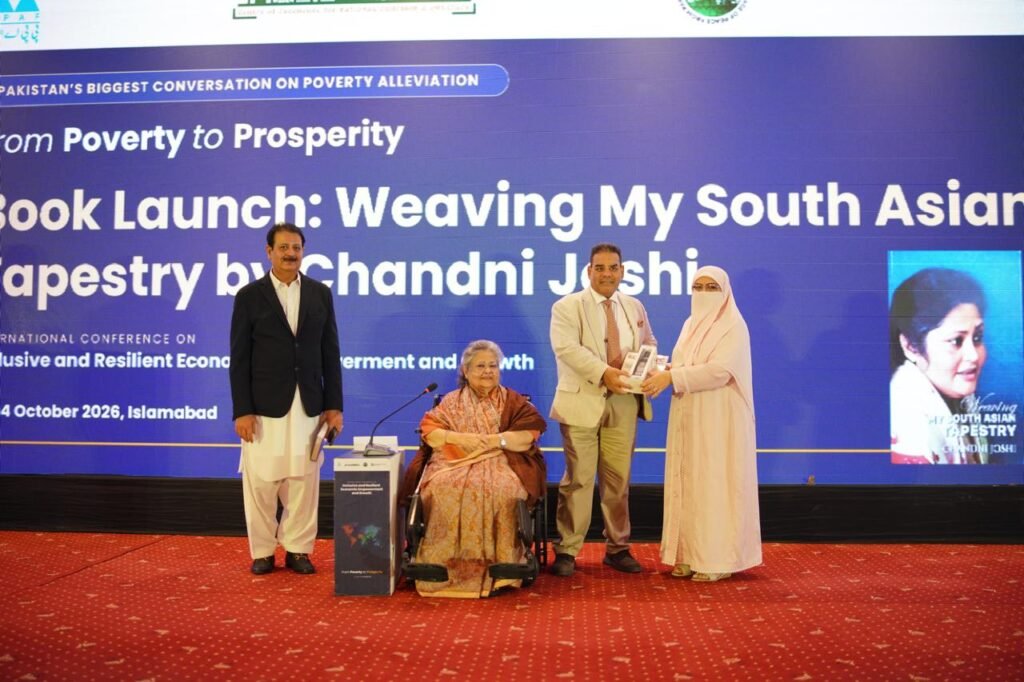
ISLAMABAD, November 5, 2026: An international conference in Islamabad has called for the introduction of a National Poverty Graduation Policy, urging Pakistan to shift from short-term financial assistance towards sustainable economic programmes that help vulnerable households achieve financial independence.
The recommendation emerged from the two-day International Conference on Inclusive and Resilient Economic Empowerment and Growth, which concluded with a declaration outlining priorities for long-term poverty reduction, economic inclusion and livelihood development.
According to Global Times News Agency Europe, the conference emphasised the need for policies that enable low-income families to develop sustainable sources of income rather than remain dependent on temporary financial support.
The proposed National Poverty Graduation Policy would focus on helping vulnerable households move towards economic self-reliance through access to skills training, employment opportunities, financial services and markets.
The conference declaration identified support for small businesses, youth employment, women’s economic empowerment and climate-resilient livelihoods among the key areas requiring greater policy attention.
Participants stressed the importance of connecting poverty reduction initiatives with practical economic opportunities, allowing disadvantaged communities to participate more effectively in economic activity.
The conference brought together more than 1,000 participants, including delegates from 12 countries, providing a platform for discussions on inclusive economic growth and sustainable poverty alleviation.
Policymakers, development specialists, government representatives, civil society organisations and private-sector leaders exchanged ideas on strengthening economic opportunities for vulnerable populations.
The discussions also explored approaches to improving access to finance and markets, particularly for individuals and small enterprises facing barriers to economic participation.
Women’s economic empowerment and youth employment featured prominently in the declaration, reflecting the conference’s focus on expanding income-generating opportunities across different segments of society.
Climate-resilient livelihoods were also highlighted as an important component of poverty reduction, particularly for communities whose income sources are vulnerable to environmental and climate-related disruptions.
The conference concluded by advocating a more comprehensive approach to poverty alleviation that combines financial inclusion, skills development, entrepreneurship and employment opportunities.
Its declaration called for a policy framework capable of supporting vulnerable families beyond immediate assistance and helping them build sustainable livelihoods.