

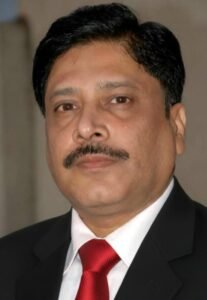
Sheikh Abdul Rashid
The contemporary world is characterized by a paradox: unprecedented technological connection alongside deep ideological fragmentation. Amidst this complex reality, the role of religion, specifically Islam, is often scrutinized. Is it a historical artifact, or the ultimate blueprint for future societal health?
A Landmark Seminar at the University of Chenab, Gujrat
This crucial inquiry was tackled head-on at a recent, landmark seminar at the University of Chenab Gujart (UChenab), featuring the insightful scholarly perspective of Khursheed Nadeem, Chairman of the National Rehmatul-lil-Alameen wa Khatamun-Nabiyeen Authority. The event, an intellectual milestone, provided a robust answer to this enduring question.
Is Islam a Question or the Answer to Modern Crises?
Mr. Nadeem’s lecture, “Islam: Question or Answer, The Role of Religion in Shaping Modern Society,” was not merely an academic exercise but a profound journalistic assertion. He firmly positioned his argument on the belief that the current global turmoil—characterized by ethical confusion, social injustice, and a sense of existential drift—is rooted in a deficit of core moral values.
Moral Collapse and the Need for Ethical Revival
His central, powerful thesis was this: Islam, as a comprehensive and ethical code, is not the question that intellectual history is wrestling with, but the fully formed, definitive answer to the conceptual and moral crises facing humanity and the Muslim world today.
Reconnecting Faith with Contemporary Life through Ijtihad
He argued that the perceived vacuum is not due to the faith’s irrelevance, but rather a disconnect between its profound, timeless ethical principles and their contemporary application. The true challenge lies in reviving the dynamic, reformist spirit of Islam (Ijtihad) to re-articulate these principles for the 21st-century context.
Justice (Adl): Islam’s Ethical Response to Global Injustice
To illustrate Islam’s immediate relevance, Mr. Nadeem’s discussion powerfully highlighted three core ethical values—the cornerstones of its social model—that are desperately needed in our modern world. These principles, when authentically applied, offer concrete solutions to current global challenges: In an age defined by economic inequality, political manipulation, and selective application of international law, the Islamic concept of Adl (Justice) offers a radical corrective. This concept is not merely legal; it is a fundamental, non-negotiable ethical mandate that applies to all individuals, irrespective of their faith, status, or affiliation.
Mr. Nadeem emphasized that true Islamic justice requires standing firm against injustice, even if it is perpetrated by one’s own kin or community.
“The pursuit of justice in Islam is an act of worship. It demands intellectual honesty in law, equity in distribution, and zero tolerance for systemic corruption. It is the antithesis of the ‘might makes right’ doctrine dominating global affairs today.”
This commitment to universal justice is the necessary foundation for building trust and genuine social harmony in a pluralistic world.
Compassion (Rahmah) as the Missing Human Element
Modern society, obsessed with efficiency and competition, often neglects the human element, leading to social isolation and mental health crises. Rahmah (Compassion and Mercy), an attribute central to God in Islam, must be the governing principle in all human interactions—from family dynamics to international policy.
This value extends beyond simple charity to encompass deep empathy, kindness, and forgiveness. It dictates how societies should treat the poor, the marginalized, the elderly, and the environment.
Mr. Nadeem articulated that the revival of Rahmah provides the spiritual antidote to the cold, calculating rationality of hyper-capitalism. It shifts the focus from purely transactional success to relational well-being and collective care.
Balance and Moderation (Wasatiyyah) in an Age of Extremes
The modern world is constantly swinging between extremes: political extremism, consumerist excess, and severe asceticism. Islam advocates for Wasatiyyah—a principle of balance and moderation.
This concept is essential for sustainable development. It promotes a balanced life where spiritual duties, family responsibilities, and worldly pursuits are all given their due. Environmentally, Wasatiyyah translates into responsible stewardship (Khilafah), rejecting both wasteful exploitation and unwarranted deprivation.
Governance, Accountability, and Ethical Stewardship
In a political context, it rejects both radical fundamentalism and complete secular detachment, advocating instead for a dynamic, ethical model of governance rooted in consultation (Shura) and accountability.
Professor Sheikh Abdul Rasheed’s Philosophical Perspective
The intellectual depth of the seminar was fittingly crowned by the concluding remarks of Professor Sheikh Abdul Rasheed. His summation was deliberately logical, providing a philosophical validation to Mr. Nadeem’s faith-based arguments.
Professor Rasheed emphasized that these core Islamic ethical frameworks are inherently logical and demonstrably effective. They provide a rational foundation for morality that is not dependent on cultural trends or political whims. His address served as a powerful reminder that intellectual fidelity and spiritual depth are mutually reinforcing.
University of Chenab’s Commitment to Ethical Discourse
The presence of Naveed Akbar, Deputy Chairman of UChenab, underscored the institution’s commitment to forging a modern university identity that is globally competitive yet deeply rooted in ethical and cultural wisdom.
Engaging Youth with Islam and Modern Intellectual Challenges
The tradition fostered by the University of Chenab—of organizing comprehensive, open, and intellectually challenging philosophical dialogues—is invaluable. In a time when the youth are bombarded with fragmented information and polarized narratives, providing a platform to engage critically with profound subjects like the intersection of Islam and modernity is indispensable.
These are not just academic seminars; they are vital exercises in cultivating intellectual resilience and moral clarity in the next generation. By actively engaging its students in these philosophical dialogues, UChenab is essentially fulfilling a national imperative. It is preparing citizens capable of contributing meaningfully to the societal discourse and proudly articulating their ethical framework on the global stage, ensuring that Islam is understood as the solution it truly is, and not merely a subject of historical debate.
Read more articles and expert opinions here: https://thepublicpurview.com/category/blog/
For more stories and insights, visit The Green Post


 Today's E-Paper