
April 6, 2026 — Iran and the United States are considering a Pakistan-backed proposal to halt hostilities, including an immediate ceasefire that could begin as early as Monday and lead to the reopening of the Strait of Hormuz, according to a source familiar with the talks.
The plan, relayed overnight via Pakistan as the primary channel between the sides, sets out a two-step pathway: an initial ceasefire followed by negotiations on a broader settlement. The push comes as escalating tensions threaten a vital global oil shipping route.
“All elements need to be agreed today,” the source said, noting the preliminary understanding would be formalised as a memorandum of understanding exchanged electronically through Pakistan.
The source added that Pakistan’s army chief, Field Marshal Asim Munir, has remained in continuous contact with U.S. Vice President JD Vance, special envoy Steve Witkoff and Iranian Foreign Minister Abbas Araqchi as diplomatic efforts intensified.
Ceasefire window and proposed accord
Under the proposal, the ceasefire would take effect immediately, enabling shipping to resume through the Strait of Hormuz, with a 15 to 20 day window to negotiate a comprehensive deal.
The draft framework — tentatively referred to as the “Islamabad Accord” — includes provisions for a regional mechanism governing the strait and envisions final in-person talks in Islamabad.
Separately, Axios reported that U.S., Iranian and regional officials have been discussing a possible 45-day truce as part of a phased approach aimed at ending the conflict.
No firm response from Tehran yet
There has been no immediate official reaction from Washington or Tehran, while Pakistan’s foreign office spokesperson declined to comment.
Iran has previously indicated it wants a lasting ceasefire accompanied by assurances it will not face further attacks from the United States or Israel. Officials in Tehran have also acknowledged receiving messages from mediators including Pakistan, Turkey and Egypt.
Also read: Pakistan walks diplomatic tightrope as US–Iran–Israel tensions intensify
The proposed end-state agreement is expected to involve Iranian commitments related to its nuclear programme in exchange for sanctions relief and access to frozen assets, the source said.
However, uncertainty remains. Two Pakistani officials said Iran has yet to formally agree despite increased diplomatic outreach across both civilian and military channels.
“Iran has not responded yet,” one official said, adding that ceasefire proposals supported by Pakistan, China and the United States have not secured a commitment so far. Chinese authorities have also not issued a response.
Oil markets on edge
The renewed diplomatic effort comes amid intensifying hostilities that have raised concerns about disruptions to traffic through the Strait of Hormuz, a crucial corridor for global energy supplies.
U.S. President Donald Trump has recently urged a swift resolution, warning of consequences if a ceasefire is not reached within a short timeframe.
The situation has added volatility to energy markets, with traders closely tracking developments that could affect oil flows through the strait.



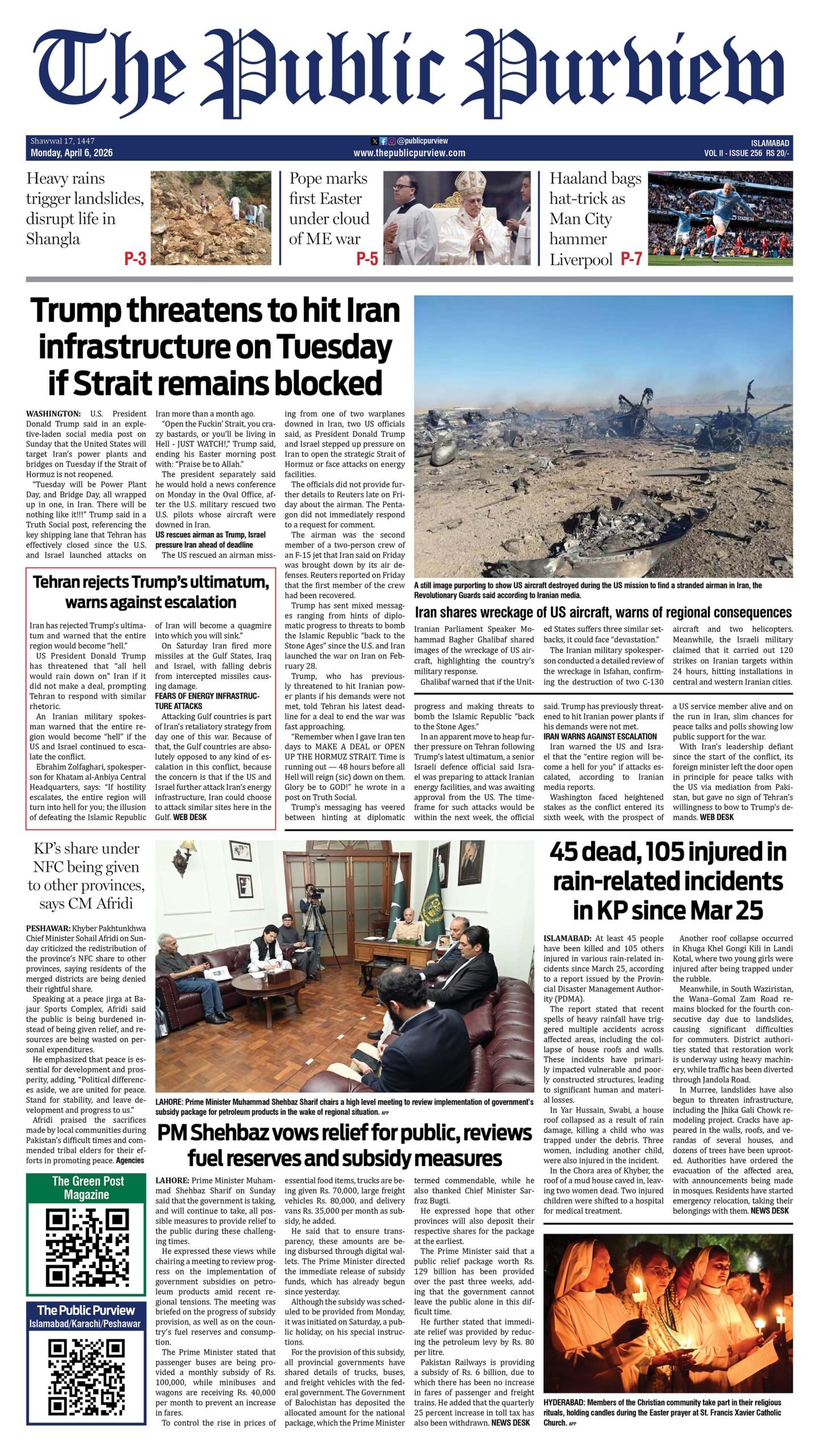 Today's E-Paper