
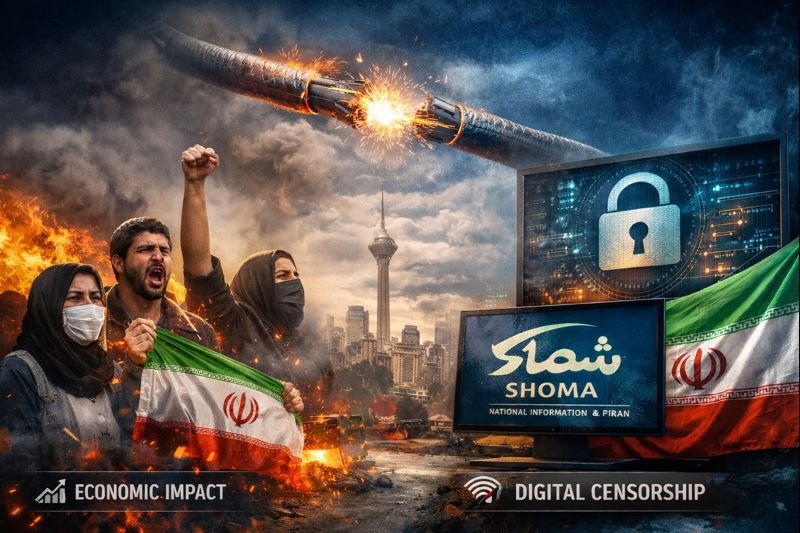
Iran is moving toward long-term restrictions on public access to the global internet after weeks of nationwide connectivity disruptions imposed during protests over inflation and political grievances, according to digital rights groups and international media reports.
The emerging policy would confine most citizens to SHOMA, Iran’s state-run National Information Network, while allowing limited and monitored access to the global internet only for individuals and institutions that pass government security vetting. If implemented, the move would represent a significant escalation from Iran’s previous use of temporary shutdowns during periods of unrest.
Blackout follows weeks of unrest
Internet monitoring organizations say Iran has maintained a near-total connectivity blackout since January 8, when protests spread across multiple cities amid worsening economic conditions and political discontent. Authorities have publicly credited the restrictions with reducing unrest, while independent reporting suggests the demonstrations and ensuing security operations resulted in thousands of deaths.
Digital rights monitors, including activist group Filterwatch, say current policy discussions indicate a shift toward sustained digital isolation rather than short-term emergency measures, a step not previously enforced at this scale in the country.
How SHOMA would reshape daily life
SHOMA, formally known as Iran’s National Information Network, has operated for years as a parallel domestic internet designed to keep essential services running during international outages. Under the proposed framework, domestic banking, government portals, messaging services and local e-commerce platforms would remain accessible, but connections to global platforms, foreign media outlets, cloud services and international communications would be blocked.
State-affiliated media have suggested that full global internet access is unlikely to be restored before March 20, the start of the Iranian New Year, though officials have not announced a formal timeline or detailed implementation plan.
Economic impact and business disruption
Economists and technology analysts warn that prolonged restrictions are already causing significant economic damage. Small businesses dependent on online payments, freelancers, exporters and digital startups have been among the hardest hit, while some international companies have reportedly paused operations or withdrawn from the Iranian market due to ongoing connectivity uncertainty.
Also Read: Iran says protests under control as deaths rise and foreign pressure grows
According to Reuters, Iranian officials have acknowledged growing economic pressure as disruptions to commerce, logistics and digital trade compound the effects of sanctions and high inflation.
Information control and rights concerns
Press freedom and human rights groups say the blackout has sharply restricted the flow of independent information during the unrest, making it difficult to verify casualty figures, arrests and on-the-ground conditions. International watchdogs argue that limiting access to the global internet during protests undermines freedom of expression and shields security operations from external scrutiny.
Some Iranians have reportedly attempted to regain internet access by traveling to neighboring countries, including Turkey, underscoring the extent of domestic restrictions and the population’s reliance on global connectivity for work, communication and access to information.
A broader shift in digital governance
Analysts say the move toward long-term internet separation reflects a broader strategy by Iranian authorities to exert tighter control over information flows during periods of political instability. If fully implemented, Iran would join a small group of states operating largely self-contained national networks, a development experts say could reshape the country’s digital, economic and social landscape.
For now, connectivity inside Iran remains heavily restricted, with officials signaling that security considerations will continue to guide decisions on whether, and to what extent, access to the global internet is restored.




 Today's E-Paper