
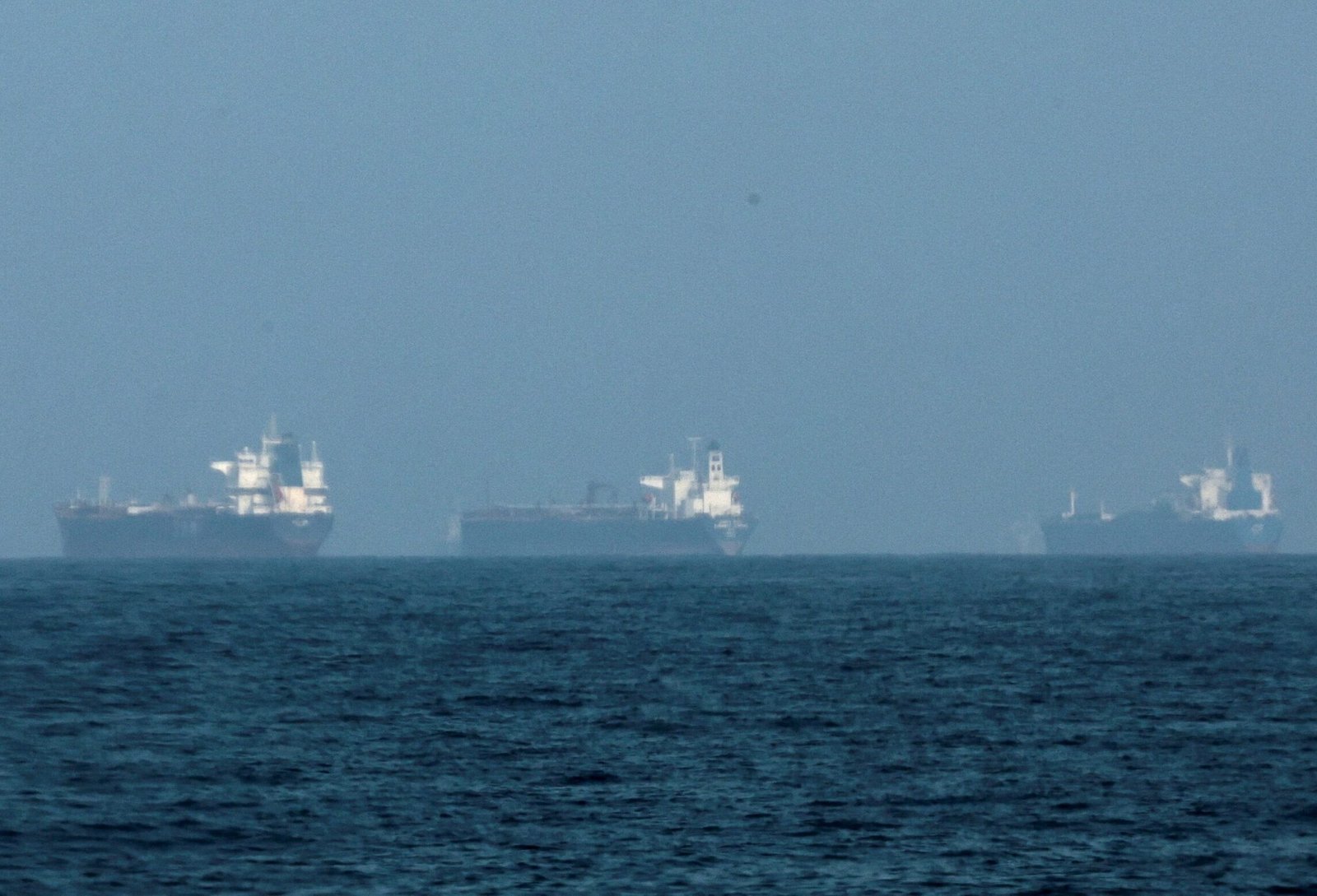
Iran said on Tuesday it could block oil shipments from the Middle East if military attacks by the United States and Israel continue, escalating tensions in the region and drawing a sharp warning from US President Donald Trump.
The Iranian Revolutionary Guards said they would not allow “one litre of oil” to leave the region if strikes against Iran persist. Trump responded by warning that the United States would retaliate with significantly stronger military action if Iran attempted to disrupt oil exports through the Strait of Hormuz, one of the world’s most important energy routes.
Threat to global oil supply
The Strait of Hormuz carries roughly one-fifth of global oil supplies, making it a critical passage for energy shipments from the Middle East to international markets.
Iran’s Revolutionary Guards said the country would determine how and when the conflict ends, signaling defiance as tensions with the United States and Israel intensify.
Trump warned that any attempt to block tanker traffic in the strategic waterway would trigger a much stronger US response. In a social media post, he said Iran would face consequences “twenty times harder” than previous attacks if oil flows were disrupted.
Ongoing conflict raises global concerns
The conflict began after the United States and Israel launched a series of air and missile strikes across Iran at the end of February. According to Iran’s ambassador to the United Nations, at least 1,332 civilians have been killed and thousands injured during the attacks.
Israel has said its objective is to remove Iran’s clerical leadership, while US officials say their main goals are to weaken Iran’s missile capabilities and curb its nuclear programme.
The war has already disrupted tanker traffic through the Strait of Hormuz, with vessels unable to sail for more than a week and oil producers reportedly slowing production as storage facilities fill.
Oil markets react to developments
Oil markets have reacted sharply to the conflict and political signals from Washington. Brent crude prices surged earlier in the week before dropping more than 10 percent on Tuesday as investors reacted to Trump’s prediction that the war could end sooner than expected.
Global stock markets also rebounded following the price decline in oil.
Also Read: Asian economies rely heavily on Strait of Hormuz oil route
Trump also said the United States may temporarily ease some oil-related sanctions to address potential supply shortages. Reports suggested that easing restrictions on Russian energy exports could be one option under consideration.
Regional tensions expand
The conflict has also spread beyond Iran. Israeli forces reported new strikes in central Iran and attacks in Lebanon’s capital Beirut following cross-border fire from the Iran-backed Hezbollah group.
In Tehran, an oil refinery fire sent thick smoke into the air, raising concerns about potential environmental and health risks. The World Health Organization warned the blaze could contaminate food, water and air supplies.
Turkey also reported that NATO air defenses intercepted a ballistic missile launched from Iran that entered Turkish airspace.
Meanwhile, Australia granted humanitarian visas to five Iranian women’s national football team players who sought asylum, citing fears of persecution. Canberra also announced plans to deploy surveillance aircraft and defensive missiles to the Middle East to support regional security.



 Today's E-Paper