
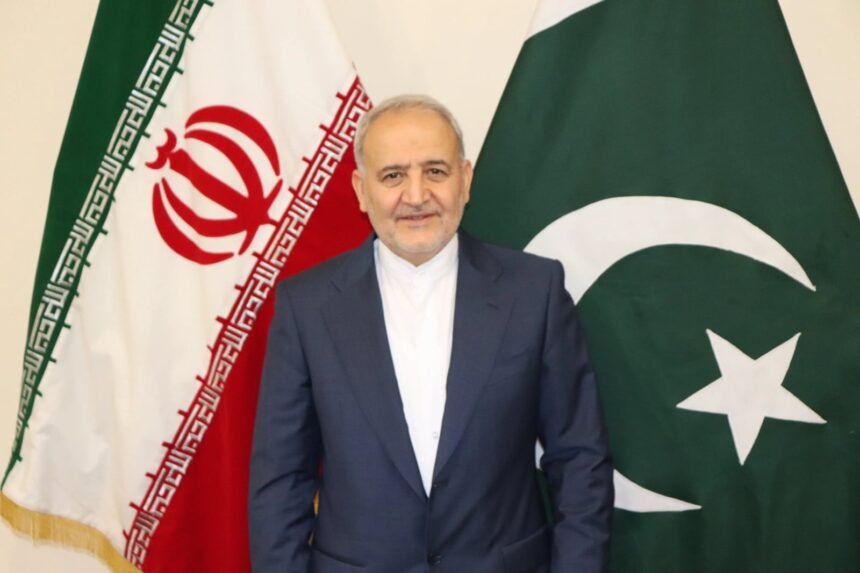
ISLAMABAD — Iran’s ambassador to Pakistan, Reza Amiri Moghadam, said on Wednesday that no negotiations between the United States and Iran have taken place so far, contradicting recent remarks by US President Donald Trump suggesting ongoing diplomatic engagement.
Speaking to reporters, the envoy said that while media reports had indicated possible talks, there had been no direct or indirect negotiations to his knowledge. He added that it was natural for friendly countries to engage both sides in efforts to reduce tensions and halt hostilities.
The statement comes as fighting continues to intensify across the Middle East, raising concerns about regional stability and global economic impact.
Conflict expands across region
Iran launched a new wave of missiles and drones early Wednesday targeting Israel and locations hosting US forces in Kuwait, Jordan and Bahrain, according to Iranian authorities. Air raid sirens were reported across parts of Israel, while incidents involving drone strikes and falling debris were reported in Gulf states.
The conflict, which began on February 28 following coordinated US and Israeli strikes on Iran, has since expanded across multiple fronts, including Lebanon, where Israeli operations against Hezbollah have intensified. Authorities report significant casualties and displacement in affected areas.
Strait of Hormuz and global concerns
The Strait of Hormuz remains a focal point of the crisis, with disruptions to shipping routes affecting global energy markets. Iran has indicated that certain vessels would be allowed safe passage while warning restrictions could apply to ships linked to countries it considers adversaries.
The situation has led to higher energy prices and disruptions in aviation, with airlines rerouting or suspending flights across the region.
Diplomatic signals and uncertainty
Despite Iran’s denial of negotiations, US officials have indicated ongoing efforts to pursue diplomacy. President Trump recently said talks were underway, though no official confirmation has been provided by Tehran.
Reports suggest that backchannel diplomacy may be explored through intermediaries, including regional countries such as Pakistan, even as military preparations continue.
Global institutions have also raised concerns over the broader economic impact. Officials from the World Trade Organization warned that disruptions to supply chains, particularly in energy and fertilisers, could affect global production and prices in the months ahead.
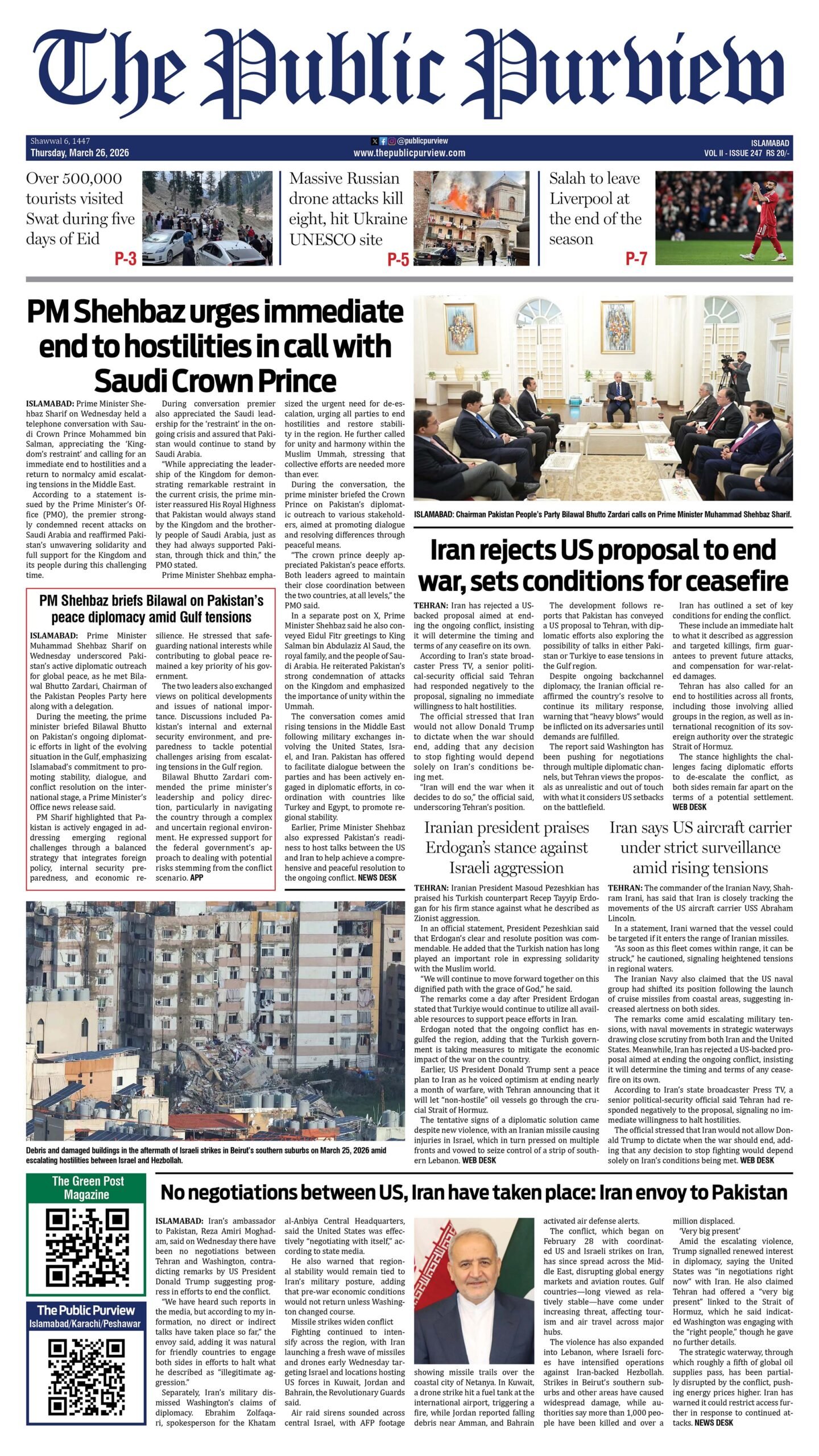 Today's E-Paper