
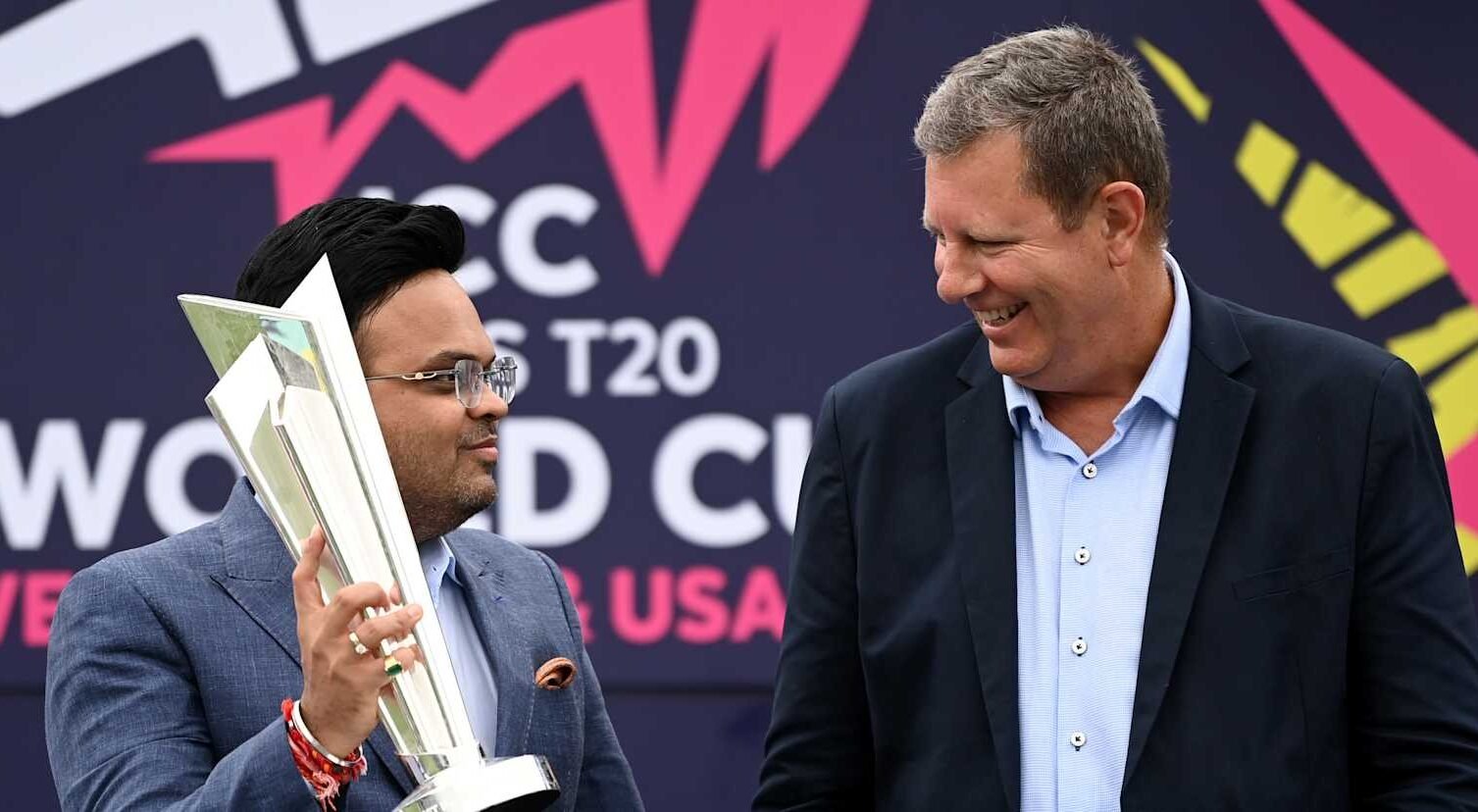
The ICC Men’s T20 World Cup, intended to be a celebration of global cricket, has been overshadowed by political disputes and growing concerns over India’s dominance in the sport, according to a report by The New York Times. The tournament, co-hosted by India and Sri Lanka, entered its opening phase amidst controversy, with withdrawals, boycotts, and last-minute schedule changes threatening both its credibility and financial stability.
The report highlights the deepening influence of politics in international cricket, particularly on the Indian subcontinent. One of the major disruptions cited is the potential India–Pakistan match, often considered the most lucrative fixture in cricket. If the match does not take place, the ICC could face significant financial losses, particularly at a time when its position is fragile. Estimates suggest that the India–Pakistan match could generate up to $250 million in revenue.
The New York Times also reports that India’s media rights holder, JioStar, is attempting to renegotiate its $3 billion broadcast deal with the ICC after suffering financial losses. This underscores the mounting economic pressure surrounding the tournament.
Historically, India and Pakistan have not played a bilateral series since 2013, and India has not toured Pakistan since 2008 due to security concerns following a 2009 attack on Sri Lanka’s team in Lahore. Tensions escalated further in April 2025 following a deadly militant attack in Jammu and Kashmir.
The report also discusses how political tensions have affected relations between India and Bangladesh. After the 2024 political turmoil in Bangladesh, India’s decision not to extradite former Prime Minister Sheikh Hasina worsened ties. Cricket became further entangled in these political issues when Bangladeshi fast bowler Mustafizur Rahman was released from his Indian Premier League (IPL) contract, reportedly on instructions from the Board of Control for Cricket in India (BCCI). In response, Bangladesh’s interim government ordered local broadcasters not to air the IPL.
India’s overwhelming influence on global cricket is a focal point of the report, noting that the country generates an estimated 80% of the sport’s global revenue, largely due to the IPL’s success. While India contributes nearly 40% of ICC profits, critics argue that this power imbalance skews decision-making, limits opportunities for other countries, and diminishes trust in the ICC’s independence.


 Today's E-Paper