
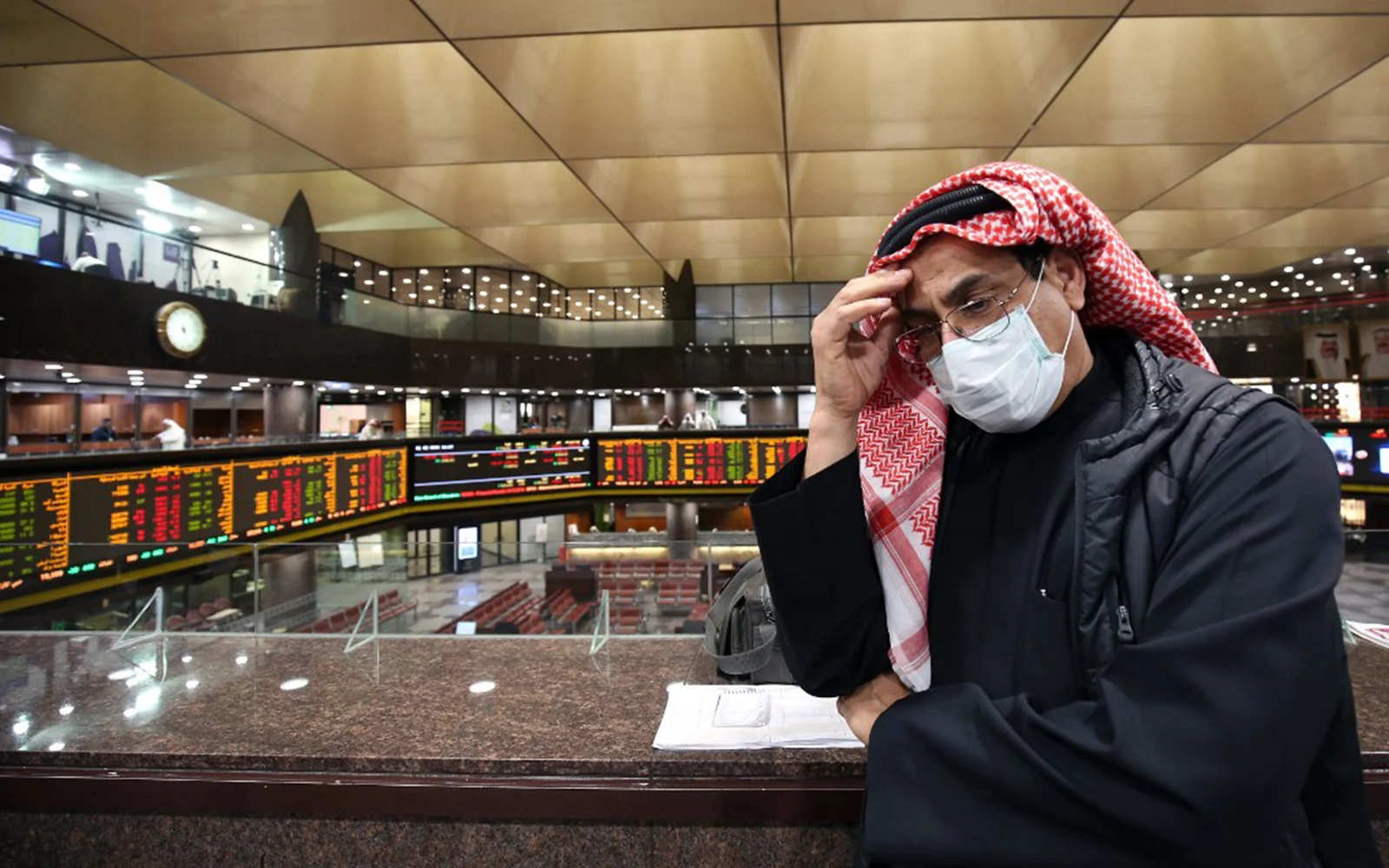
Gulf stock markets moved lower in early trading on Sunday as the conflict involving Iran entered its third week, prompting cautious investor sentiment across regional financial markets.
Market data showed that Gulf equities edged lower amid rising geopolitical uncertainty and concerns over potential disruptions to energy infrastructure and regional trade. Investors are closely watching developments around Iran’s Kharg Island oil export hub following warnings of possible further strikes.
Saudi Arabia’s benchmark stock index dropped about 0.8 percent during early trading. Shares of Al Rajhi Bank declined roughly 0.9 percent, while Saudi National Bank, the country’s largest lender, fell around 1.9 percent.
In Qatar, the main stock index slipped about 0.5 percent. Qatar National Bank, the Gulf region’s largest bank by assets, dropped approximately 1.3 percent.
Other regional markets also recorded moderate declines. Bahrain’s benchmark index eased by about 0.3 percent, while Oman’s market fell roughly 0.4 percent.
Regional conflict weighs on investor sentiment
Financial markets in the Gulf have become increasingly sensitive to geopolitical developments as the conflict involving Iran continues to escalate.
Reports of drone and missile strikes targeting infrastructure across parts of the region, including airports, ports, hotels and energy installations, have raised concerns about the broader economic impact on nearby Gulf states.
Analysts say heightened regional tensions typically lead investors to adopt a cautious approach, particularly in banking and energy-related sectors that dominate Gulf stock markets.
Energy security concerns influence markets
The Gulf region hosts some of the world’s largest energy exporters and critical oil infrastructure. As a result, developments affecting regional stability can quickly influence market performance.
Investors are closely monitoring the security situation and its potential implications for oil exports, shipping routes and regional economic activity.





 Today's E-Paper