
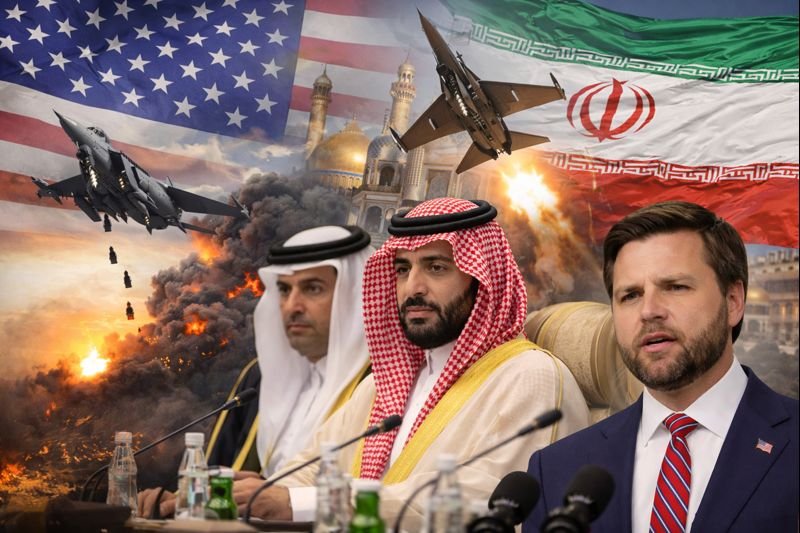
Washington/Dubai: Saudi Arabia and several Arab Gulf states have privately urged the United States to avoid military strikes on Iran, even as Washington has sought intelligence support from European allies on potential target options inside the country, according to separate media reports.
The Wall Street Journal reported that Saudi Arabia, along with other Gulf partners, has warned US officials that a direct strike on Iran could ignite regional instability, provoke retaliation, and severely disrupt global energy markets. Gulf officials conveyed their concerns in private discussions, emphasizing the risk to critical infrastructure and shipping routes, particularly the Strait of Hormuz.
At the same time, Washington Post reported that European officials said the United States has asked allies to share intelligence on possible target options inside Iran, signaling that Washington is actively reviewing military scenarios even as diplomatic caution grows among regional partners.
Gulf States Fear Escalation, Economic Fallout
According to the WSJ report, Saudi Arabia has made clear it does not want to be drawn into a direct confrontation with Iran and has stressed the importance of de-escalation. Gulf capitals fear that any US-led strike could trigger Iranian retaliation against US forces, regional allies, or energy facilities, potentially sending oil prices sharply higher.
JD Vance warns Iran strikes risk dragging US into deeper Middle East conflict
The warnings reflect a broader shift in Gulf strategy, as regional powers prioritize economic stability, foreign investment, and long-term development goals over military confrontation. Saudi Arabia, in particular, is focused on protecting its ambitious economic transformation plans and avoiding shocks that could undermine investor confidence.
Europe Caught Between Alliance and Escalation Risks
The Washington Post report highlights growing unease in European capitals, where officials are concerned about being pulled into a wider conflict. While the US request for intelligence cooperation underscores close transatlantic coordination, European officials have reportedly emphasized the need for restraint, fearing that expanded military action could spiral beyond Washington’s control.
The intelligence outreach suggests that the US is keeping military options on the table, even as senior officials publicly stress that Washington is not seeking a broader war with Iran.
A Widening Gap Between Strategy and Stability
Taken together, the two reports point to a widening gap between US contingency planning and the regional preference for de-escalation. While Washington weighs pressure tactics to curb Iran’s nuclear ambitions, Gulf states — long seen as hawkish on Tehran — are now among the strongest voices urging caution behind the scenes.
Analysts say the moment reflects a recalibration of Middle East diplomacy, where economic security, energy markets, and regional stability are increasingly shaping policy choices alongside traditional security concerns.





 Today's E-Paper