
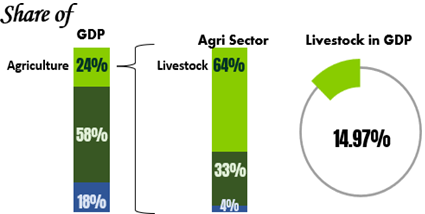
Pakistan’s livestock and fisheries sectors, foundational to the livelihoods of millions, are undergoing a historic transformation under the Green Corporate Livestock Initiative (GCLI), launched in January 2024 by the Special Investment Facilitation Council (SIFC). With a bold vision to forge a dynamic, sustainable livestock industry, GCLI aims to catalyze economic growth, ensure food security, and uplift communities across the nation. The livestock sector, contributing 14.97% to national GDP and 63.6% to agricultural GDP, supports millions of rural families, while the fisheries sector, despite a modest 1% GDP contribution, sustains 1.5 million livelihoods with significant untapped potential for export growth. Long hindered by outdated practices, low-yield herds, overfishing, and weak infrastructure, these sectors are now being revitalized through innovative technologies, strategic policy reforms, and robust public-private partnerships. GCLI’s multifaceted initiatives are not only enhancing productivity but also empowering rural communities, paving the way for a prosperous, sustainable future for Pakistan’s agrarian heartland.
Livestock Sector: Pioneering a Modern Revolution. Pakistan’s livestock sector, a cornerstone of the rural economy, has long been constrained by inefficiencies, particularly in its low-yielding, non-descript herds, which constitute approximately 90% of the national livestock population owned by small farmers. The National Herd Transformation Drive, a flagship GCLI initiative, seeks to address this by upgrading 2.3 million animals annually over the next 20 years, aiming to revolutionize dairy and meat production. This ambitious plan is driven by a collaborative approach involving public and private sectors, as well as the Pakistan Army, ensuring a coordinated effort to modernize livestock farming. By leveraging advanced reproductive technologies, GCLI is introducing significant improvements in genetic quality and productivity.
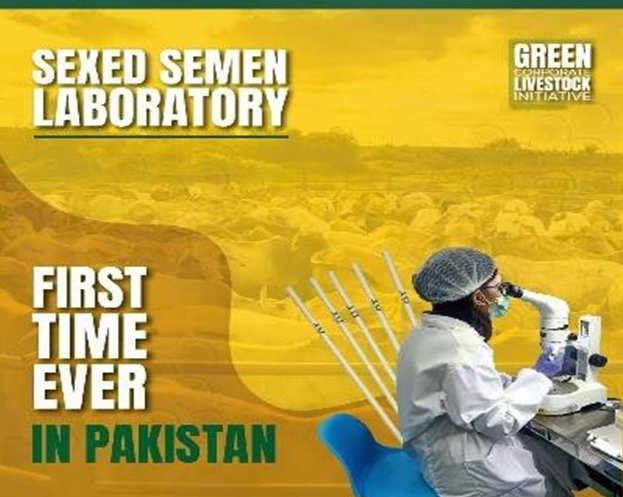
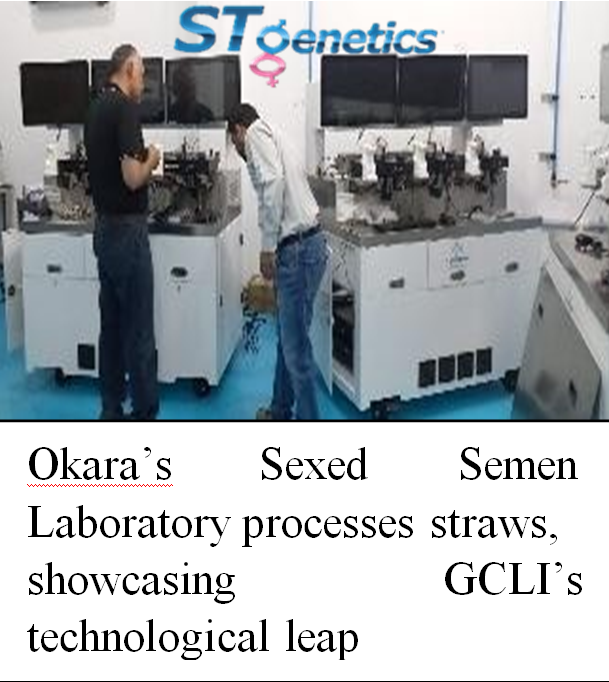
At the forefront of this transformation is the Okara Sexed Semen Laboratory, established in partnership with STGenetics (USA). This state-of-the-art facility, the first and the only of its kind in Pakistan, produces 500,000 sexed semen straws annually, enabling farmers to prioritize female calves for dairy and males for beef.
This technology is projected to boost dairy output by 939 million liters and meat production by 32 million kg, delivering an economic impact of $770 million from the third year onward. Similarly, the Okara In-Vitro Fertilization (IVF) Laboratory, capable of producing 5,000 embryos annually, facilitates rapid genetic improvement, adding 847 million liters of milk and 30 million kg of meat, with a financial impact of $660 million within five years. These advancements are complemented by GCLI’s efforts to import high-yield exotic breeds from Brazil, with imports rising from 2,000 to 3,500 animals in the first seven months of 2025, significantly enhancing dairy and beef yields.
Beyond technological innovation, GCLI is reshaping the physical landscape of livestock farming. The initiative has transformed 5,941 acres of barren land in Jugaitpeer, Rakh Ghulaman, and Kallurkot into thriving hubs of productivity, employing modern techniques such as climate-smart fodder cultivation to ensure sustainability. Additionally, underperforming livestock farms in Punjab, Sindh, and Khyber Pakhtunkhwa are being leased to private investors for revitalization and modernization, fostering efficient, high-yield operations. These efforts are critical in regions where economic deprivation has historically fueled unrest, offering a pathway to stability through job creation and improved livelihoods.
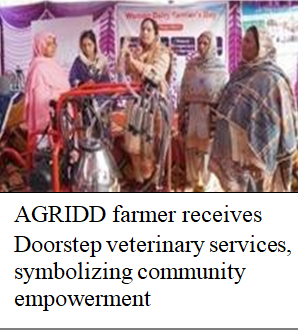
The Grass-Root Incentivized Dairy Development (GRIDD) program is a cornerstone of GCLI’s community-focused approach. Designed to address the challenges of middlemen exploitation and limited awareness of modern animal management practices, GRIDD empowers small farmers, who manage 90% of Pakistan’s low-yielding herds. Operating in 59 districts all over Pakistan, the program has registered 36,245 farmers and 382,707 animals, collected 11.1 million liters of milk, and provided extension services worth PKR 597 million to farmers, free of cost. By delivering free or subsidized doorstep veterinary and advisory services, GRIDD enhances dairy and meat production while contributing towards poverty alleviation, particularly in underserved rural areas.
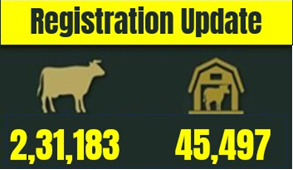
To ensure effective herd management and combat illegal activities, GCLI launched the Tag & Traceability Drive in April 2024 through the Pakistan Animal Identification & Traceability System (PAITS). This digital platform has already tagged more than 200,000 animals, enabling precise monitoring for herd transformation, disease surveillance, and curbing smuggling and illegal slaughtering, particularly in border regions. Addressing Pakistan’s critical vaccine shortfall—requiring approximately 500 million doses annually but producing only 30 million—GCLI is leasing Punjab’s vaccine production facilities to private investors for upgrades to international standards, reducing dependency on costly imports and safeguarding livestock health.
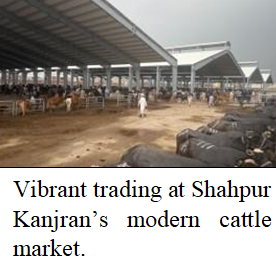
GCLI’s modernization efforts extend to market infrastructure. Modern cattle markets, inspired by Brazilian models, have been established at Shahpur Kanjran, Lahore, with another under construction in Jhang with the assistance of Punjab Cattle Market Management and Development Company (PCMMDC). Three more are planned at Bhakkar, DG Khan, and Lahore. These facilities will promote efficient livestock trading, reduce reliance on exploitative middlemen, and integrate digital payment systems for transparency.
The Pak Halal Authority, raised in 2016, has been revitalized, with the “One Country – One Logo” initiative approved in April 2025. MoUs have been signed with Türkiye, Kyrgyzstan, and Belarus, while MoUs are ready to be signed with UAE, Malaysia, Bangladesh, Indonesia, KSA, Iran, Iraq, Kuwait, Qatar, Morocco, Jordan, and Brunei.
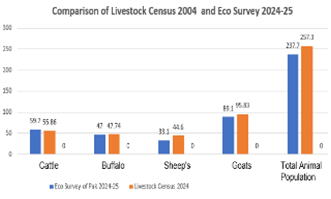
The 7th Livestock & Agricultural Census (2024), facilitated by GCLI, has been conducted after 19 years. On August 6, 2025, the Pakistan Bureau of Statistics released a report showing a 3.19% growth in livestock population. Pakistan’s national herd now stands at 251.3 million, with fodder cultivation emerging as a major crop, occupying 10% of Pakistan’s cultivated area (more than cotton at 7–8%). This data provides vital insights for policymaking, planning, and future investments, ensuring food security and economic growth. Tax reforms, including the abolition of a 3% customs duty on high-yield animal imports, have paved the way for expanding sexed semen and IVF labs, further boosting productivity.
Fisheries Sector: Harnessing the Blue Economy. Pakistan’s fisheries sector, despite access to a 1,100-km coastline and extensive inland waters, contributes only 1% to national GDP, constrained by overfishing, outdated infrastructure, and weak regulatory frameworks. With 1.5 million livelihoods dependent on fishing, GCLI’s interventions aim to unlock this sector’s potential as a driver of the blue economy, enhancing export revenues and rural employment.
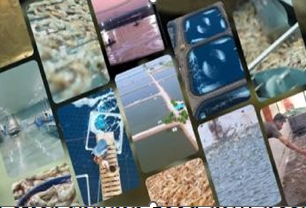
Shrimp farming is a game-changer for Pakistan’s fisheries. A pilot project in Muzaffargarh yielded 120 tons of shrimp, exported to UAE, Vietnam, and Jordan, demonstrating strong market potential. In Sindh’s Indus Delta, 150 acres have been developed for shrimp farming, with plans to expand to 1,500 acres by December 2026 and 10,000 acres by 2028. GCLI’s revival of a hatchery has slashed post-larvae costs from PKR 15 to PKR 2, while the first-ever shrimp feed mill near Kasur has reduced feed prices from PKR 425 to PKR 280 per kg, making shrimp farming more affordable for small-scale producers. Additionally, 48,611 acres of brackish land in Punjab has been identified for leasing to private shrimp farming investors, further scaling up production.
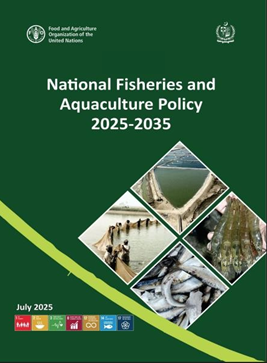
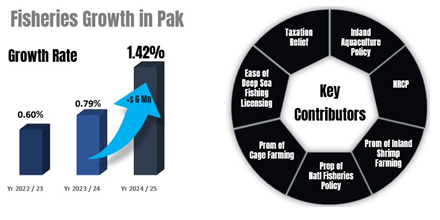
Regulatory and quality interventions are strengthening the fisheries sector’s global competitiveness. The 2024 National Residue Control Plan registered 52 farms, enabling inland aquaculture exports to meet international standards. GCLI, in coordination with the Ministry of Maritime Affairs and FAO, has contributed to drafting the National Fisheries Policy, while Balochistan’s Fisheries Policy (2025–2035) serves as a model for provincial governance. Investor conferences held in 2024 and 2025 secured pledges for shrimp parks and farm expansions, fostering private-sector engagement. Tax reforms have significantly lowered barriers to growth, abolishing a 37% customs duty on fish seed, reducing shrimp feed duties from 60% to 18%, brood-stock from 60% to 30.5%, and aquaculture machinery from 50% to 28.5%, encouraging investment and innovation.
A Bright Future for Rural Pakistan. GCLI’s collaborative efforts have driven a remarkable 4.72% growth in the livestock sector in FY25, contributing 14.97% to national GDP and 63.6% to agricultural GDP, significantly enhancing Pakistan’s capacity to meet domestic demand and expand dairy and meat exports. These initiatives are not only addressing systemic inefficiencies but also fostering resilience in communities vulnerable to economic hardship. GCLI is transforming barren landscapes and outdated systems into vibrant hubs of productivity. By empowering millions of farmers, alleviating poverty, and fostering sustainable growth, GCLI’s legislative, tax, and customs duties relief initiatives are beginning to yield tangible outcomes, reflecting the positive growth trajectory of Pakistan’s inland aquaculture.
GCLI is laying the foundation for a prosperous, self-reliant rural Pakistan, where innovation and opportunity herald a thriving future for generations to come.


 Today's E-Paper