
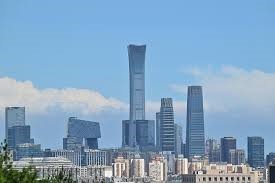
BEIJING: Senior provincial and ministerial officials gathered in Beijing this week to outline key priorities and implementation measures for China’s next five-year development plan, covering the period from 2026 to 2030.
The study session was held at the Central Party School, where Xi Jinping called for a strong and coordinated start to the upcoming planning cycle. The leadership approved recommendations for drafting the new plan in October, setting the overall framework for economic and social development over the next five years.
Addressing the session, Xi said the five-year planning mechanism allows China to focus resources on major national priorities, identify strategic challenges in advance, and maintain policy continuity. Officials attending the meeting discussed how their regions and departments would align national goals with local conditions.
Provincial leaders highlighted region-specific development roles. Heilongjiang Party Secretary Xu Qin said the northeastern province would continue to focus on its strategic position as a major grain-producing base, an industrial manufacturing hub, an energy and raw materials supplier, and an ecological buffer zone, while expanding its role in opening up to northern regions.
At the ministerial level, National Healthcare Security Administration head Zhang Ke said the agency would prioritize public welfare by ensuring the safe and effective use of medical insurance funds to support public health services, hospitals, and the pharmaceutical sector.
Executives from major state-owned enterprises also outlined sectoral priorities. China Mobile Communication Co., Ltd. Chairman Chen Zhongyue said the company would advance the rollout of communications networks, computing power, and artificial intelligence infrastructure, while increasing research in areas such as 6G, quantum technology, and advanced computing to support digital transformation.
Science and technology policy was another focus. Minister of Science and Technology Yin Hejun said efforts would center on strengthening basic research, overcoming key technological bottlenecks, accelerating the development of international innovation hubs, and fostering an open and competitive innovation ecosystem.
Energy transition goals were outlined by China National Petroleum Corporation Chairman Dai Houliang, who said the company would push forward intelligent, green, and integrated development, while accelerating the shift toward low-carbon and clean energy supplies.
Regional development initiatives were also discussed. Following the launch of island-wide special customs operations at the Hainan Free Trade Port last month, Hainan Governor Liu Xiaoming said the province would use its policy advantages to build a modern industrial system tailored to local strengths and speed up the implementation of related reforms.
Officials said the discussions were aimed at translating national planning objectives into concrete actions, ensuring coordinated development across regions and sectors during the next five-year period.





 Today's E-Paper