
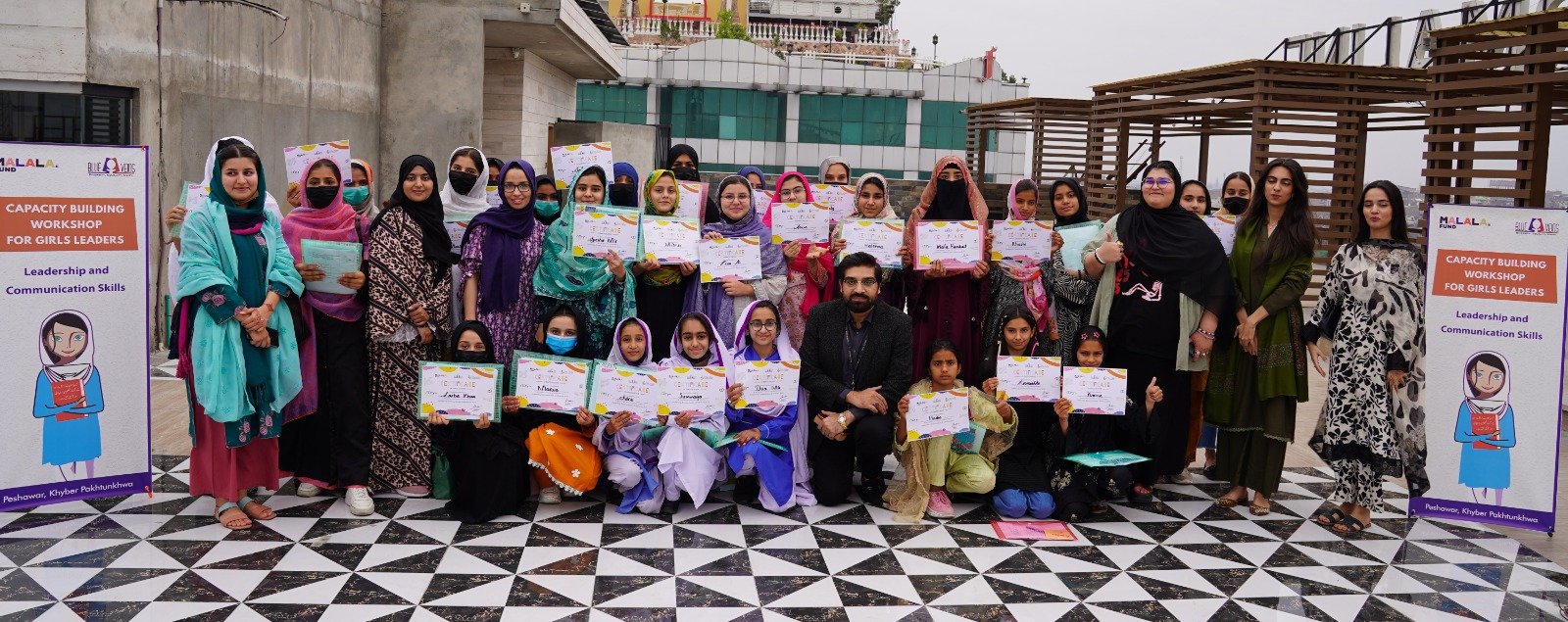
Girl leaders in Khyber Pakhtunkhwa have called for at least a 25% increase in the education development budget ahead of the province’s 2026–27 fiscal planning, urging authorities to prioritise girls’ secondary education and address persistent access gaps.
The demand was raised by participants of the Rise and Shine Girls’ Education Leadership Network during a leadership and advocacy workshop organised by Blue Veins with support from Malala Fund. The initiative aimed to equip young participants with knowledge of public budgeting, education systems, and civic engagement to strengthen their advocacy.
Barriers to girls’ education highlighted
Participants identified multiple challenges affecting girls’ education in the province, including a shortage of classrooms, weak teacher accountability, lack of safe transport, and absence of functional laboratories. They also pointed to inadequate water, sanitation, and menstrual hygiene facilities as key factors contributing to dropout rates.
Also Read: China’s education reforms offer roadmap to strengthen Pakistan’s system
The group emphasised the need for stipends, learning materials, and safer school environments to improve retention and completion at the secondary level.
Out-of-school figures raise concern
Data from the Digital Population Census 2023 shows that around 4.9 million children in Khyber Pakhtunkhwa are out of school, including approximately 2.9 million girls, highlighting the scale of the challenge and the need for targeted investment.
Ayesha Mir, a member of the network, said girls must be recognised as active contributors to society, stressing that investment in their education would have broader community benefits.
Call for policy focus and inclusion
Officials and organisers stressed that constitutional guarantees of education require stronger implementation. Yumna Aftab, Programme Officer at Blue Veins, said increased funding and inclusion of girls in decision-making processes are necessary to address existing gaps.
Muhammad Ali, Partnership Manager at Malala Fund Pakistan, said empowering girls with knowledge of governance systems can help them influence policy decisions affecting their future.
Participants urged the Khyber Pakhtunkhwa government, particularly the education and finance departments, to prioritise equitable and inclusive education in the upcoming budget. The workshop concluded with a commitment from community members and stakeholders to support continued advocacy for girls’ education across the province.




 Today's E-Paper