

Amid rising tensions in the Middle East and growing speculation about a possible large-scale conflict involving Iran Germany has issued a clear and significant statement regarding its position. The German government has openly declared that it will not participate in any military campaign against Iran nor will it join the United States or Israel in efforts aimed at overthrowing the Iranian government. This announcement made by German Foreign Minister Johann Wadephul, highlights Berlin’s preference for diplomacy and negotiations rather than military confrontation.
The statement comes at a time when the Middle East is experiencing heightened instability with various conflicts and geopolitical rivalries threatening to escalate further. Against this backdrop Germany’s decision to distance itself from the possibility of war sends a strong signal about Europe’s broader strategic approach to regional tensions.
According to Foreign Minister Wadephul, Germany believes that dialogue and negotiations remain the most effective path for resolving disputes involving Iran. He emphasized that the German government is closely monitoring developments in the region but has no intention of becoming part of a war that could further destabilize an already volatile area. This stance reflects a long-standing European policy that prioritizes diplomatic engagement and conflict resolution through international cooperation.
Germany’s position is particularly noteworthy because Western alliance’s often act in coordination during major geopolitical crises. The United States and Israel have repeatedly expressed concerns about Iran’s regional influence and its nuclear program, arguing that Tehran poses a significant security challenge. In contrast many European countries, including Germany, France and others have generally advocated a more balanced approach that combines diplomatic pressure economic sanctions and dialogue.
This difference in approach has been visible in the past especially during negotiations surrounding the Iran nuclear agreement. European powers played a crucial role in facilitating discussions and encouraging diplomatic engagement between Iran and the international community. For many European leaders the experience reinforced the belief that negotiation, however difficult remains a better alternative to war.
Germany’s refusal to participate in a potential war against Iran also reflects broader concerns about the consequences of military conflict in the Middle East. The region has endured decades of wars and instability including conflicts in Iraq, Syria, Yemen and Palestine. Each of these crises has produced devastating humanitarian consequences, destroyed infrastructure displaced millions of people and deepened political divisions.
Another major concern for Europe is the economic impact of any large-scale war involving Iran. The Middle East remains a crucial hub for global energy supply, and instability in the region can significantly affect oil and gas markets worldwide. A direct military confrontation involving Iran could disrupt shipping routes in the Persian Gulf, increase energy prices, and create economic uncertainty across global markets.
For European countries which rely heavily on stable energy supplies and economic predictability such disruptions could have serious consequences. Rising energy prices would affect industries transportation and household expenses across the continent. Therefore, avoiding a military escalation is not only a matter of security but also of economic stability.
Furthermore, a new war in the Middle East could trigger another refugee crisis. Europe has already faced significant migration pressures following conflicts in Syria and other parts of the region. Millions of displaced people sought refuge in neighboring countries and in Europe, creating political and social challenges within European societies. A conflict involving Iran one of the most influential countries in the region could potentially generate an even larger wave of displacement.
Germany’s cautious approach also reflects its historical experience and foreign policy philosophy. Since the end of the Second World War, Germany has generally pursued a foreign policy that emphasizes diplomacy, economic cooperation and multilateral engagement rather than military intervention. Berlin often seeks solutions through international institutions and alliances, including the United Nations and the European Union.
This does not mean that Germany ignores security threats. Rather, it tends to advocate strategies that combine diplomatic dialogue with economic and political pressure. By doing so, German policymakers hope to reduce tensions while keeping open the possibility of long-term political solutions.
The German foreign minister’s statement can also be interpreted as a call for restraint from all parties involved in the current tensions. In recent years, relations between Iran and Western countries have experienced multiple setbacks, including disagreements over nuclear activities, regional influence, and economic sanctions. These tensions have occasionally led to military incidents, cyber conflicts, and threats of retaliation.
If these tensions escalate into direct military confrontation, the consequences could extend far beyond the Middle East. Global trade routes, financial markets, and international diplomatic relations could all be affected. Such a conflict would likely involve multiple regional and international actors, increasing the risk of a prolonged and unpredictable war.
In this context, Germany’s emphasis on negotiation highlights the importance of maintaining diplomatic channels even during periods of intense disagreement. Dialogue does not necessarily mean agreement but it creates opportunities to manage crises, reduce misunderstandings, and prevent escalation.
At the same time, Germany’s position also illustrates the complexity of international alliances. While Western countries often cooperate on security issues, they may adopt different strategies depending on their national interests, historical experiences, and political priorities. Europe’s emphasis on diplomacy sometimes contrasts with more confrontational approaches favored by other actors.
Ultimately, the German government’s decision not to participate in a war against Iran underscores a broader principle: military solutions rarely provide lasting stability in complex geopolitical conflicts. Wars may produce temporary victories, but they often leave behind deep political grievances, humanitarian disasters, and long-term instability.
The international community therefore faces an important challenge. Instead of allowing tensions to spiral toward confrontation, global powers must invest in diplomatic efforts that can reduce hostility and encourage cooperation. This requires patience, political courage, and a willingness to engage even with adversaries.
Germany’s statement serves as a reminder that diplomacy remains a vital tool in international relations. In a world where geopolitical tensions are increasing, the choice between war and dialogue will shape not only the future of the Middle East but also the stability of the global order.
Whether other countries will follow a similar path remains uncertain. However, Germany’s refusal to join a potential military campaign against Iran clearly signals that some major powers still believe that negotiation and diplomacy offer the best chance for peace.


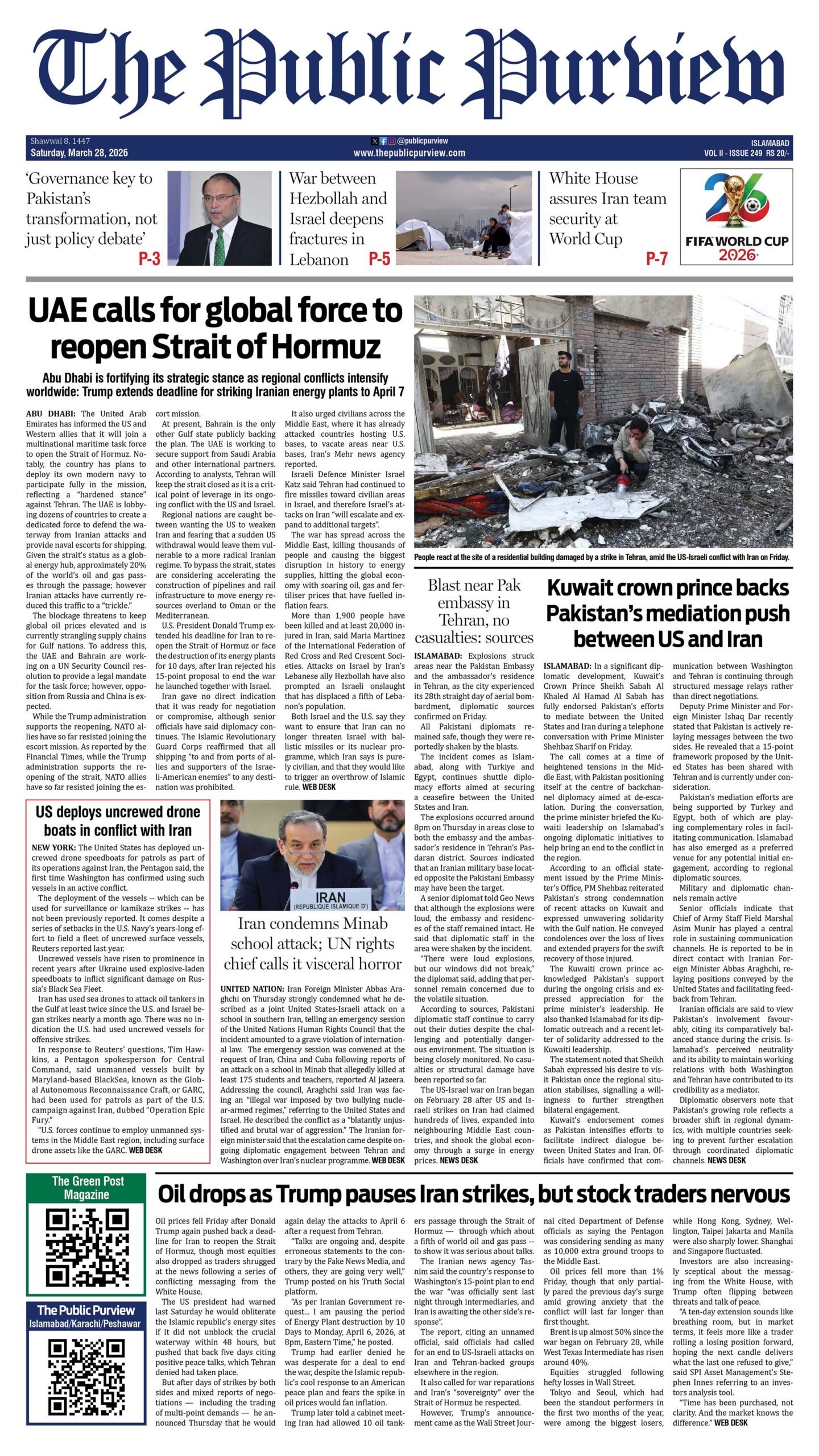 Today's E-Paper