
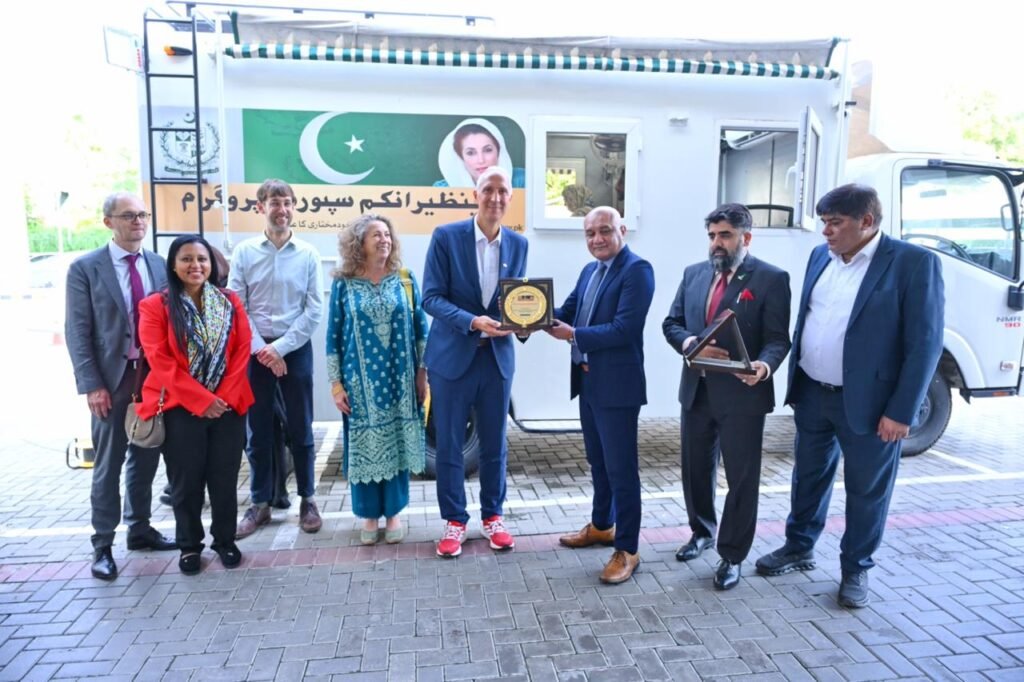
ISLAMABAD, September 2, 2026: A high-level German parliamentary delegation visited the Benazir Income Support Programme (BISP) headquarters in Islamabad on Wednesday to review Germany’s development cooperation with Pakistan and its contribution to strengthening social protection services.
The delegation was led by Christoph Schmid, a Member of the German Parliament and member of its Committee on Economic Cooperation and Development. The visit focused particularly on Germany-supported initiatives aimed at expanding BISP’s outreach to communities in remote and underserved areas.
A key component discussed during the visit was BISP’s Mobile Registration Vehicles (MRVs), for which Germany has provided 32 vehicles to help expand the reach of the National Socio-Economic Registry (NSER).
Since their deployment, the mobile registration vehicles have reached and registered more than 1.37 million people in hard-to-reach areas of Balochistan, Khyber Pakhtunkhwa and Sindh, according to BISP.
BISP Additional Secretary Dr. Asmat Nawaz welcomed the delegation, which included Dr. Manuel Winkenbach, Deputy Head of Development Cooperation at the German Embassy in Islamabad; Maria-Jose Poddey, Country Director of GIZ Pakistan; Tilman Nagel, Head of Unit at GIZ; and Johanna Knoess, Project Head for Adaptive Social Protection at GIZ Pakistan.
Dr. Asmat Nawaz highlighted the importance of continued cooperation between Pakistan and Germany in developing social protection mechanisms that are more inclusive and accessible to vulnerable communities.
Dr. Asim Ijaz, Director General NSER/CCT at BISP, briefed the delegation on major programmes and initiatives, including Benazir Kafaalat, Benazir Nashonuma, Benazir Taleemi Wazaif, Nutrition for Adolescent Girls, Benazir Hunarmand Programme, Mobile Registration Vehicles and the Digital Wallet initiative.
During the visit, the German delegation also observed the practical use of the mobile registration vehicles and received a briefing on how the system takes NSER registration beyond fixed registration centres and closer to communities in remote areas.
The MRVs use digital registration and household surveys to collect essential socioeconomic information, helping BISP identify and assess households for potential inclusion in social protection programmes.
The German delegation appreciated BISP’s efforts to strengthen Pakistan’s social protection system through digitalization, mobile outreach and innovative service delivery.
The delegation also expressed interest in continued cooperation with Pakistan to support the development of a more inclusive and effective social protection system.
Also Read: BISP Reviews World Bank Programme, Eyes New Skills Push With GIZ