
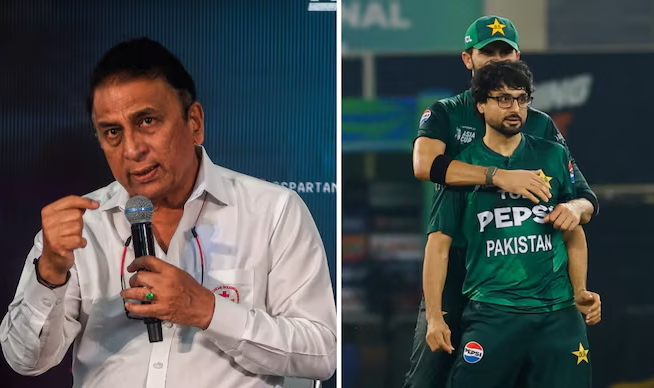
NEW DELHI : Former India captain Sunil Gavaskar has criticised an Indian-owned franchise in England’s Hundred competition for signing Pakistan spinner Abrar Ahmed, raising concerns in a column that has drawn attention amid ongoing India-Pakistan tensions.
The remarks came after Sunrisers Leeds, a franchise linked to the ownership group of IPL team Sunrisers Hyderabad, signed Abrar Ahmed for £190,000 during the Hundred draft. The move also triggered debate on social media following the auction.
Writing in an Indian newspaper, Gavaskar questioned the decision and expressed concern over financial flows linked to the signing. His comments were made in the context of broader political tensions between India and Pakistan, which have affected bilateral cricket ties for more than a decade.
Pakistan spinner Abrar Ahmed signed by Sunrisers Leeds in The Hundred auction
Context of Pakistan players in franchise cricket
Pakistan players have not participated in the Indian Premier League (IPL) since 2009 due to diplomatic relations between the two countries. However, they are eligible to play in other international leagues, including England’s Hundred competition.
There had been speculation ahead of the Hundred draft that franchises with links to IPL teams might avoid signing Pakistani players, but this did not fully materialise.
Abrar Ahmed was among the Pakistani players selected, while Usman Tariq was also picked by Birmingham Phoenix, a team backed by American investors.
ECB stance on player selection
The England and Wales Cricket Board (ECB) previously stated that all franchises in the 100-ball competition are committed to selecting players based on performance and cricketing considerations.
Several Hundred teams, including MI London, Manchester Super Giants and Southern Brave, have ownership links to companies associated with IPL franchises.
India and Pakistan have not played a bilateral cricket series in over a decade and currently compete against each other only in multinational tournaments.



 Today's E-Paper