
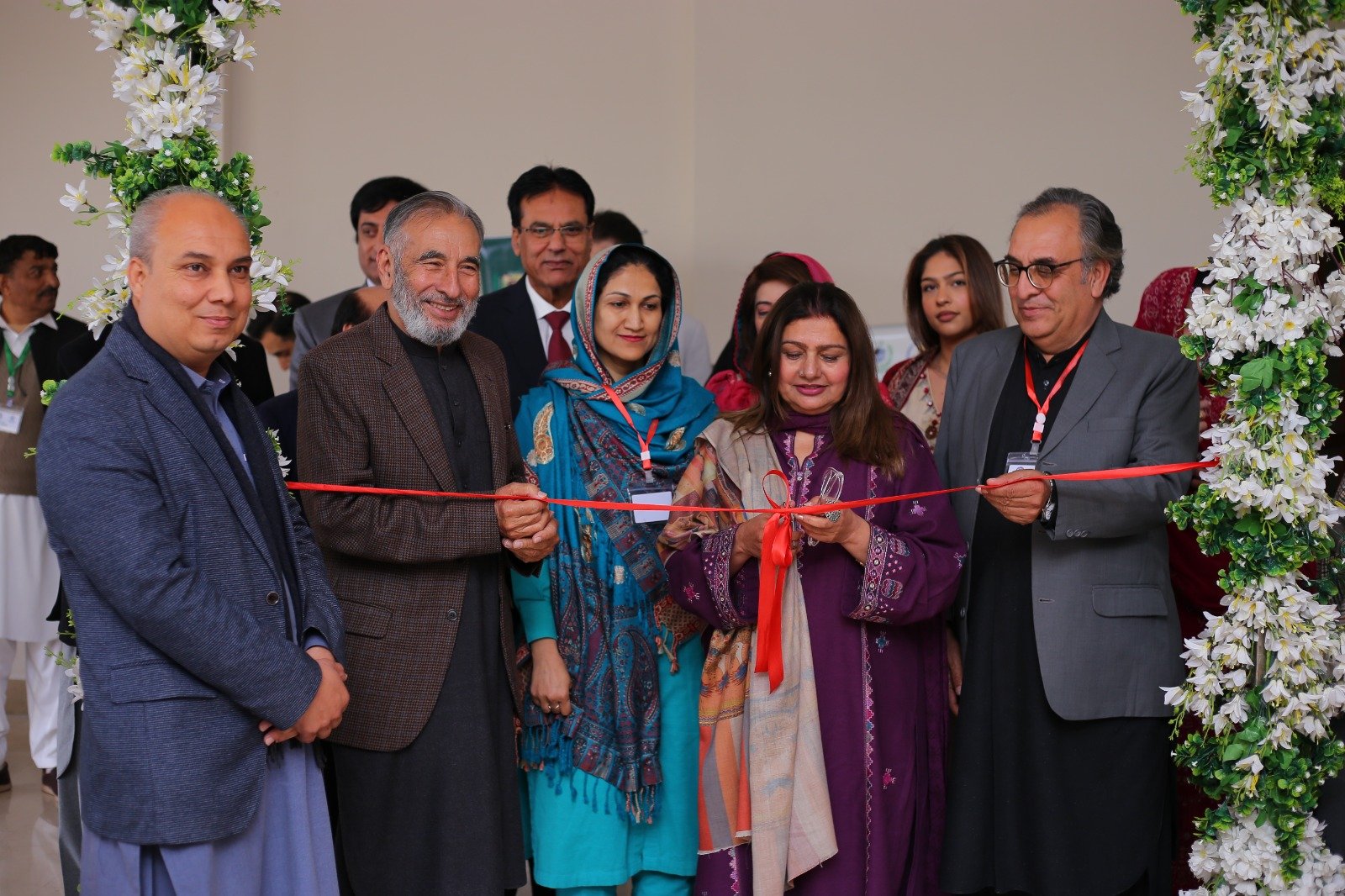
By Danyal Shams
In a world increasingly shaped by technological disruption, evolving social realities, and global interdependence, the question before academic institutions is no longer what the future will look like — but how prepared they are to shape it. It was this forward-looking spirit that defined FutureCON-2026, the international conference hosted by Women University Mardan under the theme “The Future Reimagined: Innovation through Science, Social Science and Global Collaboration.”
For two days, the university emerged as a vibrant intellectual space where scholars, researchers, policymakers and students engaged in thoughtful discussions on innovation, responsibility, and global cooperation. The diversity of participation — both national and international — reflected the university’s growing academic stature and its confidence in hosting conversations of global relevance.
A defining feature of the conference was its balanced approach toward progress. Innovation was not treated as a standalone objective but as a process intertwined with ethics, society and sustainability. Artificial Intelligence, one of the central themes, was discussed not merely as a technological advancement but as a transformative force. Professor Dr. Qibla Ayaz, the Guest of Honour, aptly compared AI’s potential impact to the invention of the printing press — a moment in history that reshaped human civilization. His emphasis on responsible adoption and intellectual foresight resonated strongly with the audience.
Commissioner Mardan, Mr. Muhammad Javed Marwat, reinforced the importance of integrating social sciences with applied sciences. His remarks highlighted a critical reality: development is not achieved through technology alone, but through communication, collaboration, and a skilled workforce. His focus on technical and skill-based education was both timely and necessary.
At the center of this ambitious initiative stood Vice Chancellor Professor Dr. Razia Sultana, whose vision and leadership were evident throughout the event. Organizing a conference of such scale and intellectual depth requires not only administrative capability but also academic foresight. Her emphasis on strengthening national and international linkages demonstrates a clear understanding that universities must operate within a global knowledge network. The announcement of a forthcoming Center of Excellence in Artificial Intelligence and a Center of Art and Design reflects strategic planning aimed at positioning the university at the intersection of technology, creativity and research.
Under her leadership, Women University Mardan is steadily evolving into a hub of academic innovation in the region. Such initiatives do not merely enhance institutional reputation; they inspire students, encourage research culture, and foster intellectual confidence within the academic community.
Reflections shared by scholars including Dr. Farhat Jabeen, Dr. Sattar, and Dr. Hikmat Afridi further underscored the importance of interdisciplinary dialogue. The signing of Memoranda of Understanding with Press Club Mardan and GC University Faisalabad added a practical dimension, ensuring that research and ideas extend beyond academic circles into broader societal engagement.
FutureCON-2026 was more than a conference; it was a statement of intent. It affirmed that meaningful academic discourse can emerge from every corner of the country when supported by vision, collaboration and commitment. Most importantly, it reinforced the idea that the future is not something passively awaited — it is consciously constructed.
If such scholarly efforts continue under committed academic leadership, Women University Mardan is well positioned to play a defining role in shaping that future.




 Today's E-Paper