

As tensions between the United States, Israel, and Iran intensify across the Middle East, Pakistan finds itself caught in the economic crossfire of a conflict it did not choose. What was once viewed as a distant geopolitical confrontation has now begun to cast a direct shadow over Pakistan’s already delicate economy, threatening to undo the modest gains of recent months.
The government has spoken of contingency planning for energy procurement, but the real challenge lies in sustaining fiscal stability if the conflict drags on. Pakistan’s vulnerability is not limited to supply disruptions; it is magnified by the sharp escalation in global energy prices. Brent crude has surged by nearly 17 percent, while LNG prices have spiked by more than two-thirds in just a week. For a country dependent on imported energy, this translates into a heavier import bill and widening external financing gaps. Analysts estimate that every $10 increase in oil prices adds between $1.5 to $2 billion annually to Pakistan’s import costs, a burden that could destabilize the current account and erode fragile reserves.
The specter of inflation looms large. Even before the latest strikes, consumer prices had climbed to 7 percent. Rising energy costs will inevitably ripple through food and commodity imports, pushing inflation higher and squeezing households already struggling with stagnant incomes. The parallels with the economic turmoil following Russia’s invasion of Ukraine four years ago are difficult to ignore. Then, soaring oil prices battered Pakistan’s economy, and the risk of history repeating itself is real.
Remittances, a lifeline for Pakistan’s external accounts, also face uncertainty. Millions of Pakistanis working in the Gulf send money home, financing imports and stabilizing the balance of payments. Any prolonged instability that disrupts their employment or financial flows would compound the strain on reserves. With exports already limited in scope and vulnerable to regional disruptions, Pakistan’s reliance on remittances makes it particularly exposed to shocks beyond its borders.
The conflict also threatens Pakistan’s trade with the region. Exporters face mounting risks as shipping routes become uncertain and insurance costs rise. For a country striving to expand its export base, such disruptions could undermine efforts to diversify markets and strengthen external earnings.
In this climate, the urgency of a comprehensive economic contingency framework cannot be overstated. While Islamabad cannot prevent the spillover effects of war, it can mitigate risks through targeted measures. Ensuring energy security, cushioning vulnerable households against inflation, and safeguarding remittance flows must form the backbone of this strategy.
Ultimately, the unfolding crisis underscores the fragility of Pakistan’s macroeconomic resilience. Heavy dependence on energy imports, a narrow export base, and reliance on remittances leave the economy exposed to external shocks. The confrontation in the Middle East is a reminder that Pakistan’s economic stability is tied not only to domestic reforms but also to global events beyond its control. The challenge now is to navigate this turbulence with foresight, discipline, and resilience, ensuring that external instability does not derail the country’s fragile recovery.




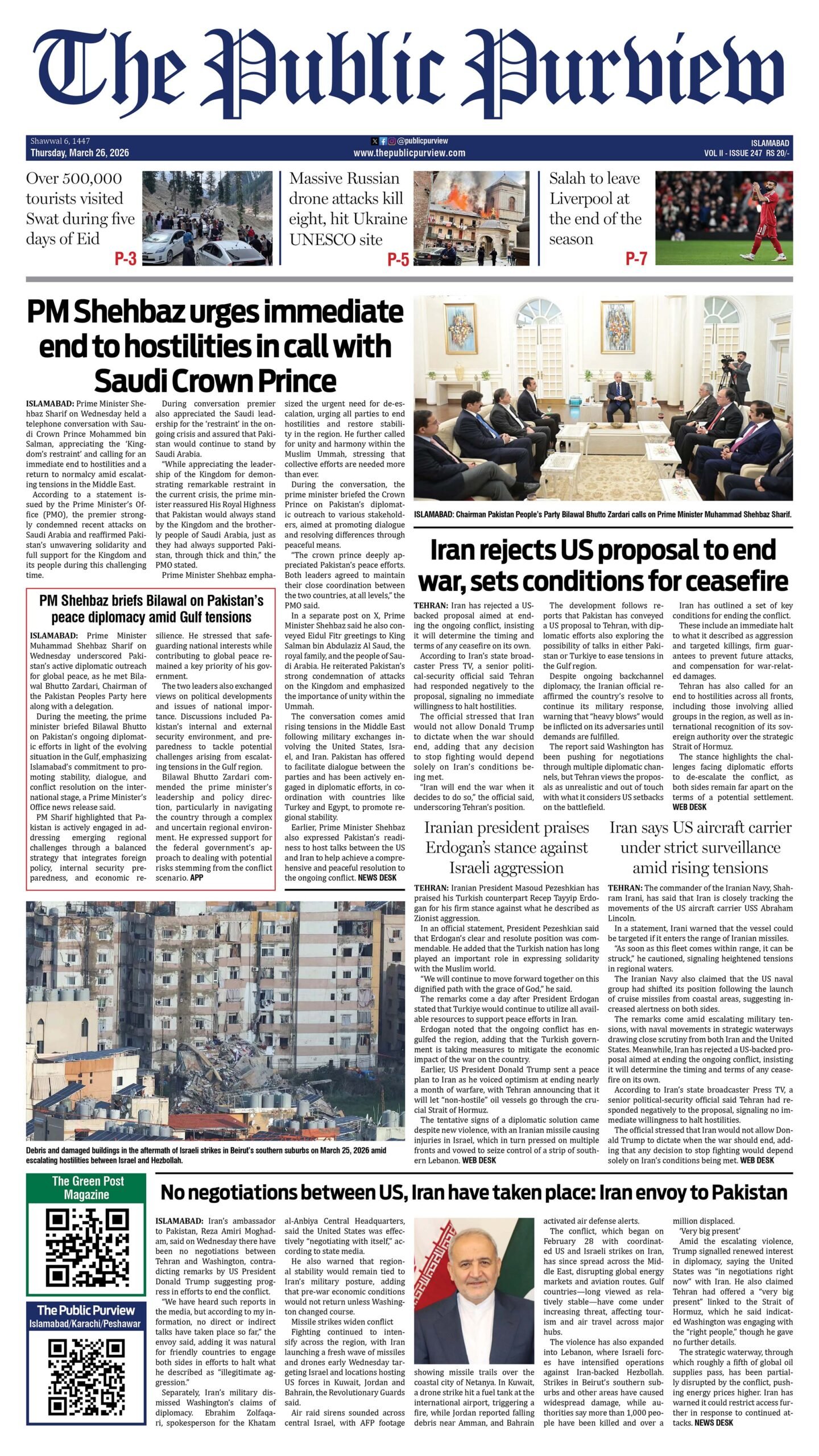 Today's E-Paper