
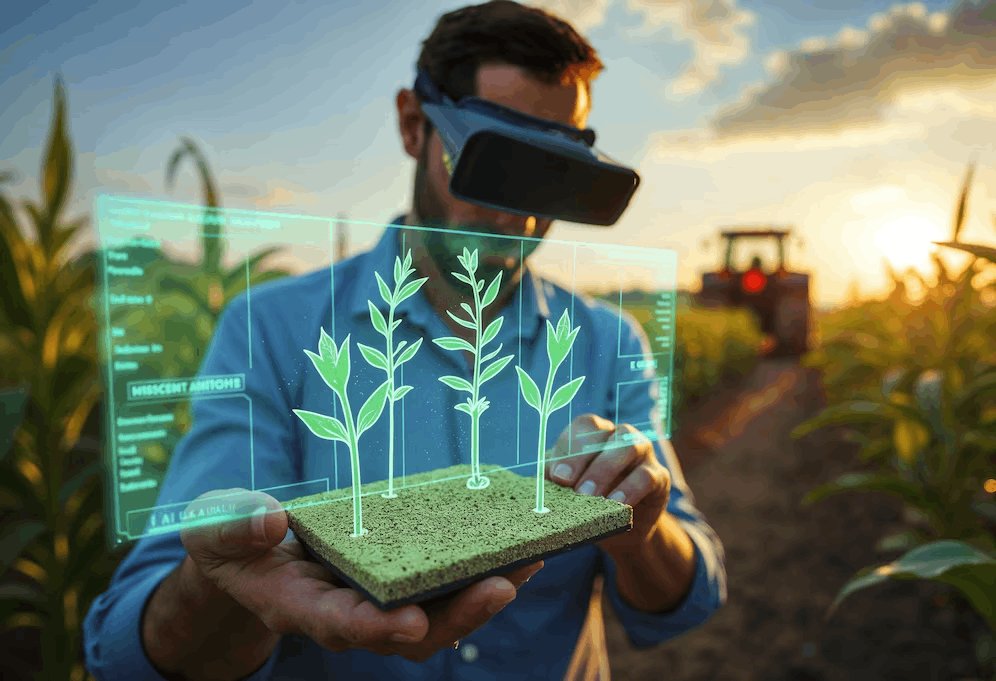
As global food demand rises alongside climate stress, water scarcity and population growth, countries are increasingly turning to technology to protect and expand agricultural output. From data-driven farming to climate-resilient seeds, modern agricultural technologies are reshaping how food is produced, especially in regions facing environmental and resource constraints.
Across Asia, Africa, Europe and the Americas, farmers and governments are adopting targeted innovations that improve yields, reduce waste and make farming more resilient. The following five agricultural technologies have played a measurable role in boosting food production worldwide.
Also Read: FAO to host agriculture investment summit in Islamabad on Feb 3
1. Precision agriculture: producing more with fewer inputs
Precision agriculture uses GPS mapping, soil sensors, satellite imagery and data analytics to manage fields at a micro level. Instead of treating an entire farm uniformly, farmers apply water, fertilisers and pesticides only where needed.
Practical example: United States and Brazil
In the United States, large-scale corn and soybean farms have adopted precision planting and variable-rate fertilisation. Farmers using GPS-guided equipment report yield increases while cutting fertiliser use, lowering both costs and environmental impact.
Brazil, one of the world’s largest agricultural producers, has also expanded precision farming in soy and maize production. By analysing soil variability and moisture levels, Brazilian farmers have improved productivity on previously underperforming land, helping the country expand exports without proportional land expansion.
Precision agriculture improves efficiency, protects soil health and allows farmers to respond quickly to climate and market pressures.
2. Drip and micro-irrigation: maximising every drop of water
Drip and micro-irrigation systems deliver water directly to plant roots through pipes and emitters, reducing evaporation and runoff. This technology is especially important in arid and semi-arid regions.
Practical example: Israel and India
Israel has become a global reference point for drip irrigation. Facing severe water scarcity, Israeli farmers use advanced drip systems combined with fertigation (delivering nutrients through irrigation). This has allowed high crop yields even in desert conditions.
In India, states such as Maharashtra and Gujarat have promoted drip irrigation for fruits, vegetables and sugarcane. Farmers adopting these systems have reported higher yields while using significantly less water, helping stabilise food production amid erratic monsoons.
Efficient irrigation ensures food production remains viable in water-stressed regions and reduces dependence on unpredictable rainfall.
3. Climate-resilient and high-yield crop varieties
Advances in plant breeding and biotechnology have produced seeds that resist drought, floods, pests and diseases. These varieties allow farmers to maintain or increase output under harsh conditions.
Practical example: Africa and Southeast Asia
In sub-Saharan Africa, drought-tolerant maize varieties have helped farmers maintain harvests during dry seasons. Countries such as Kenya and Zambia have expanded adoption of climate-resilient seeds to protect food security.
In Southeast Asia, flood-tolerant rice varieties have been introduced in flood-prone regions. Farmers growing these rice strains have been able to harvest crops even after prolonged flooding, reducing losses that previously led to food shortages.
Resilient seeds protect small farmers from climate shocks and reduce the risk of sudden production collapses.
4. Agricultural drones and remote sensing
Drones and satellite imagery allow farmers to monitor crops in real time. They help detect pest infestations, nutrient deficiencies and water stress early, enabling timely intervention.
Practical example: China and Japan
In China, agricultural drones are widely used for crop spraying, monitoring and mapping. This has reduced labour shortages and increased spraying efficiency, particularly in rice and wheat fields.
Japan has integrated drones into its ageing agricultural sector, allowing fewer farmers to manage larger areas effectively. Drone-assisted monitoring has improved crop health management and reduced input waste.
Remote sensing improves decision-making, reduces losses and allows farmers to act before problems escalate.
5. Smart farming and IoT-based systems
Smart farming uses Internet of Things (IoT) sensors to track soil moisture, temperature, humidity and crop health. Automated systems then adjust irrigation, fertilisation or ventilation accordingly.
Practical example: Netherlands and Australia
The Netherlands, one of the world’s leading agricultural exporters, uses smart greenhouses equipped with sensors and AI systems. These technologies have enabled high vegetable yields using less land, water and energy.
In Australia, IoT-based monitoring systems help farmers manage large farms remotely. Sensors provide real-time data, allowing farmers to respond quickly to drought conditions and improve overall productivity.
Smart farming reduces uncertainty, improves efficiency and supports sustainable food production at scale.
A global shift toward technology-driven agriculture
Together, these technologies demonstrate how innovation can increase food production while addressing climate change, water scarcity and labour challenges. Countries that have invested in modern agricultural tools are producing more food with fewer resources, strengthening food security and rural livelihoods.
As global pressures intensify, wider adoption of these technologies—particularly in developing regions will be critical to ensuring stable and sustainable food supplies in the decades ahead.

 Today's E-Paper