
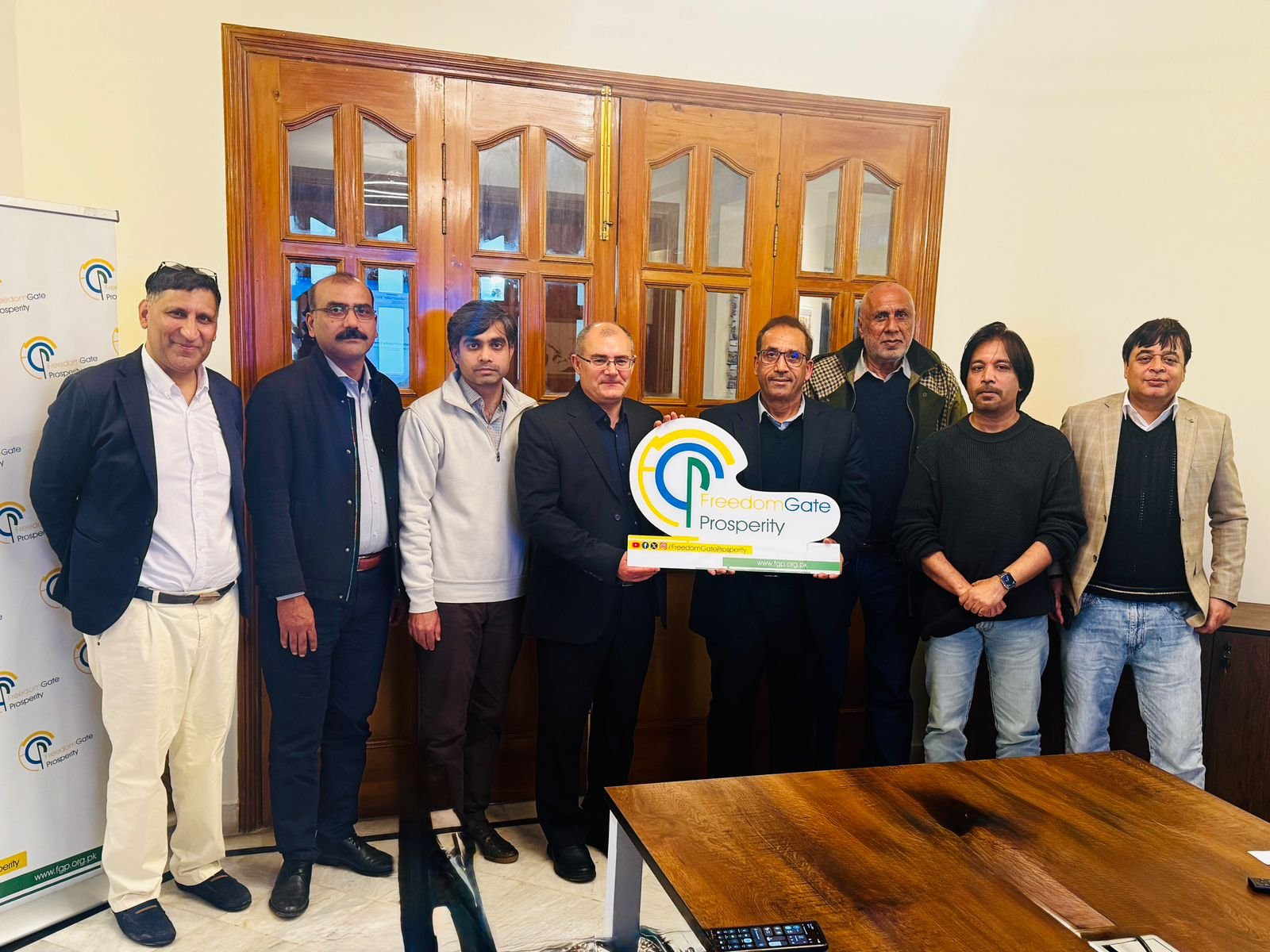
Islamabad — Freedom Gate Prosperity (FGP) held a high-level meeting with agricultural scientist Dr. Sayad Parastar, Chairman of Henan Pallas Biotechnology Co. Ltd., to explore potential cooperation aimed at restoring soil health and strengthening agricultural productivity in Pakistan.
The discussion, hosted at the FGP office in Islamabad, focused on addressing declining soil fertility, salinity, nutrient imbalance, and land degradation — challenges that continue to affect crop yields and farmer incomes, particularly in climate-stressed and salt-affected regions.
Focus on sustainable soil restoration
Dr. Parastar shared international experience in soil rehabilitation practices, including the use of S8 (Octasulfur)-based applications as one potential component within broader soil improvement strategies. He referenced experiences from arid and degraded regions where such approaches have reportedly supported gradual improvements in soil structure and crop performance.
Participants emphasized that long-term soil regeneration must be science-driven, locally adapted, and validated through structured research and pilot initiatives rather than relying on short-term yield gains.
The meeting was also attended by Pakistani-German scholar Mr. Sarmad Hussain, Mr. Shafqat Aziz, Dr. Shahbaz Tariq, Dr. Kausar Khan, Mr. Atif Saeed (FGP), and Mr. Asad Rafi, CEO of Micronox. Discussions included possible technical exchange, research collaboration, and pilot demonstrations aligned with national agricultural priorities.
Addressing climate and food security pressures
FGP CEO Muhammad Anwar highlighted the urgency of soil restoration amid rising climate variability, water stress, and food security concerns. He stressed the need for coordination with research institutions, government bodies, and farming communities to ensure that proposed solutions are practical and evidence-based.
Both sides described the dialogue as constructive and agreed to examine collaboration frameworks in a structured and time-bound manner. Over the coming weeks, technical parameters and validation mechanisms are expected to be reviewed, with the possibility of initiating pilot projects in selected regions.
The meeting concluded with a shared commitment to advancing sustainable, research-backed solutions aimed at strengthening soil resilience and supporting long-term agricultural productivity in Pakistan.



 Today's E-Paper