

The possible increase in petroleum product prices from February 16 has once again raised serious concerns among the people of Pakistan. According to sources, prices may rise by up to Rs. 6.55 per liter, affecting petrol, high-speed diesel, kerosene oil, and light diesel oil. At a time when inflation is already at alarming levels, this expected hike is likely to place an additional financial burden on millions of citizens.
Reports suggest that petrol prices may increase by Rs. 4.39 per liter, high-speed diesel by Rs. 5.40, kerosene oil by Rs. 4, and light diesel oil by Rs. 6.55 per liter. After completing its pricing calculations, the Oil and Gas Regulatory Authority (OGRA) will forward a summary to the Petroleum Division, Ministry of Energy. Following approval from Prime Minister Shehbaz Sharif, a notification will be issued, and the new prices will take effect from February 16.
This anticipated increase comes at a time when the country is already facing severe economic challenges. Rising prices of electricity, gas, food items, healthcare, and education have significantly reduced the purchasing power of ordinary citizens. For many families, managing monthly expenses has become increasingly difficult. In such circumstances, an increase in fuel prices threatens to worsen their financial struggles.
Petroleum products play a central role in daily life and economic activity. Any rise in fuel prices directly affects transportation costs. Bus fares, rickshaw charges, taxi services, and freight transport rates usually increase immediately after a hike in petrol and diesel prices. As a result, students, office workers, laborers, and small business owners are forced to spend more on commuting. For those who rely on public transport every day, this becomes a permanent financial burden.
Moreover, higher transportation costs lead to an increase in the prices of essential commodities. Food items, vegetables, fruits, medicines, and household goods become more expensive due to higher freight charges. This creates a chain reaction of inflation, where one price hike triggers several others. Ultimately, it is the common consumer who suffers the most.
The agricultural sector is also heavily affected by rising fuel prices. Farmers depend on diesel to run tube wells, tractors, and other machinery. They also use fuel for transporting crops to markets. When diesel becomes expensive, production and distribution costs rise. Consequently, farmers are forced to sell their produce at higher prices, which leads to expensive food for consumers. This further weakens food security and increases poverty levels in rural and urban areas alike.
The government often justifies fuel price hikes by citing rising global oil prices and the depreciation of the Pakistani rupee. While these factors do play a role, the main question remains: should the entire burden be placed on the public? Is there no alternative way to manage economic pressure without constantly raising fuel prices?
Many experts argue that better financial discipline, reduction in unnecessary government spending, and elimination of corruption could help ease the burden on citizens. Large expenditures on official privileges, luxury vehicles, and administrative inefficiencies continue to drain national resources. If such expenses were reduced, the government could create fiscal space to provide some relief to the people.
Over the past several years, Pakistan has witnessed repeated increases in petroleum prices. However, the public has not seen corresponding improvements in infrastructure, public transport, or economic stability. Roads remain congested, public transport remains inadequate, and unemployment continues to rise. As a result, people increasingly feel that their sacrifices are not producing meaningful results.
Transparency is another major concern. Before implementing price hikes, the government should clearly explain the reasons behind them. Citizens deserve to know how prices are calculated, how much tax is being imposed, and how the additional revenue will be used. Without transparency, public trust continues to decline, leading to frustration and resentment.
In addition to transparency, the government must introduce practical relief measures. Low-income groups, daily wage workers, and small traders are the most vulnerable to fuel price increases. Special subsidy programs, discounted transport fares, and targeted cash assistance can help reduce their burden. Farmers should be offered fuel subsidies during peak agricultural seasons to protect food production.
Small and medium-sized enterprises also require support. Rising fuel costs increase their operating expenses, making it harder for them to survive in competitive markets. Tax relief, soft loans, and energy subsidies can help these businesses continue operations and preserve employment opportunities.
In the long term, Pakistan must reduce its dependence on imported oil. Heavy reliance on foreign energy sources makes the country vulnerable to global price fluctuations and currency instability. Promoting renewable energy sources such as solar, wind, and hydropower is essential for sustainable development. Expanding investment in these sectors can help lower energy costs and improve energy security.
Similarly, encouraging the use of electric and hybrid vehicles can significantly reduce fuel consumption in the transport sector. Many countries are rapidly shifting toward cleaner and cheaper alternatives, while Pakistan is still lagging behind. Developing charging infrastructure, offering tax incentives, and supporting local manufacturing of electric vehicles can help accelerate this transition.
Improving public transport is another key solution. Efficient, affordable, and reliable mass transit systems can reduce private vehicle usage and fuel consumption. Investment in metro buses, trains, and intercity transport networks can provide long-term economic and environmental benefits.
It is also important to strengthen domestic oil refining and storage capacity. By improving local refining facilities and increasing strategic reserves, Pakistan can better manage supply shocks and price volatility. This requires long-term planning and consistent policy implementation.
In conclusion, the expected increase in petroleum prices is a major test for the government. Without accompanying public-friendly policies, transparency, and relief measures, this decision may further deepen public dissatisfaction. At present, citizens are already struggling with inflation, unemployment, and economic uncertainty. Adding more financial pressure may push many families toward poverty.
The government must understand that economic decisions are not merely about balancing budgets; they directly affect human lives. Policies should be designed with compassion, responsibility, and foresight. By controlling wasteful spending, investing in renewable energy, improving public transport, and protecting vulnerable groups, Pakistan can move toward a more stable and equitable economic future.
If public interest is placed at the center of policymaking, fuel price adjustments can be managed in a way that minimizes suffering and promotes long-term growth. Otherwise, repeated hikes will continue to widen the gap between the state and its citizens, weakening social stability and national progress.


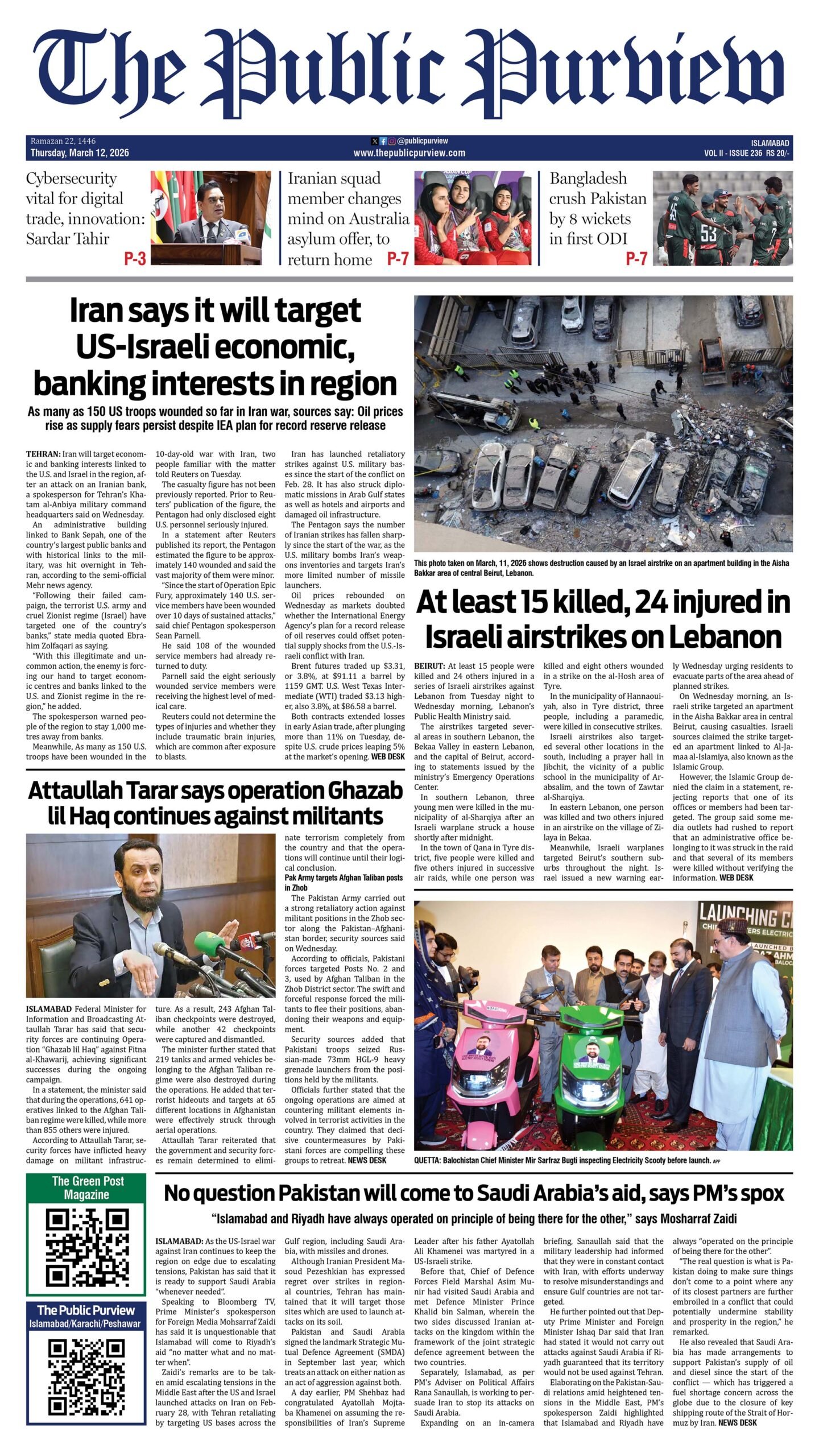 Today's E-Paper