

The art of war has always carried with it an element of deception. Centuries ago, the Chinese strategist Sun Tzu observed that “all warfare is based on deception,” a maxim that continues to resonate in today’s age of information warfare. What was once confined to the battlefield has now expanded into the realm of narratives, propaganda, and perception management. In the ongoing confrontation involving Israel, the United States, and Iran, this dimension of war has become particularly pronounced, raising questions about the authenticity of claims and the motives behind certain attacks.
Observers across the Middle East have noted that not all strikes attributed to Iran appear to originate from Tehran. Some analysts, including Arab commentators, have suggested that certain attacks on civilian and energy infrastructure may have been carried out by other actors, with Iran being deliberately implicated. The Saudi editor of Independent Arabia has voiced doubts about the source of these strikes, while Qatar’s former prime minister Hamad bin Jassim has warned of external forces attempting to push Gulf states into direct confrontation with Iran. Even the United Kingdom has clarified that a drone shot down at its base in Cyprus was not launched from Iran, leaving open the possibility of involvement by pro-Iran groups in Lebanon or Iraq, though evidence remains inconclusive.
Such ambiguity fuels suspicion that another player may be exploiting the fog of war to escalate tensions. Israel, with its long history of psychological operations and narrative manipulation, is often cited as a beneficiary of such confusion. By implicating Iran in attacks that may not be its doing, Israel could succeed in driving a wedge between Tehran and its Arab neighbours, thereby achieving strategic gains without direct confrontation. This possibility underscores the need for regional actors to exercise caution and avoid being drawn into traps that serve external agendas.
Iran’s leadership has attempted to de-escalate by pledging to halt attacks on Gulf neighbours, a move that reflects awareness of the risks of widening the conflict. For Arab states, restraint is equally vital. Entering into a direct clash with Tehran would serve neither their interests nor regional stability. Instead, it would advance the objectives of those who seek to destabilize the Middle East for political and economic gain. The United States, critics argue, benefits from prolonged instability through lucrative arms deals with wealthy Gulf monarchies, while Israel’s strategic calculus is shaped by its vision of regional dominance and the weakening of adversaries.
The lesson for the region is clear: deception remains a powerful weapon, and narratives can be manipulated to provoke confrontation. Arab and Iranian leaders must recognize the dangers of being maneuvered into conflict that primarily serves external powers. The Middle East has endured decades of turmoil, and further escalation would only deepen suffering and instability.
Ultimately, vigilance and unity are essential. The region must resist attempts to inflame divisions and instead pursue dialogue, restraint, and cooperation. In an era where information itself is weaponized, clarity of vision and caution in judgment are indispensable. The true strength of nations lies not in being drawn into battles designed by others, but in safeguarding sovereignty and stability against the forces of manipulation.




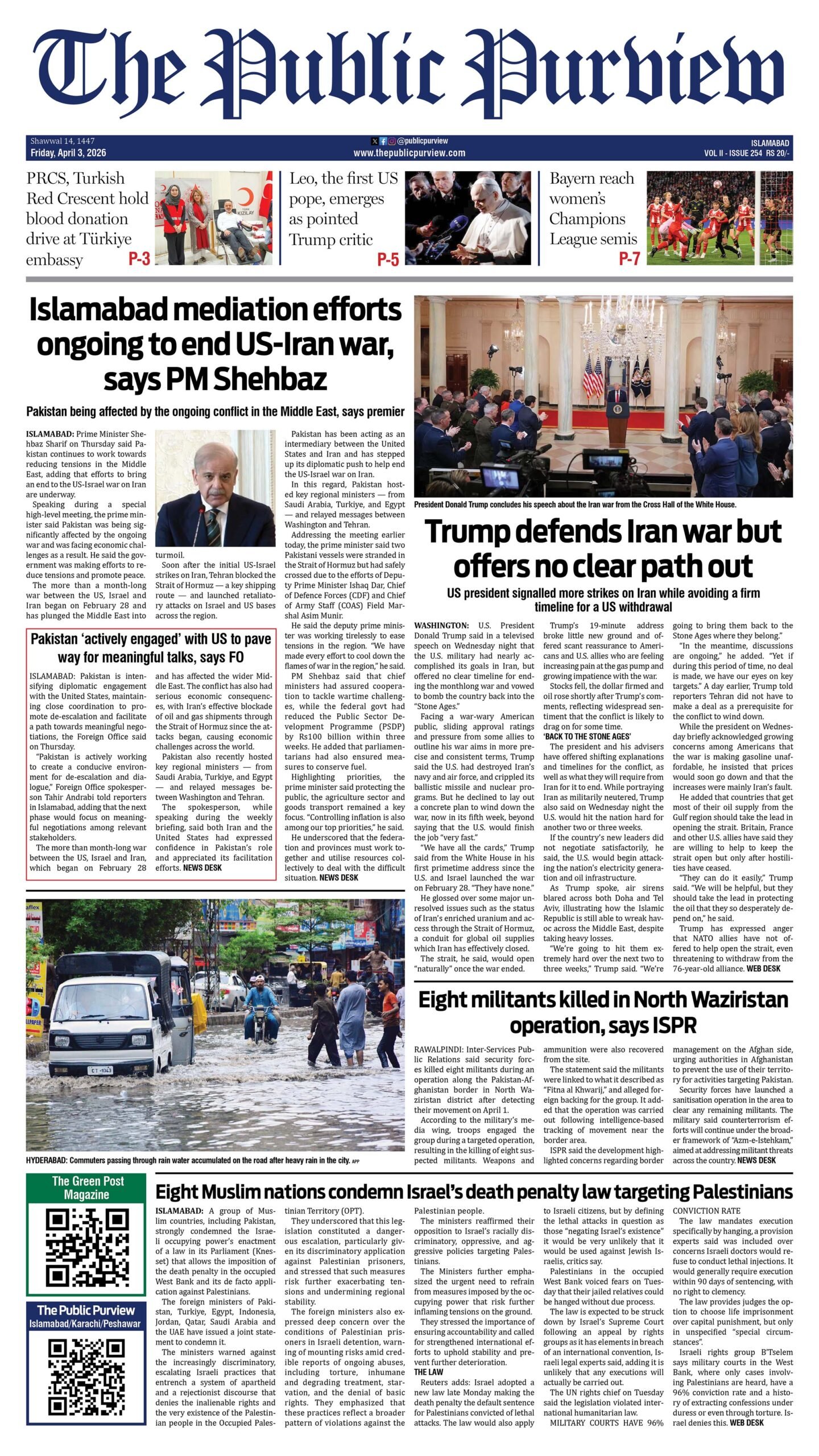 Today's E-Paper