
Khyber Pakhtunkhwa has endured decades of terrorism, extremism, and instability, paying a heavy price in terms of human lives, economic losses, and social disruption. Thousands of innocent civilians, security personnel and law enforcement officials have sacrificed their lives in the fight against militancy. Infrastructure has been damaged, development has been stalled and communities have lived under constant fear. In this challenging context the recent meeting of the Provincial Apex Committee chaired by Chief Minister Sohail Afridi holds immense national importance.
The participation of provincial ministers, military leadership, police officials and senior civil administrators reflect a unified state response against terrorism. It sends a clear message that this war is not limited to any single institution but is a shared responsibility of the entire nation. Paying tribute to martyrs at the beginning of the meeting demonstrated respect for those who laid down their lives for peace and stability.
Terrorism is not merely a security challenge; it is a complex phenomenon rooted in political, social, economic and ideological factors. The recent increase in militant activities in Khyber Pakhtunkhwa is alarming and poses a serious threat to national security. The presence of extremist elements and violent groups demands a comprehensive, long-term and well-coordinated strategy.
The Apex Committee’s focus on identifying and eliminating the root causes of terrorism is a positive development. Poverty, unemployment, lack of education, weak governance and social marginalization often create fertile ground for extremism. Without addressing these underlying issues lasting peace cannot be achieved.
One of the most encouraging aspects of the meeting was the emphasis on consultation and cooperation among political parties, public representatives and the federal government. Pakistan’s history shows that major national challenges can only be overcome through unity and collective resolve.
Political polarization and narrow interests have, in the past, weakened national efforts against terrorism. This is the time for all political forces to rise above personal and party agendas and prioritize national security and public welfare.
The provincial government’s commitment to using all available resources, including the army, police, Counter-Terrorism Department and other institutions, reflects strong political will. Strengthening the capacity of law enforcement agencies, equipping them with modern technology and enhancing their training are essential steps.
However, resources alone are not sufficient. Effective coordination, intelligence sharing, and joint operations are crucial for dismantling terrorist networks. Strengthening intelligence capabilities and improving inter-agency cooperation must remain top priorities.
Chief Minister Sohail Afridi’s emphasis on good governance as a tool to unite the nation against terrorism is both realistic and forward-looking. Global experience shows that extremism thrives where governance is weak and public services are inadequate.
The plan to transform terrorism-affected regions into model districts of good governance can become a game-changer if implemented sincerely. Providing quality education, healthcare, clean water, electricity, roads, and employment opportunities can restore public confidence and weaken extremist influence.
When citizens feel protected and valued by the state, they are less likely to fall prey to radical ideologies.
The announcement of special development and social packages for affected areas is a welcome step. Sustainable peace requires more than military operations; it demands social justice, economic opportunity and inclusive growth.
Youth empowerment deserves special attention. Unemployed and frustrated young people are vulnerable to radicalization. Vocational training programs small business loans and entrepreneurship initiatives can offer them productive alternatives and hope for the future.
Military operations and security measures have forced many families to temporarily leave their homes. Ensuring their rehabilitation and dignified return is both a moral obligation and a strategic necessity.
The government’s promise to provide complete care and essential facilities to displaced persons is encouraging. However, these commitments must be translated into transparent and effective policies. Rebuilding homes, schools, hospitals and markets should be done with community participation to ensure long term stability.
The ultimate success of the fight against terrorism depends on restoring public trust. When people believe that the state is sincere, fair and responsive to their needs, they become active partners in ensuring peace.
The Chief Minister’s statement that “this is our collective war” reflects this reality. Citizens, religious scholars, teachers, media professionals, and civil society organizations must all play their part. Countering extremist narratives requires promoting values of tolerance unity, and patriotism.
The media plays a crucial role in shaping public opinion during times of crisis. Responsible journalism, fact-based reporting, and respect for national interests are essential in countering extremist propaganda.
Avoiding sensationalism and misinformation can help prevent panic and confusion, while constructive reporting can strengthen public morale and confidence.
The recent Provincial Apex Committee meeting sends a strong and hopeful message: Khyber Pakhtunkhwa is determined to confront terrorism with unity, resilience, and strategic clarity. The close coordination between civilian authorities, security forces, and law enforcement agencies reflects the strength of state institutions.
Nevertheless, the true test lies in implementation. Words must be followed by action. If the government fulfills its commitments, promotes good governance, ensures transparency, and actively involves citizens in decision-making, lasting peace will become achievable.
Terrorism cannot be defeated by force alone. It requires justice, education, employment, and accountable governance. Only through this balanced and comprehensive approach can Pakistan move toward a secure, stable and prosperous future.



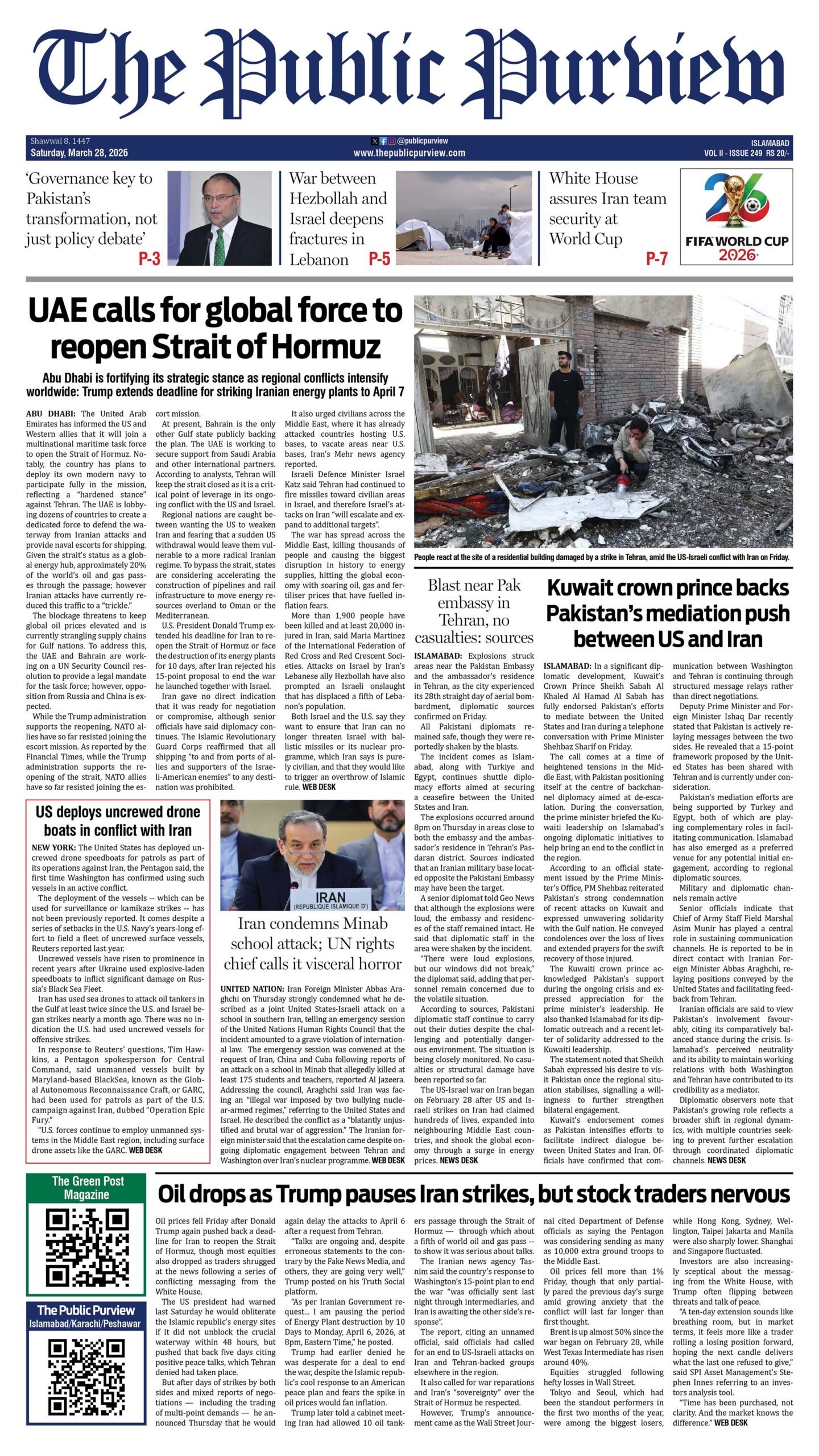 Today's E-Paper