
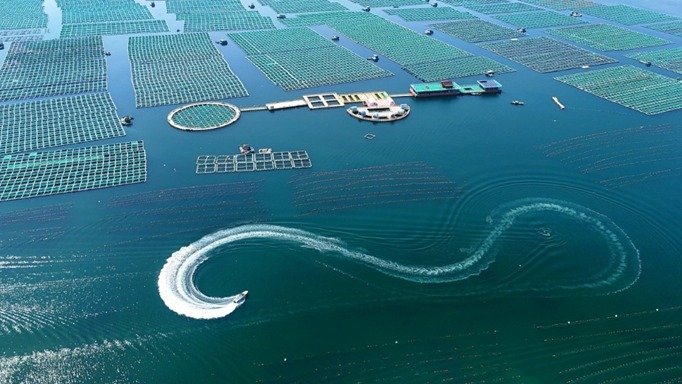
ISLAMABAD: China’s rapid advancements in smart aquaculture and marine modernisation are providing valuable lessons for Pakistan as it seeks to unlock the economic potential of its coastal resources. Experts believe that by aligning effective policy implementation with ecological safeguards and institutional strengthening, Pakistan can enhance food production, expand value-added exports, and create resilient livelihoods through a sustainable blue economy.
A report issued by the Fujian provincial government in March 2026 revealed that China’s aquaculture production surpassed 63 million metric tons in 2025, supported by the introduction of 5G-enabled smart farms. The development underscores how technology-driven planning and coordinated policy execution can significantly increase marine productivity while ensuring environmental sustainability.
In Pakistan, the Planning Commission’s Highlights of the Annual Plan 2025–26 outlines the country’s ambition to harness coastal and marine resources sustainably and achieve a $100 billion blue economy by 2047. The emphasis is now shifting from recognizing potential to establishing practical pathways for building a smarter, greener, and more investable coastal economy.
Speaking to Wealth Pakistan, Dr. Mashooq Ali, Scientific Officer at the Pakistan Agricultural Research Council (PARC), noted that Pakistan possesses one of the world’s most productive coastlines due to its warm marine environment. However, only a small portion of this potential is currently being utilized. He identified three priority avenues for increasing production: cage and pen culture, offshore saline-water intensive shellfish farming, and the selective introduction of high-value marine fish species—preferably monosex to minimize ecological risks.
Also Read: Pakistan eyes tyre export growth as Chinese-backed firm announces $120m expansion
Dr. Ali emphasized that China’s experience demonstrates how planned aquaculture systems can boost marine output without placing additional pressure on wild fisheries. He pointed out that Pakistan’s primary challenge lies not in the absence of policy frameworks but in the limited execution of existing initiatives. Drawing on his experience with cage-culture projects during his tenure at the Fisheries Development Board in 2023, he observed that while substantial policy groundwork had been completed, follow-through remained insufficient. He also highlighted that policies are often developed without adequate consultation with stakeholders and academia, making implementation more difficult.
To address these challenges, Dr. Ali proposed restructuring policy mechanisms to focus on practical delivery. His recommendations included leasing aquaculture cages or coastal land to trained graduates and diploma holders rather than restricting opportunities to large investors, developing supply-demand systems for underutilized exportable products such as shellfish, and allowing selective privatization of coastal areas under strict regulatory oversight.
Ayesha Awan, Coordinator at the World Wide Fund for Nature (WWF) Pakistan, stressed the importance of a balanced “smart and green” transition. She noted that Pakistan’s 1,050-kilometre coastline, extensive Exclusive Economic Zone, and rich marine biodiversity provide a strong yet underdeveloped foundation for blue economy growth. According to her, the key lesson from China is that sustainable development is most effective when technological innovation, ecological conservation, and market systems progress simultaneously.
Awan advocated for a gradual shift from traditional open-water fishing to integrated, technology-driven aquaculture systems, particularly Recirculating Aquaculture Systems (RAS), which recycle water, reduce waste, and enhance productivity. She added that coastal districts in Sindh and Balochistan, as well as inland river systems, are well suited for cultivating high-value species such as shrimp, pomfret, and carp.
She further emphasized that production reforms must be complemented by science-based fisheries management, including the establishment of Marine Protected Areas, seasonal fishing restrictions, and improved vessel monitoring to ensure long-term sustainability. Low-input opportunities such as seaweed and bivalve aquaculture were also highlighted as viable options for supporting community incomes while enhancing marine ecosystems.
Ecosystem restoration, particularly the conservation of mangrove forests, was identified as a critical component of sustainable coastal development. Mangroves serve as natural coastal buffers, nursery grounds for fish, and key contributors to fisheries productivity. Additionally, digitising the fisheries value chain through cold-chain infrastructure, mobile-based market access, and Internet of Things (IoT)-based water-quality monitoring can help reduce post-harvest losses and improve incomes for fishing communities.
On the policy front, Awan called for the establishment of a dedicated blue economy framework under federal leadership, with Sindh and Balochistan fully integrated into governance structures. She also highlighted the potential of public-private partnerships to finance aquaculture infrastructure and recommended incorporating fisheries modernisation into the second phase of the China-Pakistan Economic Corridor (CPEC), including joint ventures for fish-processing zones in Gwadar and other coastal areas.
Strengthening institutional capacity was also deemed essential, with emphasis on enhancing the Marine Fisheries Department, expanding research systems, providing specialised training, and facilitating access to green financing. Awan stressed that community-centric governance is vital, noting that meaningful inclusion of coastal populations is essential for achieving sustainable and long-term outcomes.
Collectively, experts believe that adapting elements of China’s smart blue economy model—through advanced aquaculture technologies, robust institutions, ecological safeguards, and inclusive governance—can enable Pakistan to unlock its marine potential and build a more productive and sustainable coastal economy, contributing to food security, export growth, and environmental resilience.



 Today's E-Paper