
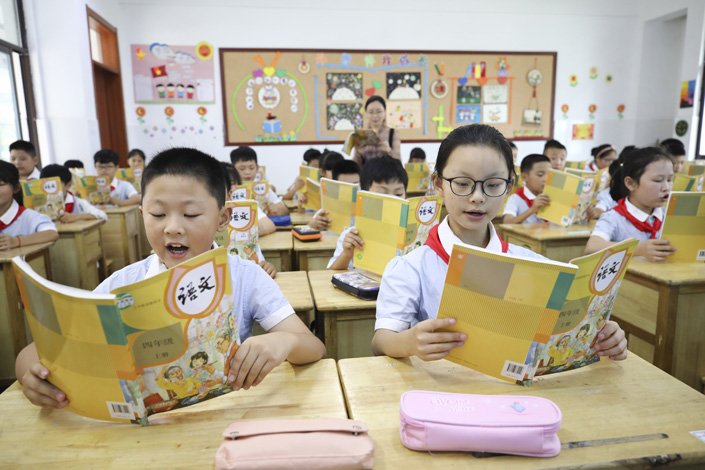
Islamabad: China’s education reforms could provide a practical roadmap for improving Pakistan’s education system by focusing on strong foundations, sustained investment and gradual use of technology, according to a report by Wealth Pakistan.
The report highlights that Pakistan can benefit from prioritising early education, teacher development and infrastructure before adopting advanced digital tools. It notes that China has expanded access and improved quality simultaneously, offering lessons for countries seeking long-term, system-wide reform.
China celebrates first International Taijiquan Day with global showcase at Wuyi Mountain
China currently operates one of the world’s largest education systems, with around 280 million students enrolled across nearly 440,000 schools. Official data shows preschool enrolment at 92.9%, senior high school admission at 92%, and higher education participation exceeding 60%.
Investment and policy focus
China has continued to increase education spending, allocating 4.34 trillion yuan in 2025, a 3.2% rise from the previous year. The government also introduced one year of free preschool education, benefiting millions of children, and increased financial support for students with special needs.
Plans are also in place to further expand central education funding in 2026, reflecting a consistent policy focus on strengthening the sector.
Lessons for Pakistan
Speaking to Wealth Pakistan, education experts said Pakistan should treat education reform as a central development priority rather than a series of isolated initiatives. Abdul Bari stressed that predictable financing, careful planning and equal emphasis on access and quality are essential for lasting improvements.
He highlighted the importance of early childhood education, noting that strong foundations at the preschool level shape future learning outcomes. He also called for inclusive policies that support marginalised communities, including children with disabilities.
Role of teachers and infrastructure
Experts said teacher training remains critical to any meaningful reform. Improving teacher capacity, professional development and working conditions is necessary to translate policy changes into classroom outcomes.
Vreesha Khan emphasised that Pakistan must first strengthen basic infrastructure, including classrooms, laboratories and learning materials, before scaling digital or artificial intelligence-based solutions.
Gradual use of technology
The report advises a phased approach to technology adoption, where digital tools support existing systems rather than replace them. While tools such as learning platforms and AI can enhance teaching and assessment, experts warned that premature implementation without adequate preparation could deepen existing inequalities.
China has also aligned its education system with economic development by expanding academic programmes linked to emerging industries, strengthening the connection between education and workforce needs.
Experts conclude that Pakistan’s path to reform lies in sustained investment, inclusion, teacher development and foundational improvements, with technology introduced only when systems are ready to support it effectively.



 Today's E-Paper