
By Gu Yekai, Song Haoxin, People’s Daily
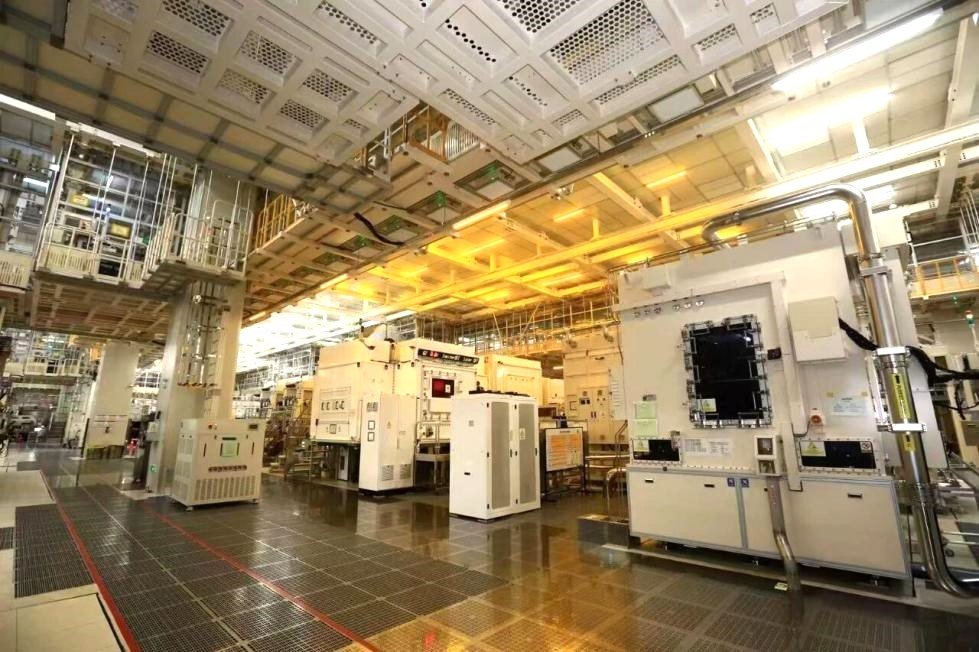
In June 2026, China’s first 8.6-generation AMOLED production line began mass production in Chengdu, southwest China’s Sichuan province. Built and operated by BOE Technology Group Co., Ltd. (BOE), this milestone not only filled a critical gap in China’s high-generation, medium-sized organic light-emitting diode (OLED) sector but also marked the country’s rise to the forefront of next-generation display technology worldwide.
The display industry is a cornerstone of high-end manufacturing. For a long time, the lack of domestically produced display panels constrained the growth of China’s electronics and information sector. After more than two decades of sustained effort, the industry has undergone a remarkable transformation — evolving from small to large in scale and from weak to strong in capability. BOE’s journey reflects this national trajectory.
Founded in 1993 as Beijing Oriental Electronics Group Co., Ltd., BOE’s initially produced precision components and materials for cathode ray tube (CRT) technology.
In the mid-to-late 1990s, when CRT televisions were at their peak and few believed the technology would be replaced, the company recognized the emerging trend of liquid crystal displays (LCDs) and made a bold strategic pivot away from CRT.
In September 2003, BOE began construction of the first 5-generation TFT-LCD production line on the Chinese mainland based on independently developed technologies. By January 2005, the line had shipped its first 17-inch LCD panel, bringing an end to the lack of homegrown LCD panels on the Chinese mainland.
In a capital-intensive industry like displays, strategic missteps can be costly. When a new wave of technological change emerged with OLED, BOE acted early to embrace transformation and pursue innovation.
In 2011, BOE invested in China’s first 5.5-generation AMOLED production line. In 2017, its 6-generation flexible AMOLED line became the first in China to enter mass production, making BOE only the second company in the world to achieve large-scale production of flexible OLED panels.
Today, BOE has become a global leader in the display industry, producing one out of every four display panels worldwide.
Mastering the latest generation of display technology allows companies to expand market share, gain competitive advantage, and even reshape the industry landscape. As OLED screens become more widely adopted in IT products and demand for high-resolution medium- and small-sized OLED panels continues to grow, BOE has moved decisively to seize the opportunity.
“At the time, no mature, dedicated production equipment existed globally for 8.6-generation OLED processes. Many core components had to be customized and developed from scratch,” said Chen Jianjun, senior vice president of BOE. He added that the company overcame a series of technological challenges, worked closely with upstream and downstream partners, and achieved industry-leading performance in multiple areas.
The 8.6-generation AMOLED production line is the largest single industrial project in China’s display sector by investment. Construction began in March 2024. The project reached structural completion in just 183 days, achieved first lighting five months ahead of schedule, and set a new global record for construction efficiency among production lines of the same generation.
Ouyang Zhongcan, an academician of the Chinese Academy of Sciences, said that the mass production of the 8.6-generation AMOLED line represents a shift for China’s display industry — from competing on an existing track to defining the future direction of the sector.
Over the years, BOE has remained committed to innovation. By the end of 2025, the company had filed more than 100,000 independent patent applications. In 2025, BOE ranked eighth worldwide in Patent Cooperation Treaty (PCT) patent applications, maintaining its position among the world’s top 10 PCT applicants for 10 consecutive years.
A broader innovation ecosystem is also taking shape around the display industry.
“We have established joint laboratories with many partners and customers to share R&D resources and explore cutting-edge OLED applications together,” said Feng Qiang, CEO of BOE. He noted that the 8.6-generation AMOLED production line will drive collaborative upgrades among more than 200 upstream and downstream companies, covering key areas such as glass substrates, luminescent materials and driver chips.
BOE now operates three 6-generation flexible AMOLED production lines in Chengdu, Chongqing, and Mianyang, with cumulative OLED display shipments exceeding 600 million units.
China’s new display industry generated more than 800 billion yuan (about $118 billion) in output value in 2025, driving the related application market to 3.6 trillion yuan. Currently, China accounts for 55 percent of the global display panel market and 43 percent of the display materials market, ranking firstin both areas worldwide.