
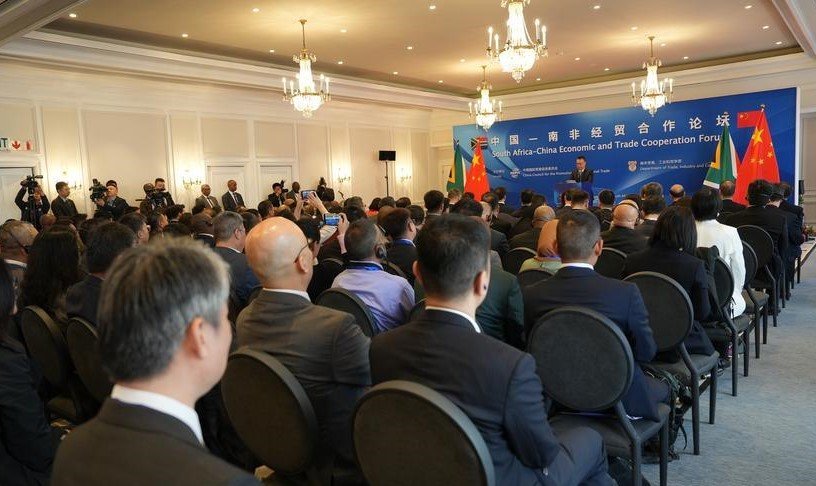
CAPE TOWN — China’s decision to implement zero-tariff measures for 53 African countries has strengthened confidence in trade relations with South Africa, with officials and business leaders pointing to new opportunities for exports and investment.
The development was highlighted at the China-South Africa Economic and Trade Cooperation Forum in Cape Town, where more than 350 representatives from government and industry discussed expanding cooperation across sectors including agriculture, manufacturing, energy and logistics.
Trade access and investment outlook
South African officials said the zero-tariff policy will allow African products to enter the Chinese market without duties, potentially increasing exports and attracting further Chinese investment into the country.
Deputy Minister of Trade, Industry and Competition Alexandra Abrahams said the move is expected to support bilateral trade growth, noting that China remains South Africa’s largest trading partner, while South Africa is China’s biggest partner in Africa.
Industry representatives also pointed to long-term benefits, including improved market access and stronger economic cooperation.
Opportunities for exporters and businesses
Participants at the forum said the policy could help South African exporters reach new markets, particularly in sectors such as agriculture and healthcare. It is also expected to support job creation and inclusive growth at the regional level.
Russel Brueton of the Western Cape Tourism, Trade and Investment Promotion Agency said expanding trade with China aligns with broader development goals, including economic growth and employment generation.
Benefits for Chinese companies
Chinese companies operating in South Africa also indicated that the zero-tariff policy could reduce costs and support business expansion. Manufacturers highlighted potential gains in supply chain stability and access to raw materials.
Executives noted that improved trade conditions may encourage further investment in South Africa, particularly in emerging sectors such as renewable energy and advanced manufacturing.
Broader cooperation and outlook
The forum also underscored the role of trade policy in strengthening wider economic ties, including cultural and tourism exchanges. Participants said the zero-tariff framework provides a foundation for deeper collaboration between the two countries.
With both sides seeking to expand bilateral trade, the policy is expected to contribute to sustained economic engagement despite global uncertainties.


 Today's E-Paper