
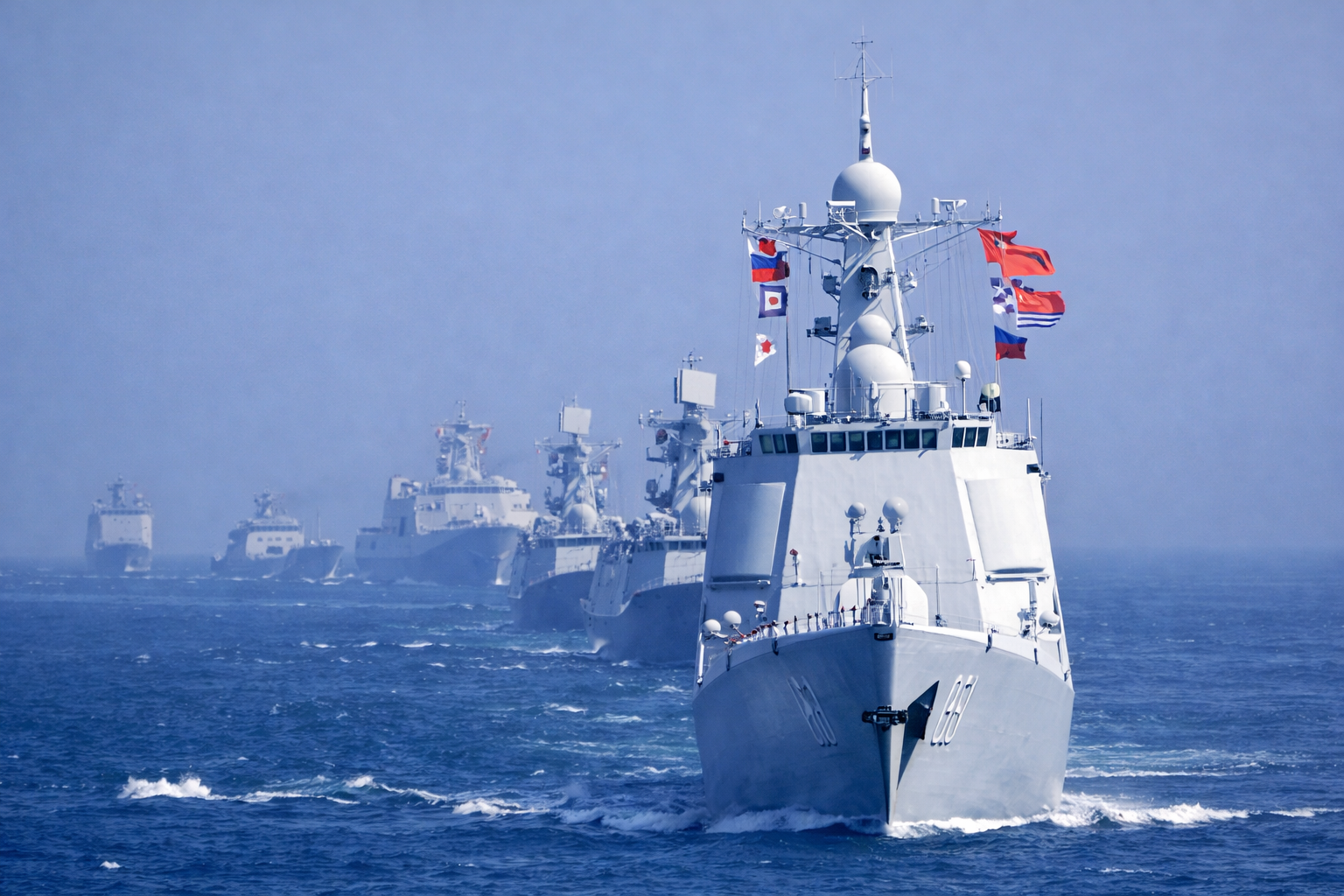
Iran, China and Russia have deployed naval forces to the Strait of Hormuz for a series of joint exercises aimed at strengthening maritime cooperation and safeguarding key shipping lanes, officials said on Tuesday. The maneuvers, known as the “Maritime Security Belt 2026” exercises, are being hosted by Iran in the narrow waterway that links the Persian Gulf with the Gulf of Oman and handles a significant share of global oil exports.
Russian presidential aide Nikolai Patrushev said that naval units from all three countries are expected to take part in the drills, which focus on coordination, tactical readiness and procedures for protecting international trade routes. The exercises build on a series of similar drills initiated by Iran’s navy in 2019 and held annually since then.
Strategic maritime route at focus
The Strait of Hormuz is one of the world’s most strategically important maritime chokepoints, with about one-fifth of the global seaborne oil trade passing through the narrow corridor each day. Any disruption to traffic in this area — for example through conflict or blockades — has historically led to volatility in global energy markets and heightened geopolitical tensions.
Analysts characterise the joint drills as a demonstration of expanding military cooperation among Tehran, Beijing and Moscow against a backdrop of broader regional security dynamics, including the continued presence of U.S. naval forces in the Gulf and recurring tensions between Iran and Western powers.
Regional context, maritime security
Officials said the “Maritime Security Belt” exercises aim to enhance operational coordination and rapid response capability among participating navies. The drills also include coordinated search-and-rescue practices and information sharing designed to reinforce maritime safety.
The joint exercises coincide with other military activity in the Strait of Hormuz, where Iran recently conducted live-fire drills and temporarily closed parts of the waterway for security precautions, drawing international attention to the region’s fragility and the importance of keeping sea lanes open for civilian and commercial shipping.
As these naval manoeuvres continue, international observers are watching closely for potential impacts on shipping routes and global energy markets, given the Strait of Hormuz’s central role in the worldwide oil supply chain.





 Today's E-Paper