
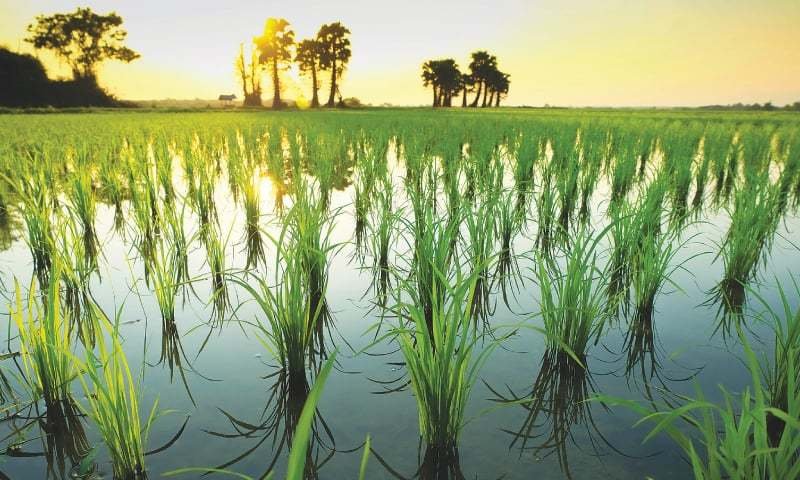
China-Pakistan hybrid rice technology trials in Pakistan are delivering higher-than-average yields, prompting an expansion of joint research and training aimed at strengthening food security and agricultural cooperation between the two countries.
Field trials conducted in Punjab have shown that China’s Honglian hybrid rice outperforms commonly grown local varieties, according to researchers involved in the project. The trials are part of a long-running collaboration between Wuhan University and the University of the Punjab, which began in 2018 and has since evolved into a broader institutional partnership.
Also Read: Pakistan’s agriculture sector grows 2.9% in Q1 FY2026 as credit support rises
Higher yields from trial varieties
Researchers tested three Honglian hybrid rice strains—H13, H14 and H15—recording yields between 10.8 and 12.3 tonnes per hectare. Scientists involved in the trials said H14 performed particularly well due to larger panicles and a higher grain count, producing more than 12 percent higher output than widely cultivated local rice varieties.
The collaboration later led to the establishment of the China-Pakistan Joint Research Center for Honglian Hybrid Rice, which focuses on improving crop productivity, resilience and adaptation to local conditions.
Focus on resilience and modern farming tools
According to faculty at the University of the Punjab, Honglian hybrid rice is valued for its resistance to disease and its ability to maintain stable yields under high temperatures. Researchers say these traits are increasingly important as climate variability affects crop performance across South Asia.
The project also integrates artificial intelligence, big data analysis and remote sensing to support seed production, crop monitoring and farm management. Over the past five years, demonstration plots and experimental sites have been set up, alongside training programs for farmers, technicians and university students.
Academic exchange and long-term cooperation
University officials said the initiative is also expanding academic opportunities, with Pakistani students gaining access to advanced training and research collaboration in agricultural sciences. The program aligns with broader cooperation frameworks under China-Pakistan academic and scientific exchanges.
In June 2025, one Honglian hybrid rice variety received official registration from Pakistan’s agricultural authorities, allowing it to be adopted more widely and cultivated commercially. Researchers say the approval marks a significant step toward scaling up the technology as part of Pakistan’s efforts to improve rice productivity and long-term food security.





 Today's E-Paper