
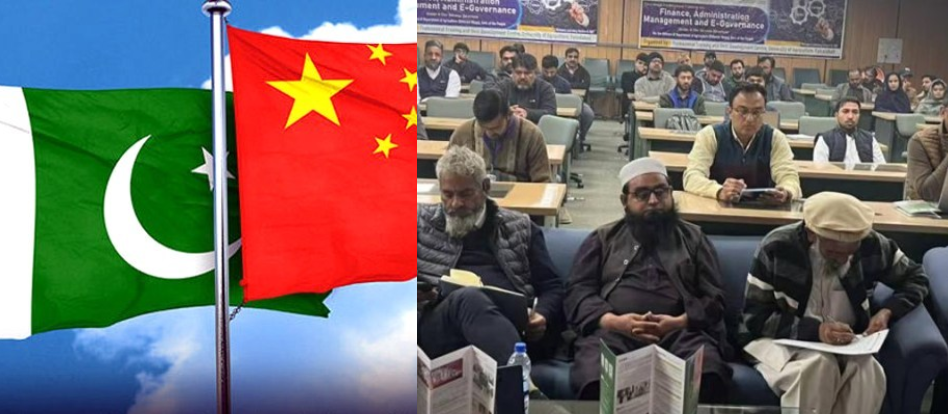
FAISALABAD— Pakistan and China are strengthening cooperation in climate-smart agriculture as growers, researchers, and students gathered in Faisalabad for a two-day international workshop focused on improving citrus production in the face of climate change.
The workshop, titled “Prospects of Climate Smart Citrus Production: Adaptive Strategies for a Changing World,” was held at the University of Agriculture Faisalabad from February 4 to 5. The event aimed to share practical solutions to help Pakistan’s citrus sector adapt to changing climate conditions and improve global competitiveness.
Also Read: China and Pakistan Test New Hybrid Rice Technology in Punjab, Showing Bigger Harvests
The programme was jointly organized by the university’s Institute of Horticultural Sciences and the China–Pakistan Horticulture Research and Demonstration Center established by Huazhong Agricultural University. It marked the second consecutive year of collaboration under the initiative.
Focus on productivity and climate resilience
Citrus remains Pakistan’s leading fruit crop, with the country ranking among the world’s top producers and exporters. However, experts at the workshop noted that Pakistan currently holds a small share of the global citrus export market, underlining the need for improved productivity, quality enhancement, and climate resilience.
An exhibition held alongside the sessions showcased 25 citrus varieties, including mandarins, sweet oranges, and grapefruits, highlighting opportunities for diversification and value addition.
A key component of the workshop was hands-on technical training. Professor Liu Yongzhong of Huazhong Agricultural University led practical sessions for local growers on advanced pruning techniques designed to improve tree health and increase yields. He also discussed the introduction of nine Chinese citrus cultivars into Pakistan, which have been propagated and are scheduled for transplantation during the upcoming monsoon season.
Strengthening institutional collaboration
Speaking at the event, Professor Dr. Zulfiqar Ali, Vice Chancellor of the University of Agriculture Faisalabad, emphasized the importance of sustained academic and research partnerships in modernizing Pakistan’s agriculture sector. He said collaboration with Chinese institutions is helping transfer knowledge, technology, and innovation to local farmers.
The workshop builds on existing agreements between the two universities, including the establishment of a China–Pakistan Horticultural Demonstration Center and a joint laboratory in Wuhan focused on germplasm innovation.
Organizers said continued cooperation in research, training, and technology transfer will support food security, improve farmer livelihoods, and promote sustainable agricultural development in Pakistan amid growing climate challenges.





 Today's E-Paper