
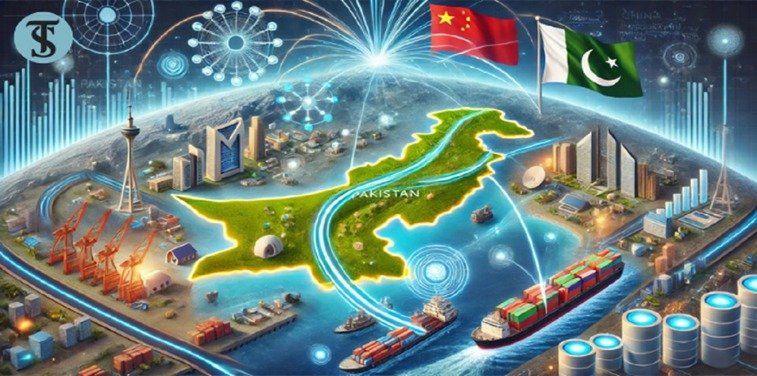
ISLAMABAD, October 19, 2026 (INP-Wealth Pakistan): Foreign investment in China’s high-tech industries rose 35.1% during the first eight months of 2026, even as overall foreign direct investment declined, highlighting growing international investor interest in research, advanced manufacturing and technology-driven industries.
According to China’s Ministry of Commerce (MOFCOM), foreign investment actually utilised in high-tech industries reached RMB200.26 billion between January and August 2026, while total utilised foreign direct investment (FDI) fell 5.3% year-on-year to RMB479.95 billion. The changing investment pattern could create opportunities for Pakistan to expand technology transfer, industrial partnerships and higher-value manufacturing under the second phase of the China-Pakistan Economic Corridor (CPEC 2.0).
High-tech industries accounted for 41.7% of China’s total utilised foreign investment during the period, an increase of 12.4 percentage points compared with a year earlier.
Investment in research and development (R&D) and design services increased 74%, while foreign investment in services supporting the commercialisation of scientific and technological achievements rose 64.2%.
Electronic and telecommunications equipment manufacturing also recorded a 41.9% increase in foreign investment.
The figures indicate a growing concentration of international capital in China’s technology-intensive industries, despite the decline in overall foreign investment.
China’s high-tech investment growth offers lessons for Pakistan
Asad Rehman, a policy analyst at S&P Global, told Wealth Pakistan that China’s shift towards innovation-driven growth offered important lessons for Pakistan’s industrial development strategy.
He said Pakistan needed to move beyond attracting foreign capital alone and place greater emphasis on technology transfer, research partnerships and higher-value manufacturing.
“Pakistan has to distinguish between attracting Chinese capital and attracting Chinese technology,” Rehman said.
He explained that future Chinese investment should help establish local supplier networks, transfer production capabilities, train engineers and technicians, and integrate Pakistani companies into higher-value regional supply chains.
Rehman said joint ventures that strengthened domestic industrial capabilities and improved export competitiveness should become a greater priority in Pakistan’s economic cooperation with China.
Foreign-funded research centres expand in China
China’s Ministry of Commerce has previously highlighted the growing role of foreign-funded research and development centres in the country’s innovation system.
Multinational companies have increasingly expanded their activities in China beyond manufacturing to include research, product development and innovation serving international markets.
During 2025, approximately 14,000 new foreign-invested enterprises were established in China’s scientific research and technical services sector, representing a 27.2% year-on-year increase.
The expansion reflects China’s growing role in technological development and the commercialisation of scientific research alongside its established manufacturing capabilities.
For developing economies, the trend highlights the importance of attracting investment that combines financial capital with technical expertise, skilled employment and research collaboration.
CPEC 2.0 could support technology partnerships
Rehman said CPEC 2.0 provided an existing framework for expanding industrial and technological cooperation between Pakistan and China.
He noted that the evolving bilateral economic agenda increasingly emphasised industrialisation, innovation and business-to-business partnerships.
Pakistan should identify industries where Chinese technological expertise could complement its existing manufacturing capabilities and export potential, he said.
Potential areas for cooperation include electric vehicles and components, batteries, energy-storage systems, electronics, solar and renewable-energy equipment, agricultural technology, pharmaceuticals and selected engineering industries.
However, Rehman cautioned that Pakistan would need to address investment barriers, improve industrial competitiveness and strengthen its business environment to attract technology-intensive manufacturing projects.
Pakistan needs stronger research-industry links
Muhammad Kamran, a scientific officer at the Pakistan Council of Scientific and Industrial Research (PCSIR), told Wealth Pakistan that China’s expansion in advanced manufacturing and innovation-intensive industries could create opportunities for bilateral technological cooperation.
He said Pakistan’s ability to benefit would depend on improving its domestic industrial capabilities and preparing local businesses to participate in more advanced manufacturing activities.
Kamran noted that Pakistan had a growing pool of information technology professionals, universities and research institutions, but these resources were not yet sufficiently connected with industrial production.
He called for closer cooperation among universities, research organisations and manufacturing companies to develop the technical expertise required by emerging industries.
Kamran also stressed the importance of predictable regulations, reliable electricity supplies, efficient transport infrastructure and stronger investor protections.
These conditions, he said, were necessary to encourage Chinese and other international manufacturers to make long-term investments in Pakistan.
He added that connecting scientific research with industrial production would be essential for turning potential technology partnerships into sustainable industrial growth.
The latest Chinese investment figures illustrate the increasing importance of research capabilities, advanced manufacturing infrastructure and technological expertise in international investment decisions.
For Pakistan, the experts said, CPEC 2.0 could provide a platform for attracting technology-based investment, provided the country strengthens its industrial capacity and creates conditions that support long-term manufacturing and research partnerships.