
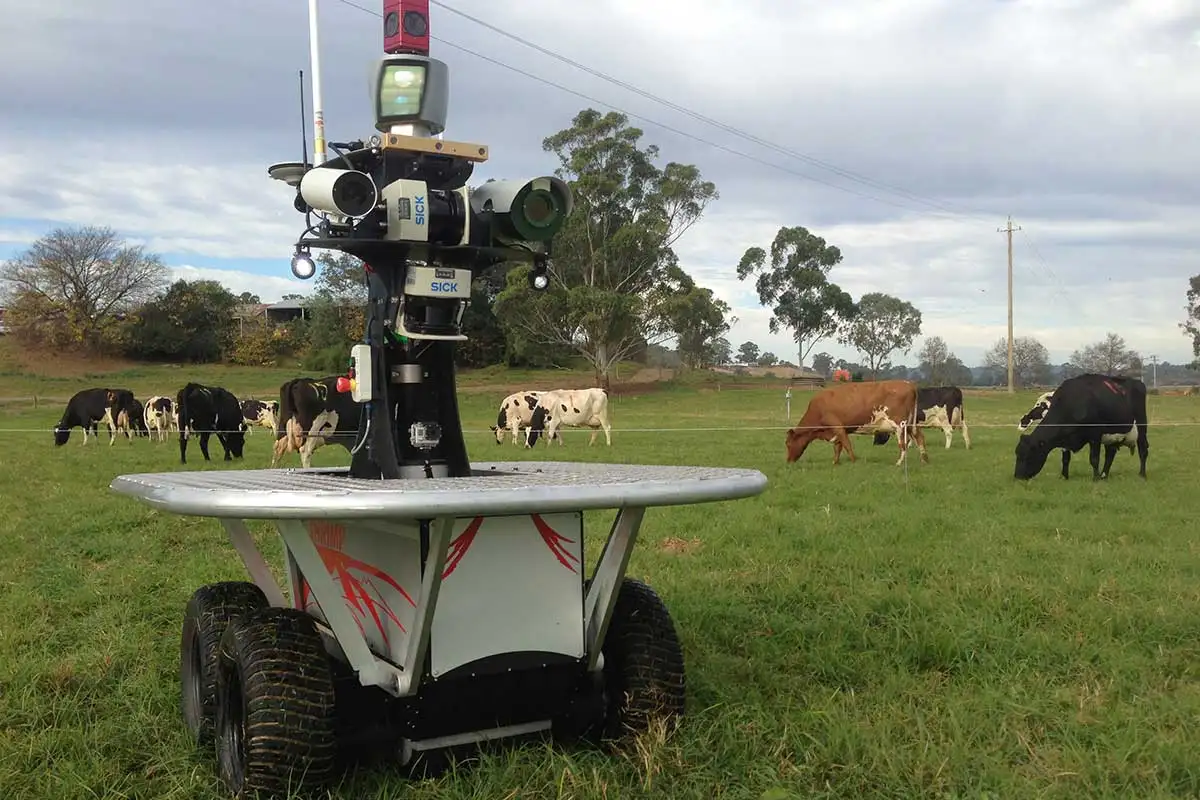
BEIJING: Chinese researchers have developed a lightweight artificial intelligence model that enables grazing robots to accurately recognize cattle behavior in grassland pastures, a breakthrough expected to improve herd feeding efficiency and livestock management.
The model, known as MASM-YOLO, was developed by researchers at the Chinese Academy of Agricultural Sciences and is designed to analyze video captured by quadruped robots operating in grazing areas. The research findings were recently published in the journal Computers and Electronics in Agriculture.
Accurate and rapid identification of cattle behavior plays a critical role in disease detection, estrus monitoring, calving prediction, and overall health assessment. Researchers said the new model allows robots to perform these tasks more efficiently under real-world pasture conditions.
Designed for real-time use in complex environments
According to the research team, MASM-YOLO supports precise detection of multiple cattle behaviors while remaining lightweight enough for real-time use on mobile robots. The model addresses common challenges in outdoor grazing environments, including changing light conditions, motion blur, and visual obstruction within cattle groups.
By integrating multi-scale feature extraction and adaptive alignment technologies, the system maintains a balance between high recognition accuracy and low computational demand.
Recognizing key cattle behaviors
The model is capable of rapidly identifying six typical beef cattle behaviors, including feeding, resting, movement, and licking. Researchers said this capability provides essential technical support for the large-scale deployment of grazing robots in livestock farming.
They added that the development marks an important step toward smarter, automated livestock management systems, particularly in expansive grassland regions where traditional monitoring is labor-intensive and time-consuming.





 Today's E-Paper