
Islamabad — China’s latest development planning for 2026–2030 is placing greater emphasis on family support, childcare and public health, highlighting policy approaches that experts say could offer useful lessons for Pakistan. The reforms focus on improving maternal and child wellbeing as part of long-term national development.
Recent policy documents and budget reports show that China is expanding support for families through childcare subsidies, preschool access and stronger community-based healthcare systems. Analysts say these measures demonstrate how integrated social and health policies can improve outcomes for children and families.
Expansion of childcare and family support
China’s current plan includes one year of free preschool education for the final kindergarten stage and annual childcare subsidies of 3,600 yuan for children under three. Officials say these initiatives have already reached millions, with free preschool benefiting around 14 million children and subsidies covering more than 30 million.
The next phase of reforms is expected to further strengthen maternal and child health services, including maternity insurance, parental leave policies and the expansion of childcare facilities at the community level.
Focus on healthcare access and outcomes
China has also set targets to improve overall health indicators, including raising life expectancy to around 80 years during the 2026–2030 period. According to official data, life expectancy reached 79.25 years in 2025, reflecting steady progress over recent years.
Also Read: A day in the life of China’s economy
Primary healthcare has played a key role in this improvement. By 2025, community-level health institutions were handling more than half of all medical consultations nationwide. In addition, over 90 percent of the population can now access a healthcare facility within a 15-minute walk, indicating expanded coverage across urban and rural areas.
Implications for Pakistan
Experts say these developments underline the importance of strengthening maternal and child support systems in Pakistan. Shahid Mahmood Qureshi, a child protection consultant in Azad Jammu and Kashmir, said improved antenatal and postnatal care, better maternal nutrition and access to skilled birth attendants are essential for improving outcomes.
He added that outreach in remote areas should connect healthcare services with birth registration, parenting support and child protection mechanisms to ensure early intervention for vulnerable families.
Need for integrated childcare policies
Qureshi also emphasised the need for accessible childcare and early childhood development centres, particularly for working families. He said community-based childcare services can support both child wellbeing and economic participation.
China’s approach highlights the role of combining financial assistance with service delivery, suggesting that childcare infrastructure is as important as direct subsidies.
Strengthening primary healthcare
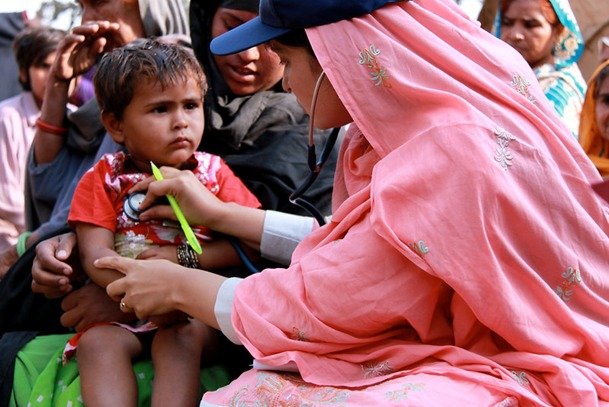
Public health researcher Dr Pavan Kumar noted that Pakistan can build on existing initiatives such as the Lady Health Worker Programme to expand outreach, immunisation and maternal health services, especially in underserved areas.
He said social protection measures, including financial support programmes, should be complemented by practical childcare solutions such as community centres and workplace daycare facilities.
Long-term development perspective
Experts say childcare should be treated as part of a broader development strategy rather than a standalone welfare issue. Integrating health, nutrition, early education and parental support can improve long-term outcomes in education, productivity and population health.
China’s current policy direction suggests that coordinated systems linking childcare, education and healthcare can play a key role in national development. For Pakistan, adapting similar approaches could help strengthen maternal and child wellbeing while supporting sustainable growth.




 Today's E-Paper