
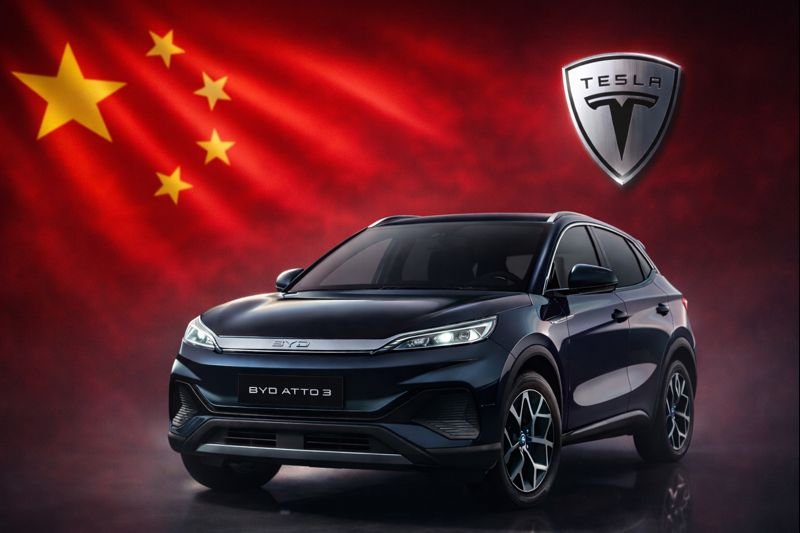
BEIJING — China will ban hidden or flush door handles on all electric vehicles sold in the country starting January 1, 2027, a safety-driven regulation that BYD says will not affect its operations, while automakers such as Tesla are expected to face design changes.
The rule was announced on February 2, 2026, by China’s Ministry of Industry and Information Technology following investigations into several fatal accidents in which concealed or electronic door handles failed after crashes, trapping passengers inside vehicles. Models already approved for sale before the ban takes effect will be allowed to remain on the market during a transition period until January 1, 2029.
Under the regulation, all vehicles sold in China from 2027 onward must be equipped with mechanical door release mechanisms on both the interior and exterior, ensuring doors can be opened even if electronic systems fail during collisions or fires.
BYD said the regulation would not affect its operations.
Stella Li, executive vice president of BYD, said the company was already prepared to comply with the new requirements, noting that several BYD models sold in China use conventional exterior door handles alongside electronic systems.
Speaking in comments reported by Bloomberg TV, Li said the ban would have “no impact” on BYD, adding that the company can adjust designs as required by regulators.
In contrast, Tesla — which popularised flush door handles across much of its vehicle lineup — is expected to face broader redesign requirements for vehicles sold in China. Industry analysts say compliance could require changes to door structures, exterior panels and manufacturing processes. Tesla has not yet issued a detailed public response to the regulation.
Other Chinese electric vehicle makers, including NIO and XPeng, which use concealed handles on several premium models, are also expected to modify designs ahead of the 2027–2029 compliance deadline.
The regulation specifies that exterior door handles must include a recessed grip area of at least 6 cm × 2 cm × 2.5 cm to allow manual operation. Inside vehicles, manufacturers must provide clear visual instructions showing occupants how to use mechanical door releases in emergencies.
Chinese regulators said the measures are intended to improve passenger safety and allow faster access for emergency responders. Analysts say the move underscores China’s growing influence in setting global electric vehicle safety standards, given its position as the world’s largest EV market.





 Today's E-Paper