
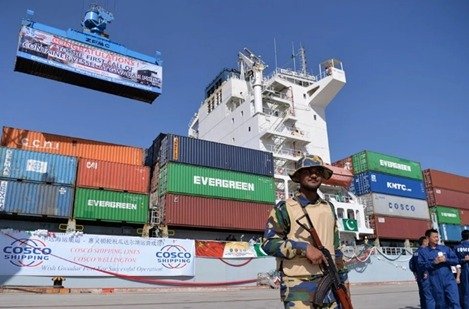
ISLAMABAD, October 28, 2026: Proposed railway connections linking Central Asia with Pakistan through Afghanistan could create new trade opportunities for Karachi and Gwadar ports, potentially positioning Pakistan as a major maritime gateway for landlocked Central Asian economies.
However, experts say the success of these regional transport corridors will depend on competitive freight costs, reliable cross-border movement, improved customs procedures and better integration of railway, road and port infrastructure.
The proposed Kazakhstan-Uzbekistan-Afghanistan-Pakistan railway corridor, being explored under the Central Asia-South Asia (CASA) project, could eventually transport up to 10 million tonnes of cargo annually towards Pakistan’s seaports, according to Kazakh authorities.
The estimated volume represents the corridor’s projected capacity rather than confirmed freight demand.
Regional railway projects gather momentum
Kazakhstan, Uzbekistan and the United Arab Emirates signed a memorandum on September 30, 2026, to examine the technical and economic feasibility of the proposed railway connection.
According to the Kazakh government, the participating countries plan to assess railway infrastructure requirements, logistics facilities and potential financing arrangements.
The parties are also considering establishing a working group to evaluate the project’s technical, economic and financial aspects.
The initiative complements the Uzbekistan-Afghanistan-Pakistan railway project, for which the three countries signed a framework agreement in July 2025 to undertake a joint feasibility study.
Pakistan and Uzbekistan subsequently reaffirmed their commitment to the Termiz-Kharlachi route and joint financing arrangements for the study.
Together, these initiatives reflect growing regional interest in developing alternative trade routes connecting Central Asian markets with international shipping networks.
Pakistan’s logistics sector could benefit
Mujtaba Arshad, Research Associate at the Centre of Excellence for CPEC at the Pakistan Institute of Development Economics, told Wealth Pakistan that improved railway connectivity could create significant opportunities for Pakistan’s transport and logistics industry.
However, he cautioned that geographical proximity alone would not guarantee commercial success.
According to Arshad, transportation costs, customs documentation, border management and the reliability of cargo movement would determine whether exporters considered the proposed corridor economically attractive.
He explained that railway connectivity would continue to depend on road transport because goods must move between production centres, warehouses, railway terminals and seaports.
Pakistan would therefore need to improve highways connecting major freight terminals with Karachi and Gwadar while developing secure parking areas, modern cargo-handling facilities and efficient customs clearance systems.
Arshad also emphasised the importance of coordination among railway authorities, port operators and road transport companies to ensure smooth cargo movement.
Railway connectivity alone cannot guarantee trade growth
Usama Haider, President of the Karachi chapter of the All Pakistan Driver and Cleaner Association, said the proposed railway corridors could generate new opportunities for transport operators, logistics companies and businesses involved in freight handling.
However, he stressed that their commercial viability would depend on actual cargo demand and dependable transportation arrangements.
“A railway connection alone cannot guarantee increased trade unless there is sufficient freight demand and arrangements for uninterrupted cargo movement,” he said.
Haider explained that exporters and logistics operators would evaluate the proposed route according to freight charges, delivery times, border security and the predictability of cargo movement.
He said road transport would remain essential even if long-distance freight increasingly shifted to railways.
Trucks would still be required to transport goods between railway terminals, industrial areas, warehouses and port facilities.
Consequently, competitive freight charges, efficient cargo handling and dependable highway connections would be just as important as investment in railway infrastructure.
Border security and customs remain challenges
Haider identified security conditions in Afghanistan, unpredictable border closures and lengthy customs procedures as major obstacles to the development of commercially viable regional freight corridors.
He warned that delays and uncertainty could increase transportation costs and discourage international freight operators from using the proposed routes.
To address these challenges, he recommended closer coordination among railway authorities, highway operators, customs departments and port management organisations.
He also called for digital customs procedures, predictable transit regulations and shorter clearance times to improve the competitiveness of Pakistan’s transport network.
Modern logistics terminals and better cargo-handling facilities would further support efficient freight movement between different modes of transportation.
Opportunities for Karachi and Gwadar ports
The proposed railway connections could provide Central Asian exporters with additional access to international markets through Pakistan’s seaports.
For Pakistan, increased transit trade could support businesses involved in freight transportation, warehousing, cargo handling, logistics services and related commercial activities.
Greater cargo movement could also generate economic opportunities around railway terminals, industrial areas and port facilities.
However, experts cautioned that the scale of these benefits would depend on actual freight volumes, infrastructure development and the cost competitiveness of the proposed corridors.
The Kazakhstan-Uzbekistan-Afghanistan-Pakistan railway remains at the feasibility assessment stage, meaning construction timelines, financing arrangements and future cargo volumes have yet to be established.
Experts maintained that Pakistan should use the current planning period to strengthen its transport infrastructure, streamline border procedures and improve coordination between railway and maritime authorities.
They said transforming regional railway proposals into commercially sustainable freight corridors could help Pakistan expand its transit trade, attract logistics investment and strengthen economic cooperation between Central and South Asia.
With efficient ports, reliable road networks and predictable cross-border arrangements, Karachi and Gwadar could eventually handle a greater share of Central Asian cargo destined for international markets.