
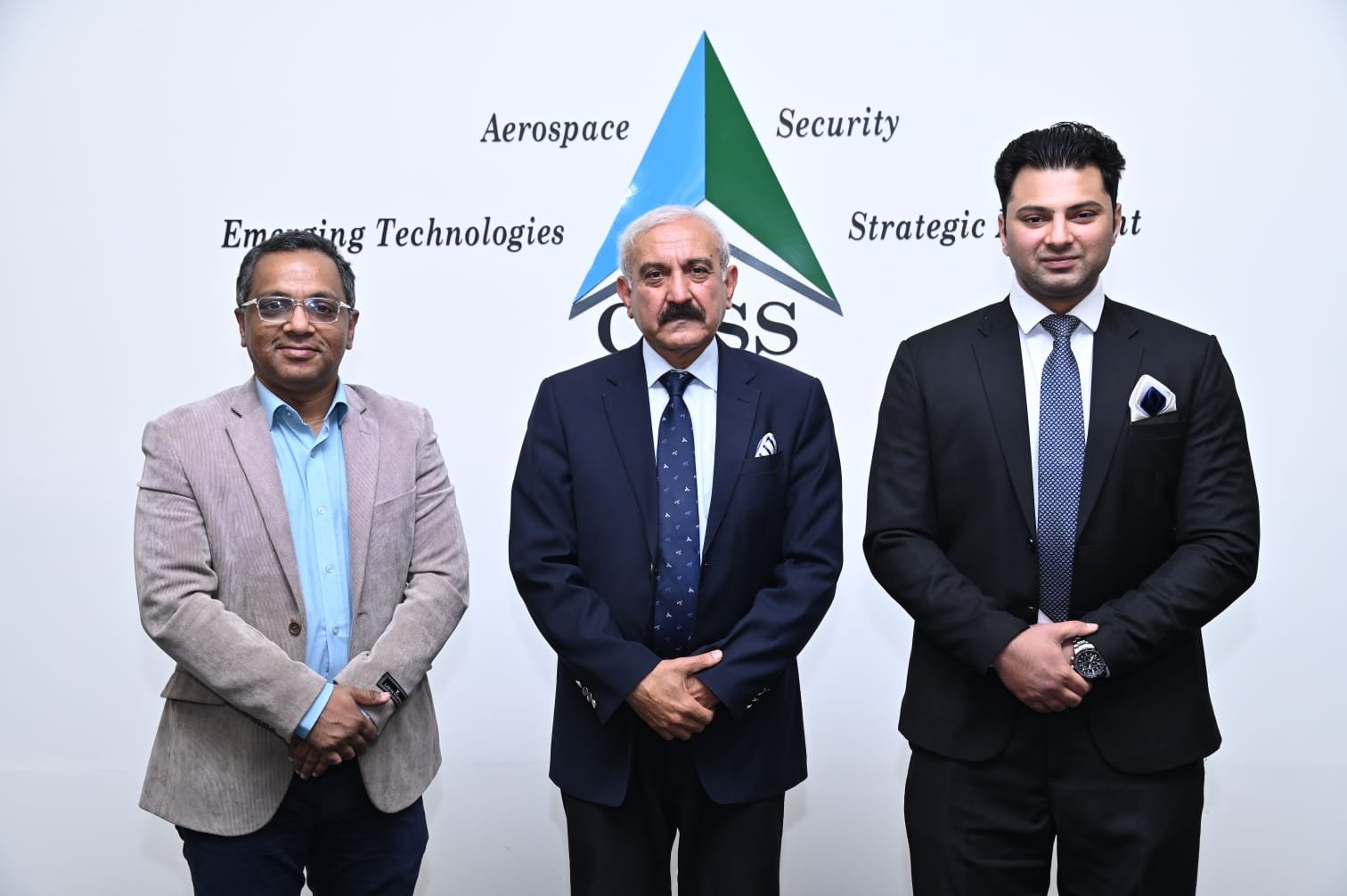
Lahore: The Centre for Aerospace and Security Studies (CASS) on Tuesday underscored youth engagement as central to advancing Pakistan’s space ambitions during a policy talk that examined how innovation, education, and public awareness can strengthen the country’s national space ecosystem.
The session, titled “Space and Pakistan’s Future: Mobilising the Youth and Fostering Innovation,” was held as part of CASS’s Tech Talk series and brought together researchers and practitioners to discuss why broader participation—particularly from young people—matters for Pakistan’s long-term space development.
Opening the event, Air Marshal (Retd) Javaid Ahmed, President of Centre for Aerospace and Security Studies, said space research was a core focus area for the institute due to its strategic and developmental relevance. He noted that CASS had provided policy-oriented input during the formulation of Pakistan’s Space Policy and pointed to limited interdisciplinary engagement within academia, where space studies remain largely confined to physics and engineering.
Focus on youth and innovation
The talk was delivered by Muhammad Iftekhar Yezdani, Chief Executive Officer of Raheqamar, who highlighted Pakistan’s demographic profile, noting that nearly two-thirds of the population is under the age of 30. He said this presented a significant opportunity to build a sustainable space ecosystem if interest and skills were developed early.
Yezdani outlined a four-part framework—Cultivate, Educate, Activate, and Amplify—aimed at expanding space awareness and innovation. His proposals included supporting local science communicators, integrating real-time satellite data into education, launching national space challenges and CubeSat programmes, strengthening incubators, and using digital platforms to build learning communities.
Also Read: CASS Roundtable Stresses Financial Inclusion for Economic Security
He also stressed the importance of modern science communication tools, such as short-form video, immersive media, storytelling, and gamification, to make space science more accessible and engaging for young audiences.
Policy continuity and institutional support
In his concluding remarks, the CASS president said the discussion highlighted the value of a bottom-up approach to innovation in the space sector and reiterated the need for sustained policy attention and institutional backing. He described Pakistan’s progress in the space domain as encouraging and cited the National Aerospace Science and Technology Park as a positive step toward strengthening the country’s broader technological ecosystem.
The event concluded with an interactive session focused on education, innovation pathways, and the role of youth in shaping Pakistan’s future in space.
 Today's E-Paper