
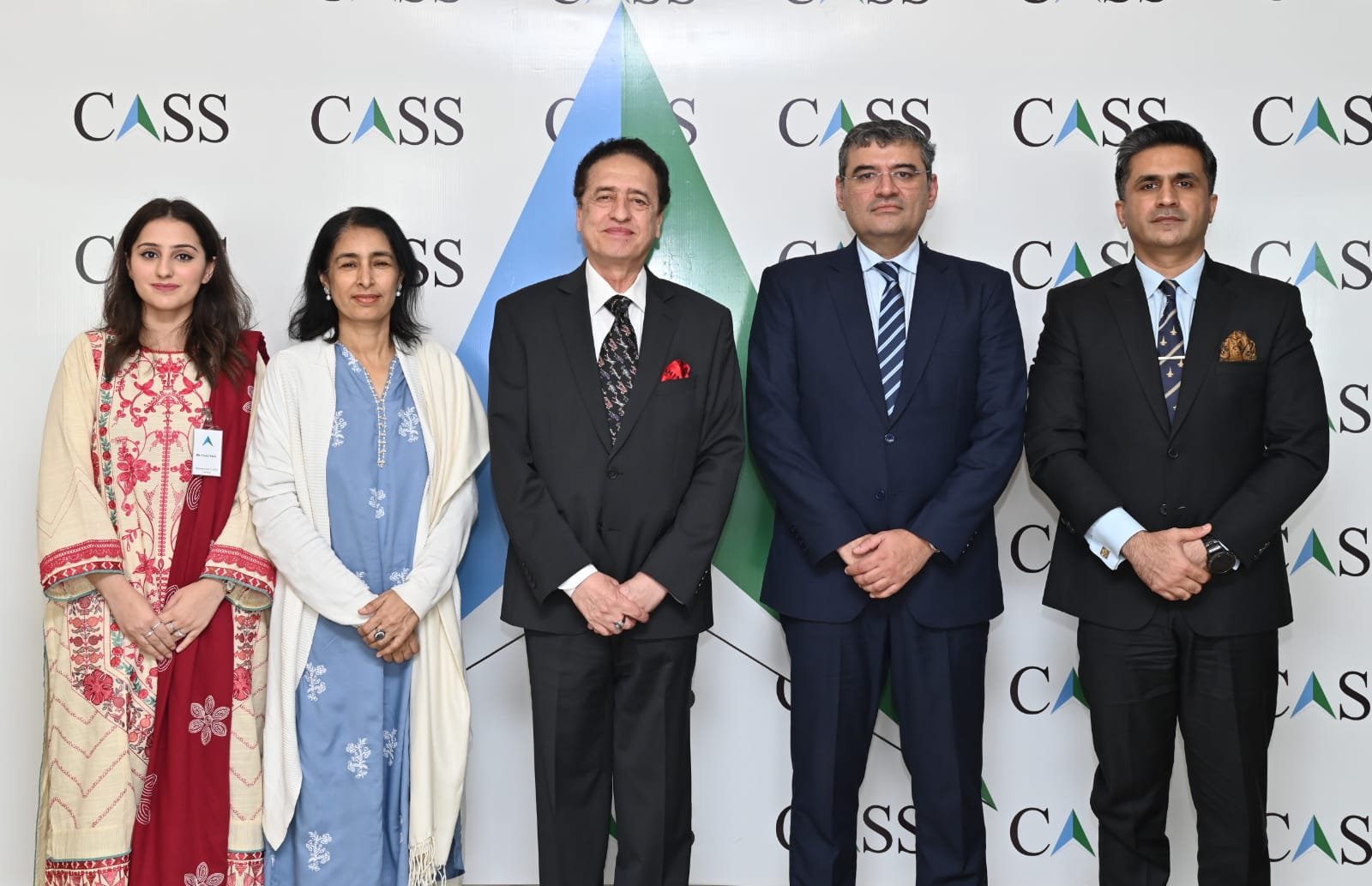
LAHORE — The Centre for Aerospace and Security Studies (CASS), Lahore, on Wednesday organised a roundtable discussion titled “Growing Up with Algorithms: How AI Is Rewiring Childhood and Youth,” bringing together academics and experts to examine the social and psychological effects of artificial intelligence on young people.
According to a statement, the discussion focused on the growing role of algorithms in education, play and social interaction, and how emerging technologies are reshaping childhood experiences. The event was attended by scholars, intellectuals and domain specialists, with opening remarks delivered by Faiza Abid, Research Assistant at CASS Lahore.
Education, learning and algorithmic influence
In the first session, Dr Ibrar Hussain, Dean of Information Technology at the University of Lahore, discussed how algorithm-driven systems are influencing children’s learning environments. He highlighted the use of adaptive classrooms, smart toys, AI-powered games and digital simulations that increasingly link school and home through blended learning models.
Dr Hussain also cautioned against potential risks associated with such technologies, including data privacy concerns, effects on cognitive development, overdependence on digital systems and increased surveillance. He stressed the need for secure and responsible AI development to safeguard children’s psychosocial well-being.
Psychological and social implications for youth
The second session featured Dr Shazia Hasan, Professor of Psychology at the University of Central Punjab, who examined how algorithmic environments are affecting identity, decision-making and individual agency. She noted that while AI tools can support cognitive growth, excessive reliance on them may reduce self-reflection, emotional engagement and independent judgement.
Focusing on young users, Dr Hasan warned that uncritical dependence on AI systems could weaken autonomy and critical thinking. She emphasised the importance of interpreting AI-generated information within ethical, social and cultural contexts to preserve human agency and self-awareness.
Call for ethical and guided use of AI
In his concluding remarks, Air Marshal Asim Suleiman (retd), President of CASS Lahore, said artificial intelligence has become deeply embedded in daily life through digital platforms, games and social media. He noted that while AI offers opportunities for creativity, personalised learning and problem-solving, it also poses challenges related to privacy, resilience and independence.
He stressed that families, educators and policymakers must play an active role in guiding the ethical use of AI, supported by research-based policies and human-centred collaboration, to ensure positive development among children and youth.
The roundtable concluded with an interactive discussion, during which participants highlighted the far-reaching implications of artificial intelligence for education, youth development and society, and appreciated CASS Lahore’s initiative in facilitating dialogue on the issue.




 Today's E-Paper