
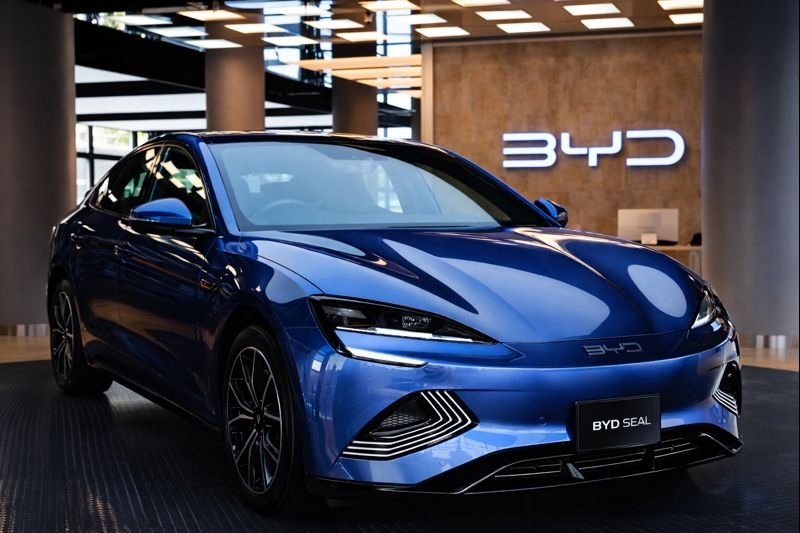
China’s BYD reported a fifth consecutive monthly decline in vehicle sales in January, as intensifying domestic competition and a cooling policy environment weigh on the country’s largest electric vehicle producer.
The automaker said in a stock exchange filing on Sunday that it sold 210,051 vehicles globally last month, a 30.1% drop from a year earlier. The continued slide highlights growing pressure in China’s electric vehicle market, where demand growth is slowing and price competition remains fierce.
Sales of plug-in hybrid vehicles — which account for more than half of BYD’s total volumes — fell 28.5% in January, extending a downward trend after declining 7.9% in 2025. In an effort to revive demand, BYD rolled out upgraded versions of several plug-in hybrid models last month, featuring longer-range batteries aimed at budget-conscious buyers.
Overseas expansion cushions domestic slowdown
Despite weaker sales at home, BYD’s overseas business continued to grow. The company exported 100,482 new energy vehicles in January and has set a target of 1.3 million overseas shipments for 2026, representing a 24% increase from last year.
The target, however, is lower than a previous goal of up to 1.6 million units discussed with investors in late 2025. BYD did not provide reasons for revising the outlook.
The automaker is expanding its manufacturing footprint abroad, with a new electric vehicle plant in Hungary expected to begin operations this year. BYD already operates production facilities in Brazil and Thailand and has announced plans for assembly plants in Indonesia and Turkey.
Competitive pressure reshapes China’s EV market
Strong growth in overseas sales helped BYD overtake Tesla as the world’s top electric vehicle seller last year, offsetting mounting pressure in China from rivals including Geely and Leapmotor in the lower-priced segment.
BYD posts triple-digit growth in Europe in 2025 as Tesla registrations fall
BYD narrowly met its revised global sales target of 4.6 million vehicles in 2025 and has not yet announced a target for 2026.
Industry forecasts suggest China’s auto market may face stagnation this year as the government scales back incentives for trading in lower-priced vehicles, a shift that could further challenge manufacturers focused on mass-market electric and hybrid models.




 Today's E-Paper