
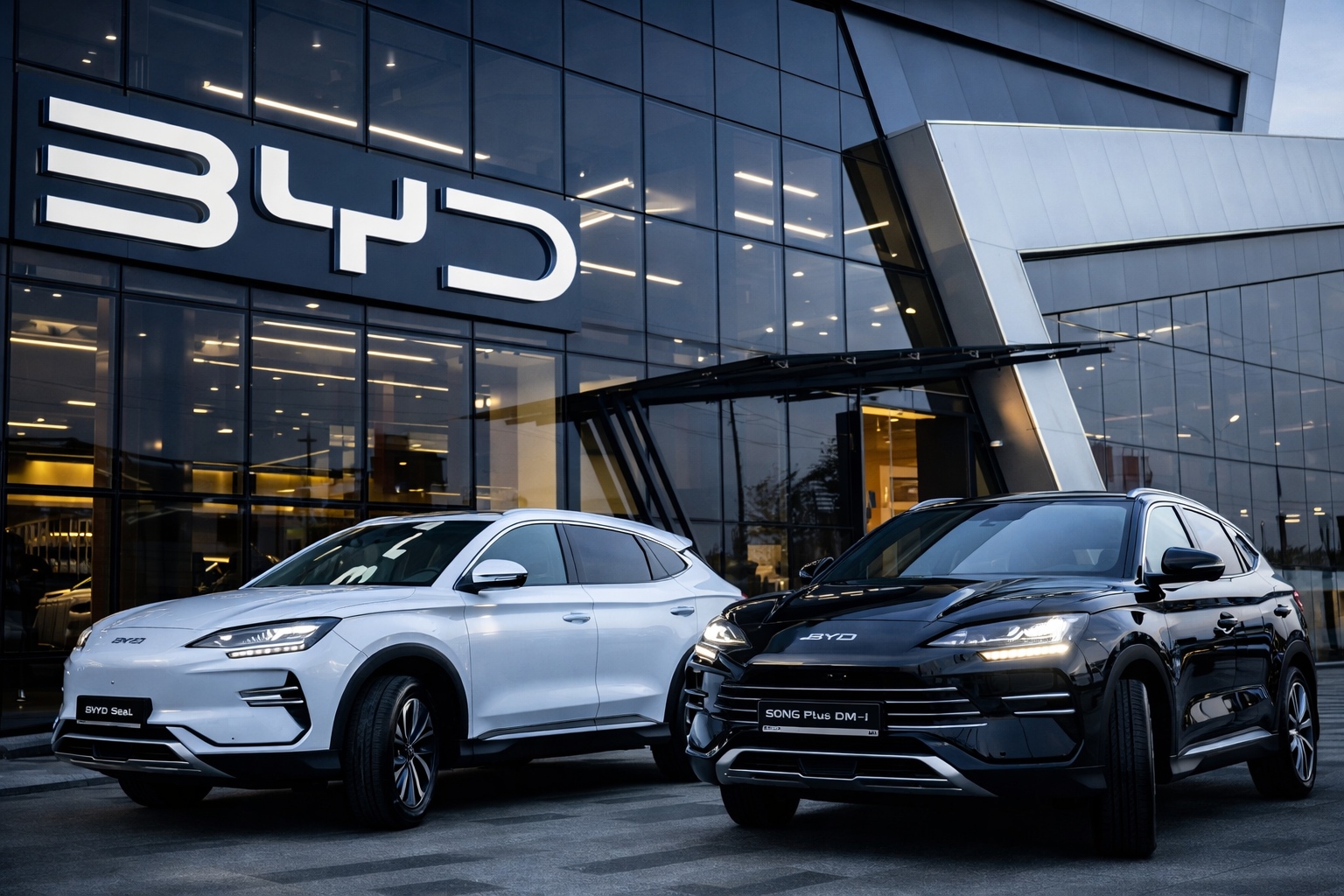
Chinese electric vehicle maker BYD has accumulated more than 6.2 million carbon credits under Australia’s New Vehicle Efficiency Standard (NVES), the highest total recorded in the scheme’s first reporting period. The results highlight how the country’s new emissions policy is reshaping competition in the automotive market, rewarding low-emission fleets while exposing other manufacturers to potential liabilities.
Government data for the 2025 reporting year shows a substantial oversupply of credits across the system, reducing the immediate financial pressure on brands that failed to meet emissions targets.
What is the New Vehicle Efficiency Standard?
The New Vehicle Efficiency Standard is a federal policy introduced by the Albanese government to reduce carbon emissions from new vehicles sold in Australia. The scheme sets annual average emissions limits for manufacturers’ fleets.
For 2025, the limits are:
-
141 grams of carbon dioxide per kilometre for passenger vehicles
-
210 grams per kilometre for light commercial vehicles
These thresholds will tighten each year. Manufacturers whose fleets emit less than the cap earn tradeable credits. Those exceeding the limits accumulate liability units and may face penalties.
Companies that fail to offset excess emissions could be fined up to $100 per gram of excess carbon dioxide per vehicle. However, they are allowed to purchase credits from manufacturers that outperform the targets.
Why BYD generated the largest credit surplus
BYD’s Australian lineup consists largely of battery electric vehicles, which produce zero tailpipe emissions. As a result, its average fleet emissions fall well below the NVES thresholds.
Although BYD ranked as Australia’s eighth-largest car brand by sales last year, it generated more than 6.2 million credits — the largest surplus among manufacturers in the scheme’s first year.
At the maximum penalty rate of $100 per gram, those credits could theoretically equate to more than $620 million in offset value. However, the actual market price of credits depends on negotiations between manufacturers and is expected to be lower due to oversupply.
A BYD spokesperson said the outcome would not change the company’s business strategy in Australia.
Which manufacturers face liabilities?
Several established carmakers recorded emissions liabilities under the 2025 results.
Mazda, Australia’s third-largest seller in 2025, accumulated more than 508,000 liability units. At the upper penalty threshold, this equates to potential exposure of up to $58 million.
Hyundai recorded more than 84,000 liability units, representing possible penalties of up to $8.4 million at the maximum rate.
Also Read: BYD and Geely shortlisted to acquire Nissan–Mercedes Mexico plant ahead of USMCA review
Other brands with recorded liabilities include Nissan, Subaru, General Motors, Porsche and Honda.
Penalties are not payable until 2027, giving manufacturers time to trade credits or adjust their vehicle mix.
Oversupply reshapes financial impact
Government figures show more than 17 million credits were generated during the first reporting period, compared with about 2.4 million units of liability.
This imbalance suggests that companies needing credits may be able to negotiate lower purchase prices. The oversupply also reduces the likelihood that manufacturers will pay the full penalty rate in the near term.
Political and industry debate
The opposition Coalition has criticised the NVES, arguing that compliance costs could increase vehicle prices if passed on to consumers. Opposition energy spokesman Dan Tehan said the framework may increase reliance on imported vehicles, particularly from China.
Infrastructure Minister Catherine King said the initial results demonstrate the policy is functioning as intended, noting that 68 per cent of vehicle suppliers met or exceeded their targets.
Industry bodies, including the Australian Automotive Dealer Association, have raised concerns that credits are calculated based on vehicles imported rather than sold, potentially influencing inventory decisions.
BYD has rejected claims that it inflated imports to maximise credit accumulation, stating that shipment volumes reflected consumer demand.
What happens next?
As annual emissions limits tighten, manufacturers with petrol- and diesel-heavy lineups may need to expand hybrid and electric offerings to reduce future liabilities.
The first NVES reporting period provides an early indication of how Australia’s vehicle emissions policy could influence market competition, pricing strategies and the pace of electric vehicle adoption in the years ahead.




 Today's E-Paper